

India Pakistan Match 9 Key Turning Points as ICC Ends Boycott Crisis

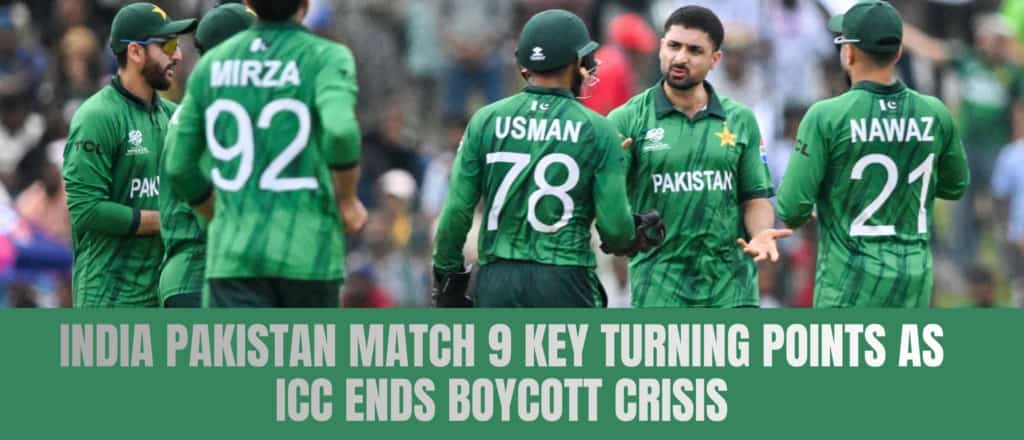
India Pakistan match returned to centre stage after days of intense negotiations, sleepless nights, and global pressure, as the ICC successfully resolved Pakistan’s threat to boycott the marquee T20 World Cup clash scheduled for February 15 in Colombo. The dramatic turnaround followed behind-the-scenes diplomacy involving the ICC, Pakistan Cricket Board, and Bangladesh Cricket Board, ensuring the tournament’s most valuable fixture remained intact.The India Pakistan match saga highlighted the delicate balance between governance, diplomacy, and commercial realities in modern international cricket.
India Pakistan Match Crisis: How the Boycott Threat Began
The India Pakistan match crisis began when the Pakistan Cricket Board publicly cast doubt on its participation in the high-profile fixture. The move followed Bangladesh’s removal from the T20 World Cup after it refused to play matches in India, citing security concerns.
Pakistan linked its boycott stance to what it described as unfair treatment of Bangladesh, raising the stakes around the February 15 contest. The situation quickly escalated into a major governance challenge for the ICC.
ICC Steps In to Protect the India Pakistan Match
Protecting the India Pakistan match became a priority for the ICC due to its enormous sporting and commercial significance. Thousands of fans had already booked flights and accommodation in Colombo, while broadcasters and sponsors relied heavily on the fixture.
Recognising the risk of severe disruption, the ICC initiated intensive dialogue with the PCB and BCB, emphasising the importance of honouring participation agreements signed ahead of the tournament.
Sleepless Nights and Behind-the-Scenes Diplomacy
The resolution of the India Pakistan match standoff came after days of relentless negotiations. Senior ICC officials travelled across regions, holding urgent meetings and virtual discussions to defuse the crisis.
These efforts were aimed at preserving the sanctity of the tournament while addressing concerns raised by Pakistan and Bangladesh. The process underscored the extent to which the ICC was willing to go to prevent a breakdown of trust among member boards.
ICC Holds Firm on Participation Agreements
A critical factor in resolving the India Pakistan match dispute was the ICC’s firm stance on participation agreements. Pakistan had signed terms committing to play all scheduled fixtures, including matches against India at neutral venues.
The ICC made it clear that Pakistan had no contractual grounds to demand changes or concessions and that failure to comply could invite severe sanctions. This clarity played a decisive role in Pakistan’s eventual volte-face.
Bangladesh Factor in the India Pakistan Match Saga
Bangladesh remained central to the India Pakistan match narrative. Pakistan sought redress for Bangladesh as part of any resolution, arguing that fairness demanded some form of acknowledgment.
The ICC addressed these concerns by confirming that Bangladesh would face no penalties and would be granted future hosting opportunities, easing tensions and paving the way for Pakistan to reconsider its stance.
Lahore Meeting That Changed the Outcome
A pivotal moment in the India Pakistan match saga was a high-level meeting in Lahore involving PCB chairman Mohsin Naqvi, BCB president Aminul Islam, and ICC deputy chair Imran Khawaja.
The discussions helped align stakeholders on a roadmap to resolution, reinforcing dialogue over confrontation. Soon after, optimism grew that the standoff would end without further escalation.
Government Approval Clears Path for India Pakistan Match
Following progress in negotiations, the Pakistan government stepped in to finalise the decision. After reviewing outcomes achieved through dialogue and considering requests from friendly nations, authorities directed the national team to play the scheduled match.
This approval removed the final obstacle, confirming that the India Pakistan match would go ahead as planned.
ICC Statement After the Crisis
In its official response, the ICC welcomed the resolution and reiterated that all members must respect their commitments to ensure the success of ICC events. The governing body described the dialogue as constructive, unified, and purposeful.
The statement reinforced the ICC’s principles of integrity, neutrality, and cooperation, positioning the outcome as a victory for the sport as a whole.
Commercial Reality Behind the India Pakistan Match
The India Pakistan match is widely regarded as the commercial centrepiece of ICC tournaments. Its cancellation would have caused significant financial losses across multiple cricket boards and stakeholders.
This reality weighed heavily throughout negotiations and underscored why preserving the fixture was non-negotiable for the ICC.
What the India Pakistan Match Resolution Means
The resolution of the India Pakistan match crisis sets an important precedent for international cricket. It demonstrates the limits of protest within ICC events and the governing body’s willingness to enforce participation agreements.
At the same time, it highlights the value of sustained dialogue in resolving disputes without fracturing the global cricketing ecosystem.
Looking Ahead After the India Pakistan Match Saga
With the crisis resolved, focus now returns to cricket on the field. The India Pakistan match will proceed as scheduled, restoring confidence among fans, broadcasters, and sponsors.
While the episode exposed underlying tensions, it also reaffirmed the ICC’s authority and commitment to protecting the integrity of its tournaments. The India Pakistan match saga may be over, but its lessons will shape future governance decisions.


Responses