

Bat Tampering: 5 Shocking Cricket Controversies Explained

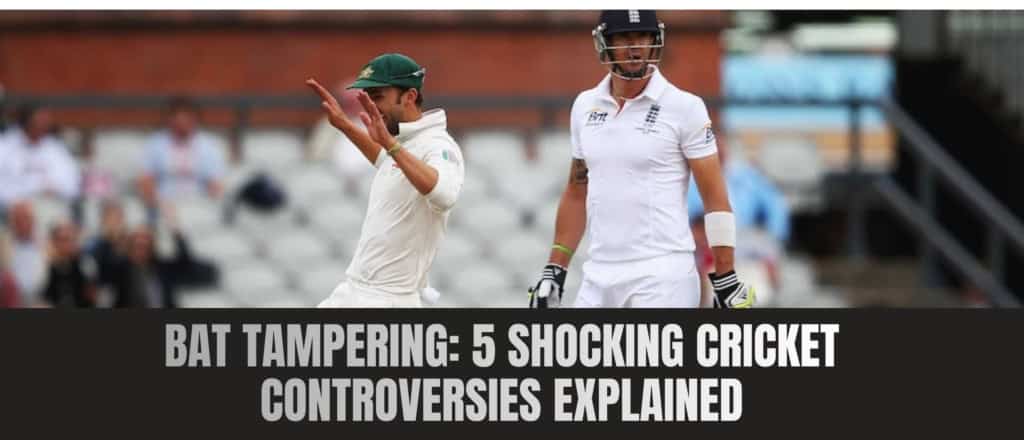
Bat tampering controversy has resurfaced in the T20 World Cup 2026 after explosive allegations, bringing back memories of five shocking incidents that changed cricket laws forever. The latest bat tampering debate during the T20 World Cup 2026 has reignited discussions about equipment regulations in international cricket.Bat Tampering Controversy Rocks T20 World Cup 2026
The bat tampering controversy took center stage in the T20 World Cup 2026 after claims surfaced questioning the legality of certain cricket bats. Allegations suggested that bats might have included additional materials to enhance power, sparking debate across the cricketing world.
Under ICC rules, a cricket bat must be made solely of wood, with strict limitations on width, depth, and materials. The renewed bat tampering controversy has drawn attention to historical moments when equipment disputes forced cricket authorities to tighten regulations.
The T20 World Cup 2026 incident serves as a reminder that even in modern cricket, equipment standards remain a sensitive and closely monitored issue.
The Monster Bat Controversy (1771)
One of the earliest bat tampering controversy moments dates back to 1771, when a player used an unusually wide bat that reportedly covered the width of the wicket. The incident caused outrage and led to formal restrictions in the Laws of Cricket.
As a result of that early bat tampering controversy, authorities introduced a maximum bat width rule of four and one quarter inches. This marked one of the first major equipment regulations in cricket history.
The legacy of that decision continues to influence ICC equipment guidelines followed in tournaments like the T20 World Cup 2026.
Dennis Lillee’s Aluminium Bat (1979)
A major bat tampering controversy erupted in 1979 when Australian fast bowler Dennis Lillee used an aluminium bat during an Ashes Test match. England’s captain objected, arguing that the metal bat was damaging the cricket ball.
The incident escalated quickly, and cricket authorities eventually banned non-wooden bats. This bat tampering controversy reinforced the principle that cricket bats must remain wooden to preserve the integrity of the game.
Even in the T20 World Cup 2026, the aluminium bat episode is often cited as a turning point in equipment regulation history.
Ricky Ponting’s Graphite-Coated Bat (2006)
Another high-profile bat tampering controversy surfaced in 2006 when Ricky Ponting used a graphite-reinforced bat. Questions arose regarding whether the coating provided additional power.
Cricket lawmakers examined the bat’s structure and ultimately banned similar models. The bat tampering controversy surrounding graphite coatings highlighted how even minor modifications can influence performance.
Modern ICC tournaments, including the T20 World Cup 2026, apply strict bat gauge tests to ensure compliance with established standards.
Andre Russell’s Black Bat Debate (2016)
In 2016, Andre Russell found himself at the center of a bat tampering controversy after using a black-colored bat in a T20 league. While the bat was technically approved, concerns arose that it left marks on the white ball.
The situation was resolved after adjustments were made to the bat’s surface. Though not illegal in structure, the bat tampering controversy emphasized the importance of visual clarity and ball integrity in limited-overs cricket.
Such incidents continue to influence how equipment is scrutinized in global events like the T20 World Cup 2026.
Feroze Khushi’s Illegal Bat (2024)
A more recent bat tampering controversy emerged in domestic cricket when a player was found using an oversized bat that failed the gauge test. The team faced penalties, including points deductions, underscoring the seriousness of equipment violations.
This episode reinforced the ICC’s commitment to strict bat checks in international tournaments, including the T20 World Cup 2026. Manufacturers and players alike must ensure bats comply fully with technical standards.
ICC Regulations in T20 World Cup 2026
The renewed bat tampering controversy during the T20 World Cup 2026 highlights the robustness of ICC regulations. Bats are subjected to routine inspections, including checks on thickness, edge size, and material composition.
The ICC’s focus remains on maintaining a level playing field. Any confirmed case of bat tampering could lead to severe penalties, ranging from player reprimands to team sanctions.
The T20 World Cup 2026 incident has once again brought equipment governance into the spotlight, reminding teams that even minor deviations can spark major debates.
5 Shocking Bat Tampering Controversies in Cricket
- The Monster Bat (1771)
- Triggered formal bat width restrictions in cricket laws.
- Aluminium Bat Ban (1979)
- Dennis Lillee’s metal bat led to a permanent ban on non-wooden bats.
- Graphite-Coated Bat (2006)
- Ricky Ponting’s bat prompted regulatory review and subsequent bans.
- Black Bat Incident (2016)
- Andre Russell’s bat controversy raised concerns about ball discoloration.
- Oversized Bat Penalty (2024)
- A domestic cricket case resulted in disciplinary action and points deduction.
Why Bat Tampering Controversy Matters
The bat tampering controversy is more than a technical issue — it strikes at the core of cricket’s fairness. In high-stakes competitions like the T20 World Cup 2026, even small equipment advantages can influence match outcomes.
Maintaining strict compliance ensures competitive balance and protects the spirit of the game. As power-hitting continues to evolve in modern T20 cricket, governing bodies must remain vigilant.
The latest bat tampering controversy serves as both a reminder of cricket’s rich regulatory history and a warning that innovation must never cross the boundary of legality. With the T20 World Cup 2026 underway, attention will remain firmly fixed on ensuring that the game’s laws are upheld without compromise.

Responses