

T20 World Cup: 3 Powerful Truths in Usman Tariq Storm

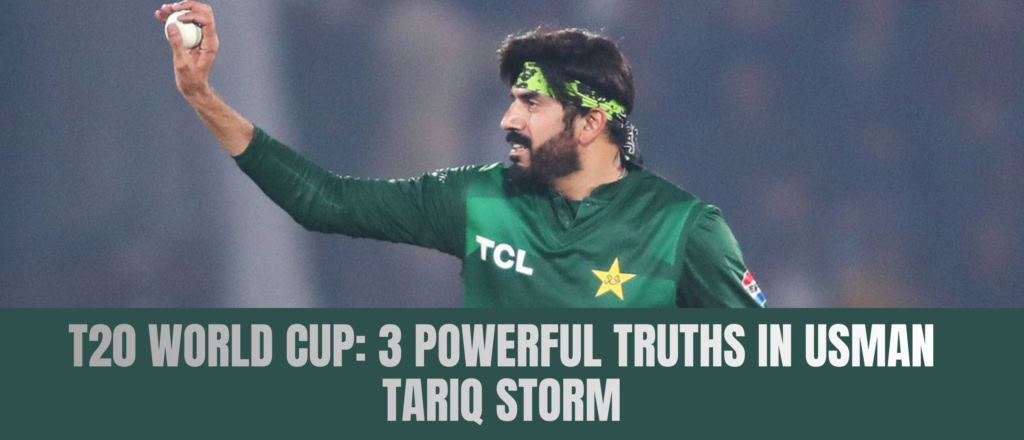
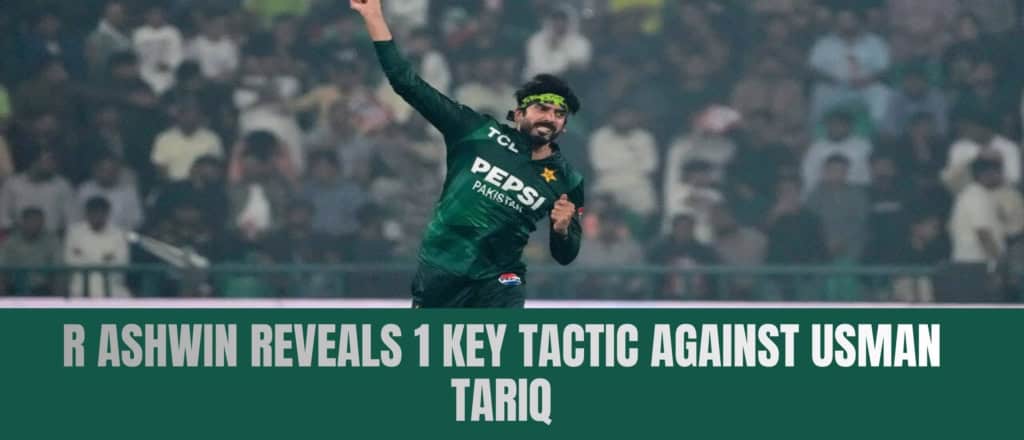
T20 World Cup drama intensified after Pakistan spinner Usman Tariq found himself at the center of a major chucking controversy, even as former India star R Ashwin delivered a powerful defense of the bowler’s action. The incident unfolded during Pakistan’s Group A clash against the USA, turning what should have been a routine win into one of the most debated moments of the tournament.T20 World Cup Match Turns Spotlight on Usman Tariq
The T20 World Cup clash between Pakistan and the United States at the Sinhalese Sports Club in Colombo was expected to be a straightforward contest. Pakistan, packed with experience, entered the game as favorites. However, the narrative shifted dramatically due to the scrutiny surrounding Usman Tariq’s bowling action.
Tariq emerged as Pakistan’s standout performer in the T20 World Cup encounter, claiming three crucial wickets to derail the USA’s chase of 191. His spell proved decisive as Pakistan sealed a convincing 32-run victory. Yet, instead of applause, his action sparked intense debate across social media platforms.
Observers pointed to a noticeable bend in his bowling arm and a slight pause in his run-up before releasing the ball. Clips circulated widely, fueling allegations of chucking during the high-profile T20 World Cup fixture.
Chucking Controversy and ICC Rules Explained
Understanding the ICC 15-Degree Rule
The chucking controversy in the T20 World Cup revolves around the ICC’s 15-degree elbow extension regulation. According to ICC bowling laws, a bowler is permitted a maximum of 15 degrees of elbow straightening between the point where the arm reaches shoulder height and ball release.
Determining whether a bowler exceeds that threshold is not a matter of visual judgment alone. On-field umpires cannot accurately measure elbow extension during a live T20 WC match. Instead, suspected actions must undergo biomechanical testing at an ICC-accredited center.
This technical complexity has created a grey area in elite cricket, particularly in tournaments like the T20 World Cup, where scrutiny is magnified and replays are dissected instantly.
The Pause at the Crease Debate
Another aspect questioned during the T20 WC contest was Tariq’s brief pause before delivery. Critics suggested the pause might contribute to deception. However, cricket laws permit bowlers to have unique actions, provided they remain consistent and within legal parameters.
A pause alone does not constitute an illegal action. Unless reported and tested by the ICC, a bowler’s method remains valid in T20 WC competition.
R Ashwin’s Strong Defense in T20 World Cup Debate
Former India off-spinner R Ashwin stepped into the T20 World Cup debate with clarity and authority. Ashwin emphasized that legality can only be determined through scientific testing, not social media speculation.
- He outlined three key points regarding the T20 World Cup controversy:
- Only an ICC bowling action testing center can officially determine legality.
- Judging 15-degree elbow extension with the naked eye is nearly impossible.
- Accusing a bowler without formal review is unfair and potentially damaging.
Ashwin described the issue as a “grey area” and stressed that exploiting such a grey area is not wrongdoing if the action remains within ICC regulations. His comments reframed the T20 WC conversation, shifting focus from accusation to procedure.
Pakistan’s Clinical Performance in T20 World Cup Clash
Amid the noise, Pakistan’s on-field dominance in the T20 World Cup should not be overlooked. Sahibzada Farhan’s explosive 73 at the top of the order laid the platform for a formidable total of 190/9. His aggressive strokeplay placed early pressure on the USA bowling attack.
Captain Babar Azam contributed to a stabilizing third-wicket partnership, ensuring Pakistan capitalized on a strong start. The total proved challenging under lights in Colombo during the T20 World Cup group-stage encounter.
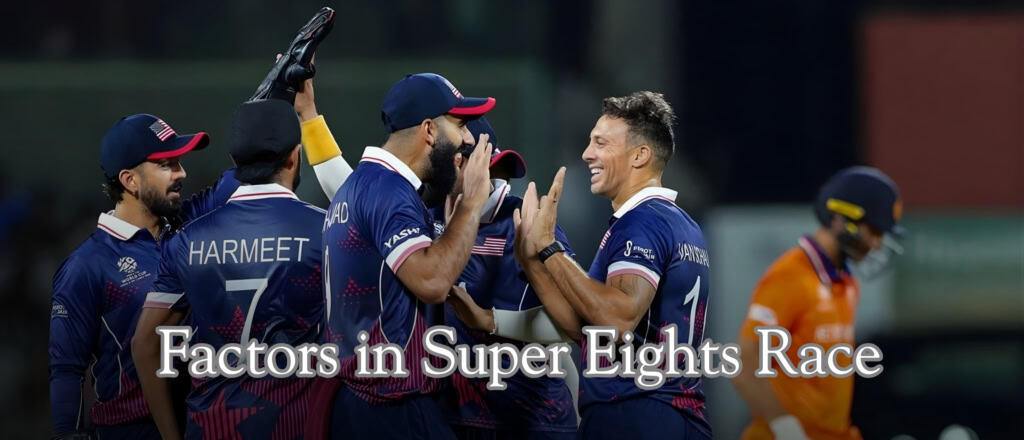
The USA responded with determination. Shayan Jahangir and Shubham Ranjane attempted to anchor the chase, but regular wickets halted momentum. Tariq’s spell broke the backbone of the innings, ensuring Pakistan’s control remained intact throughout the T20 WC fixture.
The 32-run win strengthened Pakistan’s position in Group A and reinforced their credentials as serious contenders in the T20 World Cup campaign.
Technology and the Future of Bowling Reviews in T20 World Cup
Need for Real-Time Monitoring
The T20 World Cup controversy has reignited debate over technological advancements in cricket. With ultra-slow-motion replays available instantly, public judgment often precedes official review.
Ashwin’s remarks hinted at the need for real-time testing mechanisms during ICC tournaments. While current systems rely on post-match reporting and laboratory assessments, integrating advanced tracking tools during T20 World Cup matches could reduce ambiguity.
Protecting Players’ Integrity
Allegations of chucking can severely impact a cricketer’s reputation. In global events like the T20 World Cup, where careers are defined by performance on the biggest stage, unverified claims can overshadow achievements.
Maintaining structured ICC protocols ensures fairness and preserves the integrity of T20 WC competition. Until formally tested and ruled otherwise, players are presumed to be operating within legal limits.
The Bigger Picture in T20 World Cup Campaign
The Usman Tariq episode highlights how quickly narratives shift in modern cricket. A match-winning performance in the T20 World Cup can be eclipsed by controversy within hours.
Pakistan, however, will focus on momentum. With a balanced squad and strong bowling depth, they appear well-positioned for the challenges ahead in the T20 World Cup. Tariq’s contribution demonstrated Pakistan’s ability to rely on emerging talents under pressure.
As the T20 World Cup progresses, discussions around bowling legality may continue. Yet, the ultimate authority remains the ICC’s testing framework, not online debate.
For now, the tournament continues to deliver drama, intensity, and high-quality cricket hallmarks of the T20 World Cup spectacle that captivates global audiences year after year.
🤔🤔