

T20 World Cup: 5 Shocking Twists in Bangladesh U-Turn

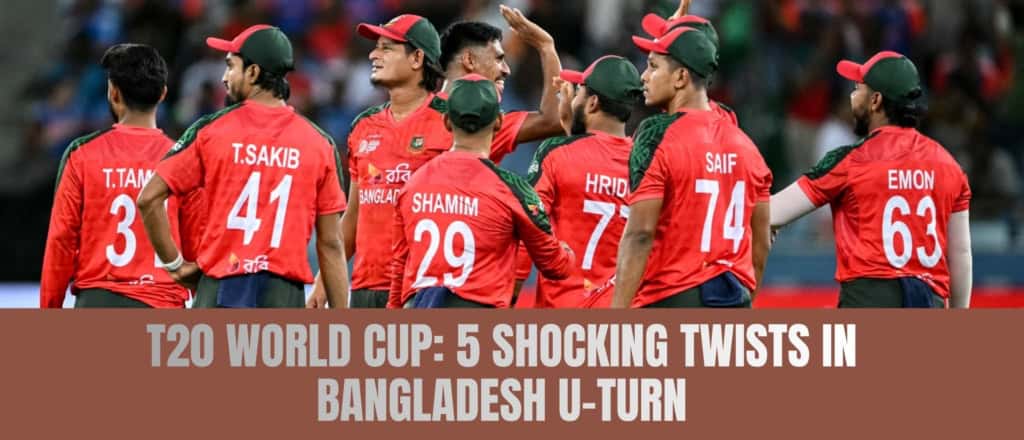
T20 World Cup controversy deepened after Bangladesh dramatically altered its stance on withdrawing from the tournament, with Sports Advisor Asif Nazrul now claiming the decision was taken by the players and the Bangladesh Cricket Board (BCB). The stunning U-turn has reignited debate over governance, player autonomy, and the ICC’s handling of the situation during one of cricket’s biggest global events.T20 World Cup Withdrawal Sparks Major Bangladesh Controversy
The T20 World Cup was expected to showcase high-intensity cricket, but Bangladesh’s decision not to participate in parts of the tournament created a storm off the field. Initially, the Bangladesh government cited “security concerns” regarding travel for group-stage matches, triggering widespread speculation about political interference in cricketing affairs.
At the time, Asif Nazrul publicly stated that the government had taken the call in the interest of national security. His remarks positioned the T20 World Cup withdrawal as a sovereign decision rather than a cricketing one. However, fresh comments have reshaped the narrative entirely.
In a recent interaction with reporters, Nazrul asserted that the T20 World Cup decision was made collectively by the BCB and the players, emphasizing that the cricketers made sacrifices to protect national dignity and public safety.
Bangladesh Cricket Board’s Role in T20 WC Decision
From Government Directive to Player Consensus
Earlier statements suggested the Bangladesh government directly influenced the T20 World Cup participation plan. Nazrul had even explained that meetings were organized to provide players with context regarding the government’s stance.
He previously indicated that the purpose of the meeting was to inform players why the government chose not to travel, reinforcing the perception that the final authority rested with state officials. That version of events painted the T20 WC boycott as a politically driven move.
However, the revised claim now shifts responsibility toward the Bangladesh Cricket Board and the players themselves. According to Nazrul’s latest comments, the BCB and team members assessed the security situation and collectively decided against participation under the prevailing conditions.
This reversal has fueled fresh questions about transparency in T20 WC governance and the degree of autonomy granted to players.
Security Concerns and ICC Response
Security concerns formed the foundation of Bangladesh’s initial position in the T20 World Cup controversy. The BCB reportedly requested that their scheduled matches be shifted to Sri Lanka instead of India, citing safety considerations.
The International Cricket Council did not alter the tournament schedule. Despite tensions and comparisons to Pakistan’s own boycott-related issues, the ICC ultimately chose not to impose sanctions on Bangladesh.
Nazrul described the ICC’s stance as a “brilliant achievement,” noting that Bangladesh would remain eligible to host future international tournaments. This assurance softened potential fallout from the T20 World Cup dispute and prevented punitive measures.
Political vs Cricketing Decision in T20 World Cup
The evolving narrative around Bangladesh’s absence from parts of the T20 World Cup highlights the blurred lines between politics and sport. Cricket, especially in South Asia, often intersects with diplomatic considerations, and this episode once again demonstrated how governance can influence participation.
If the initial explanation suggested government intervention, the updated version reframes theT20 WC withdrawal as a collective cricketing decision. This distinction matters because ICC regulations emphasize that member boards, not governments, should control cricketing operations.
The controversy underscores the importance of clarity in communication during major events like the T20 World Cup, where mixed messages can undermine credibility.
Impact on Players and Bangladesh Cricket
Sacrifice for National Dignity
Nazrul’s latest remarks emphasized that the players agreed to step aside from the T20 World Cup schedule for the greater good. He framed the decision as a patriotic act intended to safeguard national dignity and public security.
For the cricketers, missing T20 World Cup matches represents a significant professional setback. Global tournaments offer exposure, ranking points, and career-defining performances. The claim that players willingly accepted such consequences adds a new layer to the narrative.
However, earlier media reports suggested that players may not have had substantial input in the original decision. The discrepancy between reports and official statements continues to fuel debate around the T20 World Cup episode.
Bangladesh’s Future in ICC Events
Despite the controversy, Bangladesh’s cricketing future in ICC events appears secure. The ICC’s assurance of no sanctions indicates a willingness to maintain constructive relations with the Bangladesh Cricket Board.
The possibility of hosting future ICC tournaments could help restore confidence in Bangladesh’s standing within global cricket. Participation in upcoming T20 WC cycles will also be closely monitored to ensure similar disputes do not arise again.
ICC’s Balancing Act in T20 World Cup Disputes
The T20 World Cup controversy placed the ICC in a delicate position. On one hand, maintaining the tournament schedule was crucial for logistical and commercial stability. On the other, addressing security concerns from a member board required diplomatic sensitivity.
By refraining from imposing sanctions, the ICC signaled flexibility. The decision prevented escalation and allowed the T20 World Cup to proceed without further disruption.
However, the situation also exposed the need for clearer protocols when member boards raise security objections. Transparent communication channels and predefined guidelines could minimize confusion in future T20 World Cup editions.
Lessons from Bangladesh’s T20 World Cup U-Turn
The Bangladesh U-turn in the T20 World Cup saga serves as a case study in crisis communication. Initial statements attributed the withdrawal to government authority, while subsequent remarks credited the BCB and players.
This shift highlights the importance of consistent messaging during global sporting events. In tournaments like the T20 World Cup, where scrutiny is intense and international audiences are engaged, contradictions can quickly erode trust.
For Bangladesh cricket, rebuilding narrative clarity will be essential. The team’s focus will likely return to on-field preparation, ensuring that future T20 World Cup campaigns are remembered for performance rather than controversy.
Looking Ahead in the T20 World Cup Landscape
As the T20 World Cup continues to capture global attention, governance issues remain as significant as on-field battles. Bangladesh’s evolving explanation underscores the complex relationship between national policy, cricket boards, and ICC regulations.
Ultimately, the success of any T20 World Cup depends not only on thrilling matches but also on stable administration and transparent decision-making. Whether the U-turn settles the debate or invites further scrutiny, Bangladesh’s role in this chapter of T20 World Cup history will remain a defining moment.


😯😯😯