

English football Clubs Struggle in Champions League Last-16 – But Is It Really a Problem?

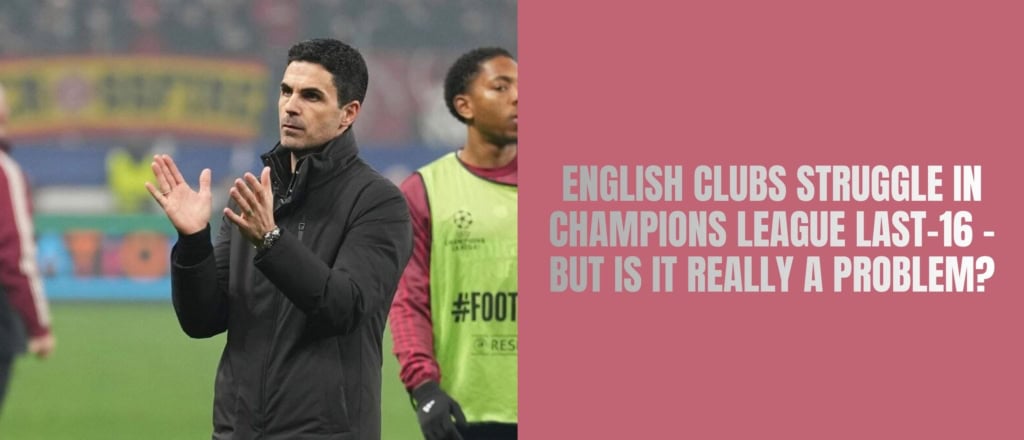
English football experienced a disappointing week in the UEFA Champions League as Premier League clubs struggled in the first legs of the round-of-16 matches. Six English teams were involved across Tuesday and Wednesday, yet the results painted a worrying picture: four defeats and two draws.
Several of those losses were particularly heavy, with three teams beaten by three-goal margins. Newcastle United produced a competitive performance against strong opposition, but the rest of the Premier League representatives largely failed to deliver convincing displays.
After the opening legs, only Arsenal and Liverpool appear more likely than not to progress to the quarter-finals. For the other English sides, the return fixtures now represent a significant challenge if they hope to keep their Champions League campaigns alive.
Despite the disappointing results, the situation may not be as alarming as it first appears.
The Tie Is Only Half Finished – English football
The Champions League knockout rounds are played over two legs, meaning the current results represent only the halfway point of each tie. Teams such as Manchester City and Chelsea still have the opportunity to turn their ties around in the second leg, particularly when playing at home.
Manchester City, for example, have the attacking firepower to score multiple goals against any opponent, while Chelsea remain capable of dramatic comebacks despite their inconsistent form this season.
Newcastle United also remain in contention, even though their task is particularly difficult against one of Europe’s most established clubs.
If several English teams manage to overturn their deficits in the second legs, the narrative of a “European meltdown” could quickly disappear.
Financial Power of the Premier League – English football
The concern surrounding English clubs’ performances is largely driven by expectations created by the Premier League’s financial strength.
The Premier League generates an estimated £6.5 billion in annual revenue, making it by far the richest domestic football league in the world. The league’s financial power allows its clubs to attract top players, coaches and staff from across the globe.
Six of the ten richest football clubs in the world are currently based in England. As a result, many observers assume that English teams should dominate European competitions every season.
However, financial advantage does not always guarantee success against the best clubs in Europe. Teams such as Real Madrid, Barcelona, Bayern Munich and Paris Saint-Germain continue to compete at the highest level and regularly challenge Premier League sides in the Champions League.
A Competitive Balance in European English football
From a broader perspective, having multiple leagues competing at a high level may actually benefit European football.
If English clubs dominated the Champions League every season, the competition could become predictable and less exciting for fans around the world.
The Champions League involves teams from dozens of European football associations, and the appeal of the tournament lies in its diversity and unpredictability. Seeing clubs from Spain, Germany, France and other nations compete on equal terms with Premier League teams helps maintain that balance.
For many football fans outside England, the idea of six Premier League teams reaching the quarter-finals would be far from appealing. A competitive tournament featuring clubs from several leagues provides more variety and excitement.
Structural Issues Within the Premier League – English football
Another factor behind the mixed performances of English football clubs may lie in the structure of the Premier League itself.
Although the league features enormous financial resources and world-class players, some clubs struggle with long-term planning and strategic stability. Rapid managerial changes, aggressive transfer spending and inconsistent recruitment strategies can undermine team cohesion.
In several cases, clubs appear to be assembling squads filled with talented players but lacking a clear tactical identity or long-term vision.
Chelsea are often cited as a prime example. The club has invested heavily in players in recent years, yet the team has frequently looked unbalanced or inconsistent on the pitch.
Even with vast resources, success at the highest level still depends on careful planning, stable leadership and a clearly defined football philosophy.
European Clubs with Strong Identity – English football
Many successful European clubs rely on long-standing playing philosophies and youth development systems.
Clubs in Spain and Germany often build their teams around a strong footballing culture that influences both their playing style and the development of young players.
Barcelona, for example, have historically relied on their academy system to produce technically gifted players who fit the club’s possession-based style. Bayern Munich also maintain a clear identity and strong domestic development structure.
These systems not only strengthen club teams but also contribute to the development of national teams.
Implications for the England National Team
The broader discussion about Premier League success in Europe also connects to the performance of the England national team.
Despite possessing many talented players, England have historically struggled to win major international tournaments. Some analysts argue that the structure of English club football may play a role in this challenge.
Because Premier League teams rely heavily on international players, opportunities for English-developed players can sometimes be limited. In several Champions League matches this week, English-trained players made up a minority within Premier League squads.
By contrast, clubs in countries such as Spain often feature more domestically developed players who later form the backbone of the national team.
This difference in development structures may partially explain why some countries have achieved greater success in international tournaments.
A Wake-Up Call Rather Than a Crisis – English football
Ultimately, the recent results may serve more as a wake-up call than a genuine crisis for English football.
The Premier League remains one of the strongest leagues in the world and will almost certainly continue to produce teams capable of competing for European titles.
However, setbacks in the Champions League can encourage clubs to focus on long-term planning, youth development and strategic stability rather than relying solely on financial strength.
If English football teams respond by improving their structures and football philosophies, the temporary struggles in Europe could ultimately prove beneficial.
For now, the Champions League ties remain open, and the second legs will determine whether the early setbacks truly represent a disappointing campaign for English football or simply a brief stumble in one of the most competitive tournaments in world sport.
Written by 8jjsports.com | March 10, 2026
Stay updated with 8jj Sports for Live Sports Scores, News & Community






Responses