

Punjab Kings Suffer Setback as Lockie Ferguson Set to Miss Early IPL 2026 Matches

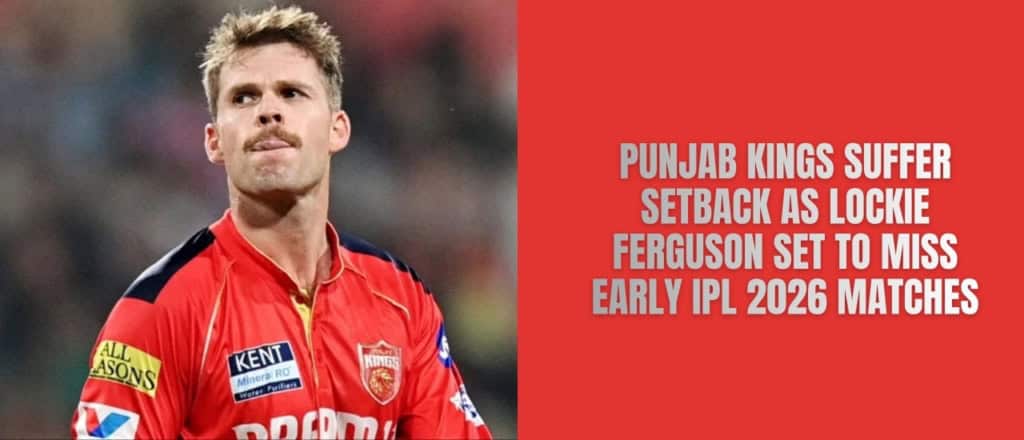
Lockie Ferguson Absence Forces Early Tactical Reset for Punjab Kings in IPL 2026
The build-up to IPL 2026 has already taken an unexpected turn for Punjab Kings, with New Zealand fast bowler Lockie Ferguson set to miss the opening phase of the tournament. The timing of the setback is particularly disruptive, arriving just days before the start of the season and immediately forcing the franchise into a recalibration of its pace bowling plans.
Ferguson’s absence is not injury related, but driven by personal priorities following the birth of his child. While he is expected to return later in IPL 2026, the immediate impact is significant. Punjab Kings now face the challenge of reshaping their bowling identity without one of their most potent strike weapons at the top end of the attack.
For a franchise that had structured key elements of its strategy around raw pace and early breakthroughs, this development creates both tactical uncertainty and selection pressure.
The Lockie Ferguson Void and What It Means for Punjab Kings’ Early Balance
The absence of Lockie Ferguson is more than just the loss of an overseas player. It removes a specific match profile that Punjab Kings had actively built into their IPL 2026 planning. Ferguson’s role was not limited to taking wickets. He was expected to define how the team attacked in high-pressure phases, particularly in the powerplay and at the death.
Without him, Punjab Kings lose immediate access to express pace and aggressive wicket-taking intent. This changes how opposition teams will approach their innings. Batters who might have played cautiously against Ferguson’s pace may now take a more settled approach early in the innings, which can shift momentum control away from Punjab Kings.
The franchise must now decide whether to replace that profile directly or redistribute his responsibilities across multiple bowlers. Neither option is straightforward, especially at the start of a tournament where rhythm and combinations are still being established.
How Lockie Ferguson Shaped Punjab Kings’ IPL 2026 Bowling Blueprint
Before this setback, Ferguson was central to the structural design of Punjab Kings’ bowling unit. His ability to operate in multiple phases gave the team flexibility that is rare in T20 cricket. He could be used as a powerplay enforcer, a middle-overs breaker, or a death overs finisher depending on matchups.
This versatility allowed Punjab Kings to build layered bowling plans rather than rigid overs allocations. It also provided captaincy options that could adapt dynamically to match situations.
With Ferguson unavailable, those plans now require immediate revision. The team loses not only pace but also strategic elasticity. Bowling combinations that were designed to function around his presence must now be tested under live conditions without the intended anchor.
This creates a ripple effect across the entire attack, particularly in how other fast bowlers are deployed.
Reworking the Powerplay Without Lockie Ferguson’s Early Threat
One of the most immediate tactical concerns for Punjab Kings is the powerplay. Ferguson’s presence offered a direct attacking option in the first six overs, where early wickets often determine the tone of a match.
Without him, the responsibility shifts to the remaining pace unit, who may not offer the same combination of speed and intimidation. This changes field settings, bowling lengths, and risk tolerance.
Opposition batters are likely to adjust accordingly. The absence of a high-speed enforcer reduces the immediate threat level, which can lead to more aggressive batting intent early in the innings. That puts additional pressure on Punjab Kings to find alternative methods of creating breakthroughs.
It may also force the captain into more conservative field placements, which can reduce attacking opportunities in the early overs.
Death Overs Pressure and the Redistribution Problem
Ferguson’s value was not limited to the start of an innings. His ability to bowl at the death gave Punjab Kings a dual-phase weapon capable of handling high-pressure overs at both ends of a match.
Without him, the death overs become a critical area of concern. The team must now identify which bowlers can absorb that responsibility without compromising control or execution.
This redistribution is rarely seamless. Bowlers who excel in one phase are not always equally effective in another. The margin for error in the final overs is extremely small, and any mismatch in role assignment can lead to costly run leaks.
For Punjab Kings, IPL 2026 now begins with an immediate test of adaptability in the most decisive phase of the game.
Lockie Ferguson’s Return and the Challenge of Mid-Season Reintegration
Although Ferguson is expected to return later in IPL 2026, reintegrating a key fast bowler mid-tournament presents its own challenges. The team that exists when he returns may not resemble the one he originally prepared with.
By that stage, Punjab Kings will likely have established temporary combinations, defined roles, and adjusted match strategies. Reintroducing Ferguson into that structure will require careful balance to avoid disrupting emerging rhythm.
However, his return will also provide a significant boost. Few bowlers in world cricket offer his combination of pace and wicket-taking threat. In the later stages of the tournament, where qualification scenarios tighten and pressure increases, his presence could become a decisive factor.
The key question for Punjab Kings will be whether they can remain competitive long enough for his return to matter in a meaningful way.
Punjab Kings’ Early Season Test of Adaptability in IPL 2026
This situation highlights a broader reality of IPL 2026 planning. Teams must now prepare for uncertainty not only in form and fitness but also in availability driven by personal and international commitments.
For Punjab Kings, the early phase of the tournament becomes a test of adaptability. They must find ways to maintain competitiveness without one of their primary overseas pace assets while ensuring that long-term plans remain intact.
This requires more than simple replacement. It demands tactical flexibility, role clarity, and quick decision-making under pressure.
If Punjab Kings can stabilize their bowling unit in Ferguson’s absence, his eventual return could elevate them significantly in the second half of the tournament. If not, the early damage may shape their entire campaign trajectory.
Either way, IPL 2026 has already delivered its first major structural challenge for the franchise, and the response will define their season.
Punjab Kings Search for Control Without Their Fastest Edge in IPL 2026
The absence of Lockie Ferguson forces Punjab Kings into a very specific kind of test in IPL 2026. It is not just about replacing pace. It is about replacing the type of control that comes from genuine high speed pressure. That distinction matters because it changes how every over is planned, defended, and attacked.
Without Ferguson at the top of the structure, Punjab Kings lose a bowler who naturally compresses scoring options. His presence alone often forces batters into defensive decisions earlier than they would prefer. That pressure is now absent in the opening phase of the tournament, and the team must find another way to create the same discomfort for opposition lineups.
What follows is not a simple swap in personnel. It is a recalibration of bowling identity.
How Punjab Kings Must Rebuild Their New Ball Strategy in IPL 2026
The first major adjustment for Punjab Kings comes in the powerplay. Ferguson’s role was built around early disruption, either through wicket-taking intent or by restricting rhythm. Without him, the new ball strategy becomes more dependent on control-based bowling rather than outright pace.
This shift has subtle but important consequences. Control bowlers rely on precision, length discipline, and variation in movement rather than intimidation. That means batters are less likely to be rushed and more likely to settle into innings earlier.
In IPL 2026, where powerplay scoring rates continue to rise, this becomes a structural challenge. Punjab Kings must now decide whether to accept slightly higher scoring in exchange for stability or attempt to recreate Ferguson’s aggressive profile through alternative combinations.
Neither option fully replaces what has been lost. Instead, the team must build a hybrid approach that balances containment with selective attacking bursts.
The Tactical Gap Left by Lockie Ferguson in Middle Overs Control
While most attention naturally falls on the powerplay and death overs, Ferguson’s absence also creates a quieter issue in the middle phase. His ability to return for second or third spells allowed Punjab Kings to interrupt opposition momentum at key points in the innings.
Without him, the middle overs become more predictable. Opposition batters may find fewer moments of disruption, allowing them to rotate strike more comfortably and rebuild after early pressure.
This is where the structural gap becomes visible. Good T20 bowling attacks are not defined only by breakthroughs but by interruption patterns. They break rhythm, even when wickets do not fall. Ferguson’s presence contributed to that disruption cycle.
Now, Punjab Kings must rely on spin or medium pace options to fill that void. The effectiveness of this replacement will depend heavily on how well the team can maintain pressure without overexposing weaker phases of their attack.
Reassigning Roles Under Pressure in Punjab Kings’ Bowling Unit
One of the most immediate consequences of Ferguson’s absence is the forced redistribution of responsibility. Bowlers who were originally assigned supporting roles may now need to take on frontline duties earlier in matches.
This shift can have a psychological impact as well as a tactical one. Not every bowler is comfortable being introduced into high-pressure overs immediately. Some thrive in support roles where their responsibilities are more defined and less exposed.
In IPL 2026, Punjab Kings must manage this transition carefully. Overloading any single bowler too early in the tournament risks inconsistent execution. At the same time, underutilizing attacking options can lead to passive bowling phases that allow opposition teams to dictate terms.
This balancing act is one of the most delicate aspects of their early season strategy.
Lockie Ferguson’s Absence and the Recalibration of Death Overs Plans
The death overs represent the most sensitive area of Punjab Kings’ bowling structure. Ferguson’s ability to bowl at the end of innings provided them with a rare combination of pace and execution under pressure.
Without him, the final overs become a shared responsibility rather than a specialist assignment. This increases complexity, because death bowling requires not only skill but also clarity of role and confidence in execution.
Punjab Kings now face the challenge of identifying who can absorb that pressure without leaking momentum at critical stages. This often involves experimentation early in the tournament, which can lead to inconsistent results.
In IPL 2026, where finishing strength often defines playoff qualification, this is a risk that cannot be ignored.
How Opposing Teams Will Adjust to Punjab Kings Without Ferguson
One of the most immediate external effects of Ferguson’s absence is how opposition teams will approach Punjab Kings in the early matches of IPL 2026. Batters are highly aware of matchups, and the removal of a high-speed threat changes decision-making at the crease.
Without Ferguson, top-order batters may adopt a more stable, less cautious approach in the powerplay. This reduces the likelihood of early wickets and increases the importance of spin or variation-based breakthroughs.
It also allows opposition teams to plan innings with slightly lower risk in the opening phase. That psychological shift is subtle but significant. In T20 cricket, perception of threat often shapes actual performance.
Punjab Kings must therefore compensate not just tactically but also psychologically. They need to create new forms of pressure that force similar levels of hesitation in opposition batting lineups.
The Opportunity Hidden in Punjab Kings’ Bowling Disruption
While the loss of Lockie Ferguson is clearly a setback, it also creates an opportunity for Punjab Kings to develop depth in their bowling unit. IPL 2026 is a long tournament, and teams that rely too heavily on a single strike bowler often face structural vulnerability when that player is unavailable.
This early disruption forces the squad to expand responsibility across multiple bowlers. It encourages flexibility and can uncover unexpected match-winning options.
If managed correctly, this period of adjustment could actually strengthen Punjab Kings in the long term. Bowlers who step into larger roles now may carry that confidence into later stages of the tournament, including Ferguson’s return phase.
The key is whether the team can maintain competitiveness during this transition period.
Punjab Kings and the Reality of Short-Term Instability in IPL 2026
The opening phase of IPL 2026 now becomes a test of resilience rather than dominance for Punjab Kings. Without Ferguson, their margin for error narrows significantly, especially in high-scoring conditions.
However, instability does not always lead to failure. It can also accelerate clarity. Teams often discover their most reliable combinations only when forced to adapt under pressure.
Punjab Kings will need to balance experimentation with results. Too much change risks inconsistency, while too little risks stagnation.
As the tournament progresses, the effectiveness of their response will become clearer. For now, IPL 2026 presents them with a challenge that is both tactical and psychological.
How they manage this phase without Lockie Ferguson will likely define the structure of their entire campaign.
Punjab Kings Face the Psychological Weight of Losing Lockie Ferguson in IPL 2026
The absence of Lockie Ferguson does not only alter the bowling structure of Punjab Kings in IPL 2026. It changes something less visible but equally important. It shifts the psychological baseline of how the team expects to compete in pressure moments.
Fast bowling at elite T20 level is not just about speed or wicket-taking ability. It creates perception. It shapes how batters approach risk. When that threat is removed, even temporarily, the entire mental framing of a contest changes. Punjab Kings must now operate without that immediate intimidation factor at the start of games.
This is where the real challenge begins, because replacing pace is easier than replacing presence.
How Lockie Ferguson’s Absence Changes Opposition Confidence in IPL 2026
One of the most immediate effects of Ferguson missing the early phase of IPL 2026 is the shift in opposition mindset. Batters who would normally take a cautious approach against high pace are now likely to settle earlier into their innings.
This does not mean Punjab Kings suddenly become ineffective. It means the margin for error in their bowling execution becomes smaller. Without a naturally intimidating bowler setting the tone, the rest of the attack must work harder to create uncertainty.
In practical terms, this increases the importance of early breakthroughs through discipline rather than impact. Length, movement, and consistency become more valuable than outright pace. However, these tools require sustained pressure to be effective.
That is where the challenge lies. Punjab Kings are not just missing wickets. They are missing the psychological disruption that often leads to wickets later in the over.
Building Pressure Without Lockie Ferguson’s Natural Threat Factor
In T20 cricket, pressure is often built in layers. A fast bowler like Ferguson provides an immediate layer through pace alone. Without him, Punjab Kings must construct pressure more deliberately.
This involves tighter fielding setups, more disciplined bowling spells, and greater reliance on dot-ball accumulation. Each of these elements contributes to pressure, but none of them are as instantly disruptive as express pace.
The result is a slower build-up of tension within overs. Batters are more likely to rotate strike comfortably, reducing the chances of forced errors. Punjab Kings must therefore be patient in their approach, trusting that pressure will accumulate over time rather than expecting immediate breakthroughs.
This shift requires discipline from both bowlers and captaincy decisions. Aggression must be calculated, not constant.
The Mental Load on Punjab Kings’ Remaining Fast Bowlers
Without Lockie Ferguson in the XI, responsibility naturally shifts onto the remaining fast bowlers in the squad. This creates a psychological load that goes beyond just bowling more overs or different phases.
These bowlers are now expected to deliver impact performances in situations where they may not have previously been the primary attacking option. That change in expectation can influence decision-making under pressure.
In IPL 2026, where margins are thin and matches swing quickly, confidence plays a major role in execution. Bowlers who are unsure of their role often struggle to maintain consistency across spells.
Punjab Kings must therefore manage this transition carefully. Clear role definition becomes essential. Each bowler needs to understand whether their focus is containment, wicket-taking, or phase control. Without that clarity, execution can become reactive rather than proactive.
How Lockie Ferguson’s Absence Impacts Game Rhythm and Flow
One of the less discussed effects of losing a bowler like Ferguson is the impact on game rhythm. Fast bowlers of his type do not just take wickets. They interrupt flow.
When a batter is forced to adjust to high pace, even without losing their wicket, it changes timing and shot selection in subsequent overs. That disruption often benefits the entire bowling unit.
Without him, Punjab Kings may find that opposition batters settle into rhythm more easily. This makes it harder to create breakthroughs in later overs because the initial disruption is missing.
In IPL 2026, where batting lineups are highly adaptable, preventing rhythm is often more important than attacking once rhythm is established. Punjab Kings now face the challenge of breaking that rhythm through alternative means such as spin variation or slower ball strategies.
Punjab Kings and the Risk of Passive Bowling Phases in IPL 2026
Another structural concern without Lockie Ferguson is the potential for passive bowling phases. When teams lose an aggressive strike option, there is often a tendency to fall back on containment-based strategies.
While containment is important, over-reliance on it can allow opposition teams to dictate tempo. Batters can rotate strike freely, identify weaker bowlers, and build partnerships without significant disruption.
For Punjab Kings, avoiding this pattern will be critical. IPL 2026 rewards teams that can maintain attacking intent even when primary weapons are unavailable. This may require unexpected bowlers stepping into aggressive roles or tactical field changes designed to force risk-taking.
The key challenge is balance. Too much aggression leads to leakage. Too much containment leads to stagnation.
The Opportunity for Emerging Roles Within Punjab Kings’ Attack
While Ferguson’s absence is clearly a setback, it also creates space for new roles to emerge within the Punjab Kings bowling unit. IPL 2026 often rewards teams that discover depth under pressure rather than relying solely on established stars.
This situation forces other bowlers into responsibility earlier than expected. Some may thrive in this environment, particularly those who have previously operated in supporting roles but possess untapped attacking potential.
These emerging roles can become valuable long-term assets. Even when Ferguson returns, the experience gained during this phase will deepen the squad’s overall resilience.
In many cases, teams that successfully navigate early disruption develop stronger internal competition and clearer role understanding.
Lockie Ferguson’s Return and the Rebuilding of Balance in IPL 2026
Although Ferguson is missing the opening phase, his return later in IPL 2026 remains a significant factor in Punjab Kings’ overall campaign outlook. However, reintegrating a high-impact bowler mid-season is not always straightforward.
By the time he returns, Punjab Kings may have already settled into alternative combinations. This creates a structural adjustment period where roles must be rebalanced without disrupting momentum.
However, his return also provides a potential surge in performance at a critical stage of the tournament. As playoff races intensify, having a bowler of Ferguson’s profile can significantly shift match dynamics.
The challenge will be ensuring that his reintroduction strengthens rather than destabilizes the system that has been built in his absence.
Punjab Kings at a Crossroads in IPL 2026
Ultimately, IPL 2026 presents Punjab Kings with an early identity test. Losing Lockie Ferguson removes a key pillar of their bowling strategy, but it also forces clarity in how the team wants to operate under pressure.
Do they attempt to replicate his impact through multiple players, or do they redesign their approach entirely around control and variation?
The answer will likely evolve over the first phase of the tournament. What is certain is that their ability to adapt quickly will define whether this setback becomes a temporary disruption or a defining feature of their season.
Punjab Kings now enter IPL 2026 not just as a team adjusting to absence, but as a unit searching for a new balance between control, aggression, and belief.


Responses