

Estevão Willian and the Dirt Pitch Origins of an Awesome 1st Class Brazilian Phenomenon

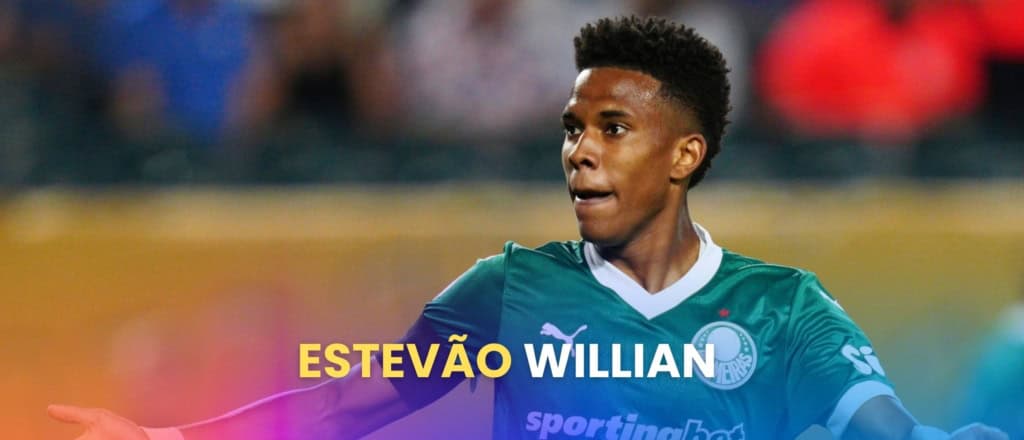
Estevão Willian and the Early Environment That Built a Natural Football Instinct
The story of Estevão Willian begins in a place where football is not structured, polished, or regulated by perfect conditions, but instead shaped by unpredictability and raw environment. In Franca, a city located roughly 400 kilometres from São Paulo in Brazil, his earliest relationship with football was formed on uneven dirt surfaces that demanded instinct rather than instruction. These conditions played a critical role in shaping the identity of Estevão Willian as a player who relies on control, balance, and rapid decision making under pressure.
From the very beginning, Estevão Willian displayed movements that stood out even in informal settings. His ability to shift weight, change direction instantly, and maintain close control of the ball created an impression that extended beyond his age group. These were not learned traits in a structured academy environment but natural responses developed through repetition and freedom of play. Coaches observing him during early sessions quickly realised that his understanding of space and movement was different from other children.
At just three years old, Estevão Willian attempted to enter a local football school, despite being below the minimum age requirement. The academy’s structure began at five years old, which initially made his participation impossible. However, persistence from his father, Ivo Gonçalves, changed the situation. His request for inclusion was eventually accepted by local coach Sergio Freitas, known as Serginho, who agreed to allow the child to train.
This decision marked the first formal step in the football journey of Estevão Willian. What followed was not just participation but immediate recognition of exceptional ability. Serginho later described his early experience of watching Estevão Willian as something unusual and immediately noticeable. The close control, coordination, and confidence on the ball were not typical for a child of that age, and this early impression set the foundation for everything that followed.
The environment itself also played a crucial role. Training sessions often took place on dirt pitches known locally as terrão. These surfaces are uneven, fast, and unpredictable, which forces players to constantly adjust their balance and technique. For Estevão Willian, this environment became a natural training ground that enhanced his ability to react quickly and maintain control in difficult situations.
Unlike structured academy pitches, the terrão does not allow for predictable ball movement. Every touch requires adaptation, and every decision must be made instantly. This environment helped shape Estevão Willian into a player who is comfortable in tight spaces and capable of maintaining composure even when conditions are unstable. Coaches later recognised that this early exposure to irregular surfaces contributed significantly to his later technical maturity.
Estevão Willian and the First Coaches Who Recognised Exceptional Talent
The early recognition of Estevão Willian did not come from large institutions or professional scouting systems but from local coaches who witnessed his development firsthand. One of the earliest figures to identify his potential was Sergio Freitas, who observed that his ability with the ball went beyond what is typically seen in early childhood football development.
According to those who worked with him, Estevão Willian demonstrated a natural ability to run with the ball while maintaining tight control, a skill that even older children struggle to master consistently. His movement patterns were fluid, and his decision-making appeared instinctive rather than taught. This combination of control and awareness made him stand out immediately within training groups.
As his reputation grew within local circles, it became increasingly difficult to manage his presence in standard age groups. Other parents and coaches began to notice the imbalance in ability, with some expressing frustration that he was outperforming children significantly older than him. This eventually led to adjustments in his training environment, where he was moved into older age categories to maintain competitive balance.
Estevão Willian was placed in under-nine and under-eleven groups despite being younger, and even in those environments he continued to stand out. This consistent performance across age groups reinforced the belief among coaches that his development trajectory was not ordinary. Instead of plateauing, he continued to adapt and excel, regardless of the level of challenge.
One of the defining elements of his early coaching experience was the decision to manage expectations carefully. Coaches often had to balance development with fairness, sometimes even removing him temporarily from sessions to avoid discouraging other children. This highlighted the extent of his dominance in early grassroots football environments.
Estevão Willian and the Role of Family Structure in Early Development
The development of Estevão Willian was heavily influenced by a structured and disciplined family environment that supported both his football progression and personal growth. His father, Ivo, played a central role in shaping his training habits and technical discipline. As a former goalkeeper, Ivo understood the importance of repetition, accuracy, and mental resilience in football development.
Training sessions at home were structured around repetition-based challenges designed to improve precision. One of the most notable routines involved targeting specific areas of the goal, where Estevão Willian was required to complete tasks within limited attempts. This created an environment where focus and persistence became essential parts of his learning process.
Rather than treating failure as a setback, these sessions encouraged repetition until success was achieved. This approach contributed significantly to the development of his perfectionist mindset. Coaches later observed that Estevão Willian displayed an unusual level of determination, often continuing drills long after others would have stopped.
Alongside football discipline, his upbringing was also influenced by strong religious and family values. His connection to his local church introduced another dimension to his development, including learning to play musical instruments such as drums. This activity was not separate from his football life but integrated into his daily routine, contributing to his rhythm, coordination, and emotional balance.
His mother also played a critical role in ensuring educational structure remained part of his development. She emphasised the importance of intellectual growth alongside sporting success, reinforcing the idea that understanding and awareness off the pitch directly influenced performance on it. This dual structure created a balanced environment that supported long-term development.
Together, this combination of structured discipline, emotional grounding, and freedom of expression created the foundation for Estevão Willian’s early football identity. It ensured that his development was not one-dimensional but shaped by multiple influences that contributed to both his technical ability and psychological resilience.
Estevão Willian and the Life-Changing Move to Cruzeiro at Age Eight
The next defining stage in the journey of Estevão Willian began when his talent moved beyond local recognition and entered the structured ecosystem of Brazilian elite youth football. A filmed training session, recorded by a businessman from Minas Gerais, became the catalyst for a major turning point. The footage was sent to Cruzeiro, one of Brazil’s most established football clubs, who immediately expressed interest in bringing him in for evaluation.
At just eight years old, Estevão Willian was no longer just a standout in informal football environments. He was now being considered for integration into a professional academy system where expectations, structure, and pressure were significantly higher. For many children, this transition would be overwhelming, but for Estevão Willian, it became an opportunity to accelerate development under more demanding conditions.
The decision to move was not a simple one. It required his family to make a complete life adjustment. His father, Ivo Gonçalves, made the decision to relocate the family to Belo Horizonte, driving long distances in a small truck to ensure that his son could join Cruzeiro’s system. This was not a short-term relocation but a full commitment to a long-term vision of football development.
This moment marked a significant emotional and financial turning point. The family left behind stability and familiarity to pursue uncertainty driven by belief in Estevão Willian’s potential. It was a decision rooted in conviction rather than comfort, and it would define the next phase of his development journey.
Life in this new environment was challenging. Because of his age, Estevão Willian was not financially compensated, and the family lived under tight financial conditions. Despite this, the focus remained entirely on football development. His father often described this period as difficult but necessary, as it represented a sacrifice made in pursuit of long-term opportunity rather than immediate security.
Even under these conditions, Estevão Willian continued to develop rapidly. His performances in youth training sessions and early competitive matches quickly distinguished him from his peers. Coaches at Cruzeiro began to recognise that his technical ability, movement, and decision-making were not only advanced but consistently effective under pressure.
The environment at Cruzeiro provided him with structured training, tactical education, and exposure to higher levels of competition. This transition from informal football to professional academy systems required adaptation, but Estevão Willian adjusted quickly. His ability to maintain performance across different contexts reinforced the belief that his talent was not situational but transferable.
As his reputation grew within the academy, he began to attract attention beyond his immediate age group. Coaches and staff recognised that his development trajectory required specialised attention, leading to adjustments in how he was integrated into training environments. Rather than being confined to a single developmental path, he was given opportunities to experience different formats of youth competition.
This period also marked the beginning of his exposure to national-level recognition. Performances in youth tournaments began to place Estevão Willian on the radar of broader scouting networks. He was no longer just a promising academy player but an emerging national prospect whose progress was being closely monitored.
Estevão Willian and the Rise Through Brazil’s Youth Football System
As Estevão Willian continued his development at Cruzeiro, his performances reached a level that demanded broader attention. His breakthrough came during a major youth tournament, where he emerged as one of the standout players in the competition. His ability to influence matches, create scoring opportunities, and maintain composure in high-pressure situations set him apart from other players in his age group.
One of the most significant outcomes of this period was Cruzeiro’s decision to adapt their youth development structure around his growth. Instead of placing him into a rigid system, the club created tailored developmental pathways designed to maximise his technical and tactical progression. This level of adaptation is typically reserved for players identified as exceptional long-term prospects.
During this phase, Estevão Willian also became one of the youngest Brazilian players to secure a commercial agreement with a global sports brand at just ten years old. While commercial recognition was not the primary focus of his development, it reflected the growing awareness of his potential within football and commercial ecosystems.
His performances continued to attract attention from multiple clubs within Brazil. As interest increased, he reached a critical decision point in his early career. After evaluating different developmental environments, Estevão Willian ultimately chose to move to Palmeiras, a club widely respected for its structured youth academy and emphasis on tactical versatility.
The decision to join Palmeiras was significant because it represented a shift from individual recognition to structured elite development. Palmeiras is known for its emphasis on tactical education, positional flexibility, and long-term player development rather than immediate exposure. For Estevão Willian, this environment offered the opportunity to refine his skills within a highly disciplined system.
At Palmeiras, his development accelerated further. Coaches focused on expanding his tactical understanding, requiring him to operate across multiple attacking roles. Rather than being confined to a single position, Estevão Willian was trained to function as a creative midfielder, wide attacker, and secondary forward. This positional flexibility became one of his defining strengths.
The club’s philosophy encouraged players to develop versatility by mastering multiple roles. In Estevão Willian’s case, this approach allowed him to expand his understanding of space, timing, and attacking structure. It also improved his adaptability in different match situations, making him a more complete attacking player.
His performances within Palmeiras’ academy system consistently demonstrated that his development was not stagnating but expanding. Each stage of progression introduced new tactical demands, and Estevão Willian responded with continued improvement. This adaptability became a key factor in his transition toward professional football.
Estevão Willian and His Professional Debut at Age Sixteen
The culmination of Estevão Willian’s youth development journey came when he made his professional debut for Palmeiras at the age of sixteen. This moment represented the transition from academy prospect to senior professional footballer, a milestone that confirmed his readiness for top-level competition.
His debut was symbolically significant, as it came against Cruzeiro, the club where his structured development had initially taken shape. This connection added emotional depth to his first professional appearance, marking a full-circle moment in his early career.
From the moment he entered professional football, Estevão Willian demonstrated that his technical ability and confidence translated effectively to higher levels of competition. His movement, ball control, and attacking awareness remained consistent, even under increased physical and tactical pressure.
This stage of his career marked the end of his developmental phase within Brazil’s youth systems and the beginning of his emergence as a professional footballer on the national stage. His transition was not abrupt but the result of years of structured progression, family sacrifice, and consistent performance across multiple levels of competition.
At this point, Estevão Willian was no longer viewed solely as a youth prospect but as a professional player with long-term potential to succeed at the highest levels of international football. His journey from Cruzeiro to Palmeiras solidified his reputation as one of Brazil’s most promising emerging talents.
Estevão Willian and the Decision That Led to Chelsea’s Long-Term Project
The rise of Estevão Willian from Brazilian prodigy to global football prospect reached a decisive turning point when European football entered the picture in a serious and structured way. After establishing himself at Palmeiras and progressing through one of Brazil’s most demanding youth systems, Estevão Willian began attracting attention from elite clubs across Europe. His performances had already confirmed that his ability was not limited to domestic competition, but capable of translating to higher levels of tactical and physical intensity.
Among the clubs monitoring his progress, Chelsea emerged with a clear and structured approach. Unlike traditional recruitment strategies focused on immediate impact, Chelsea presented a long-term development vision built around young players. This approach became a defining factor in Estevão Willian’s decision-making process, as it aligned with his need for gradual adaptation rather than rushed exposure to European football.
The decision was not made in isolation. It was shaped by conversations with experienced professionals who understood both the demands of European football and the challenges faced by young South American players transitioning to it. One of the most influential voices in this process was Thiago Silva, whose experience at Chelsea provided valuable insight into the club’s environment, expectations, and developmental structure.
Thiago Silva explained that the club offered a unique opportunity for young players to grow within a competitive but supportive framework. He highlighted that the experience of playing in England, particularly in London, could have a significant impact not only on a player’s career but also on their personal development. These insights played an important role in shaping Estevão Willian’s understanding of what his next step would involve.
For Estevão Willian, the decision was ultimately about development trajectory rather than immediate prestige. Chelsea’s willingness to invest in long-term potential rather than instant performance created a pathway that matched his stage of growth. In June 2024, the agreement was officially confirmed, securing his transfer to the Premier League club, while allowing him to remain in Brazil for an additional season to continue his development at Palmeiras.
This transitional arrangement was crucial. It ensured that Estevão Willian would not be rushed into European football before completing his final developmental phase in Brazil. Instead, he was given time to mature physically, tactically, and mentally before making the full transition to one of the most demanding leagues in world football.
Estevão Willian and Neymar’s Influence on Mental Strength and Confidence
During the period between his transfer agreement and his eventual move to Chelsea, Estevão Willian experienced both growth and adversity. One of the defining moments came early in 2025 when he missed a decisive penalty against Corinthians, one of Palmeiras’ biggest rivals. The moment carried emotional weight and exposed him to the psychological pressure that comes with high-level football expectation.
This setback had a significant emotional impact on him, as it came during a period where expectations around his development were increasing rapidly. However, it also became a defining moment in his mental growth as a professional athlete. Rather than isolating the experience as failure, Estevão Willian processed it as part of his learning curve within elite football.
Following the match, he received a message from Neymar, one of Brazil’s most influential modern footballers and a player he had admired throughout his childhood. Neymar encouraged him to maintain confidence, emphasising that missed penalties were a natural part of a football career and that resilience in response to setbacks was what ultimately defined a player’s success.
This message had a profound effect on Estevão Willian. It reinforced the idea that setbacks were not indicators of limitation but part of the developmental process of elite players. Neymar also expressed belief in his future potential, describing him as a future standout talent for Brazilian football. This external validation from a global superstar strengthened his psychological resilience and helped him refocus on long-term progression.
Football analysts and coaches who had worked with Estevão Willian also noted similarities between his development trajectory and other Brazilian talents who had transitioned successfully to global stardom. His playing style, characterised by fluid movement, creativity, and confidence in one-on-one situations, drew comparisons to players who had emerged as generational talents in previous decades.
This combination of external belief and internal resilience contributed to his ability to recover quickly from setbacks and maintain performance consistency. It also reinforced his reputation as a player capable of handling both expectation and adversity at a young age.
Estevão Willian and Early Signs of European-Level Impact
Even before officially joining Chelsea, Estevão Willian began demonstrating traits that suggested successful adaptation to European football. His performances in Brazil continued to evolve, showing increased tactical awareness, improved decision-making, and a growing ability to influence matches in high-pressure environments.
Football coaches and analysts observing his development noted that his style was not dependent solely on technical flair but also included strategic intelligence. His ability to identify space, time attacking runs, and adjust to defensive structures made him effective in both open and tightly controlled match situations.
The transition period between Brazil and Europe is often one of the most challenging phases for young South American players. However, Estevão Willian’s structured development at Palmeiras, combined with his early exposure to competitive environments at Cruzeiro, provided him with a strong foundation for adaptation. His experience across multiple tactical systems in Brazil prepared him for the complexity of European football.
His move to Chelsea represented not just a transfer but a transition into a new phase of career development. The Premier League environment is widely regarded as one of the most physically demanding and tactically advanced competitions in world football. For Estevão Willian, this meant adjusting not only to increased intensity but also to a different footballing culture.
Despite these challenges, early indications suggested that his technical ability and football intelligence would allow him to integrate effectively over time. Coaches and analysts highlighted his composure in high-pressure situations and his ability to maintain performance consistency even in competitive environments against elite opposition.
His emergence as a Chelsea player marked the beginning of a new global chapter in his career. While still in the early stages of his European journey, Estevão Willian had already demonstrated that his development trajectory was aligned with elite-level expectations.
At this stage, he was no longer viewed only as a promising Brazilian talent but as a global football prospect with the potential to become a defining player of his generation.




Responses