

ICC Approves Pink Ball Option for Bad Light in Test Cricket

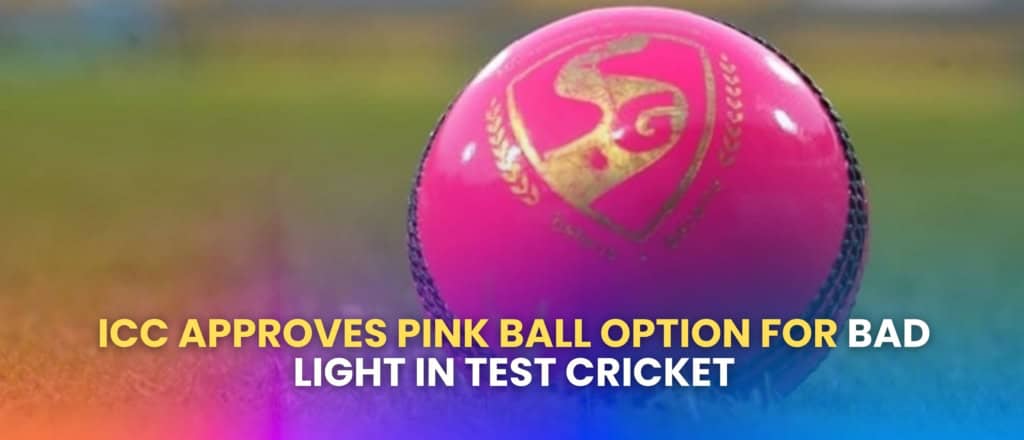
The International Cricket Council has approved a major change to Test cricket playing conditions, introducing an option for teams to use the pink ball in matches where poor light is expected to impact play. The decision, taken during the ICC board meeting in Ahmedabad ahead of the IPL 2026 final, has quickly become one of the most debated developments in the sport.
Supporters believe the move could help preserve valuable playing time, while critics argue it risks changing the traditional balance of Test cricket. Either way, the decision signals the ICC’s willingness to modernize the game’s oldest format without fundamentally altering its core structure.
ICC Targets One of Test Cricket’s Biggest Frustrations
Bad-light interruptions have long been among the most frustrating aspects of Test cricket. Fans often see overs lost despite conditions appearing suitable for play, while players are forced off the field because visibility no longer meets safety requirements.
The problem is particularly common in countries such as England and New Zealand, where overcast weather can arrive suddenly and significantly reduce visibility. Under current regulations, the red ball can become difficult to track against dark skies, leaving umpires with little choice but to suspend play.
The ICC‘s latest move aims to address that issue directly by providing teams with a practical alternative before matches even begin.
How the New Pink Ball Rule Works
Under the revised playing conditions, both teams will have the option to agree before the start of a Test match that a pink ball can be used if poor light is expected to become a factor.
The agreement must be reached before the toss, ensuring both sides understand the conditions under which the match will be played. The rule will initially operate on a trial basis, allowing cricket authorities to evaluate its effectiveness before considering wider implementation.
The reasoning behind the change is straightforward. Pink balls are generally easier to see in fading daylight and under floodlights, reducing the likelihood of lengthy interruptions caused by poor visibility.
If successful, the rule could help preserve overs that would otherwise be lost and improve the overall flow of Test matches.
Why the Pink Ball Makes Sense
The pink ball has already proven its value through day-night Test matches played around the world. It was specifically developed to improve visibility during evening sessions while maintaining many of the characteristics associated with traditional Test cricket.
Cricket administrators believe the same principle can help solve bad-light stoppages during conventional Tests. Rather than watching players leave the field for extended periods, spectators could continue enjoying uninterrupted cricket under conditions that remain safe for everyone involved.
In an era where every session matters and packed schedules leave little room for lost playing time, maximizing available overs has become increasingly important.
Players Remain Divided on the Decision
While many supporters have welcomed the rule, not everyone is convinced.
Rassie van der Dussen was among the first high-profile players to publicly criticize the decision. The South African batter argued that the pink ball behaves differently from the traditional red ball and creates a significantly different challenge for batters.
According to his concerns, introducing a pink ball could alter the balance between bat and ball, particularly because many players believe the pink ball tends to move more through the air and off the pitch.
His comments reflect a broader debate within cricket circles. Some players view the change as a practical solution to an old problem, while others worry it may create new issues by changing the nature of the contest.
The success of the trial period will likely determine whether those concerns prove justified.
ICC Introduces Additional Playing Condition Changes
The Ahmedabad meeting was not focused solely on Test cricket. The ICC also approved another notable adjustment affecting limited-overs internationals.
Under the new regulations, head coaches and designated support staff will now be permitted to enter the field during drinks breaks in One-Day Internationals and T20 Internationals. The change brings international cricket closer to practices already common in franchise competitions around the world.
Coaches have regularly communicated directly with players during strategic timeouts in major T20 leagues, and the ICC believes the move will improve tactical flexibility during international matches as well.
The decision reflects the growing influence of franchise cricket on the global game and the increasing emphasis on in-match strategy.
What This Means for the Future of Test Cricket
The pink-ball option represents another example of cricket’s ongoing effort to adapt without losing its traditional identity. Test cricket remains the sport’s most historic format, but administrators are increasingly looking for ways to improve the viewing experience and reduce avoidable interruptions.
Whether the new rule becomes a permanent feature will depend largely on feedback from players, officials, broadcasters, and supporters during the trial period.
If it succeeds in reducing delays without significantly altering playing conditions, it could become one of the most impactful Test cricket rule changes in recent years.
When the Rule Takes Effect
Cricket fans should not expect to see the new regulation immediately. The updated playing conditions are scheduled to come into effect from October 1, 2026, giving national boards and players several months to prepare.
That means England’s upcoming Test series against New Zealand will still be played under existing regulations. However, once the new rules arrive later this year, the debate surrounding the pink ball’s role in Test cricket is likely to intensify.
For now, the ICC has made its move. The cricket world will soon discover whether it proves to be a game-changing innovation or a controversial experiment.
Written by 8JJsports.com | June 03,2026
Stay updated with 8JJ for Real-Time Sports Scores & Sports Related Updates






Responses