

Gautam Gambhir: 5 Major Reasons He Supports ICC’s Bold Test Rule


Gautam Gambhir has strongly backed the ICC’s latest Test cricket innovation, calling it a proactive step that could help teams achieve results in matches affected by poor light and challenging weather conditions. The India head coach believes the newly approved regulation has the potential to reduce lost playing time and ensure crucial Test matches reach a meaningful conclusion.
The ICC new rule, which allows the use of a pink ball during traditional red-ball Test matches under specific circumstances, has generated significant discussion throughout the cricketing world. While some players and analysts have raised concerns about adapting to different ball conditions within the same match, Gautam Gambhir sees the change as a positive development for the future of Test Cricket.
Gautam Gambhir Welcomes ICC New Rule for Test Cricket
Gautam Gambhir made his position clear when discussing the ICC new rule ahead of India’s one-off Test assignment. He emphasized that any measure capable of increasing the chances of producing a result should be viewed positively.
According to Gambhir, cricket’s longest format benefits when matches are decided through play rather than being heavily influenced by weather interruptions or bad light. His support reflects a broader desire to preserve the competitive integrity of Test Cricket while adapting to practical challenges.
The ICC new rule is scheduled to take effect from October and will be introduced on a trial basis, subject to agreement between both participating teams.
How the Pink Ball Test Rule Will Work
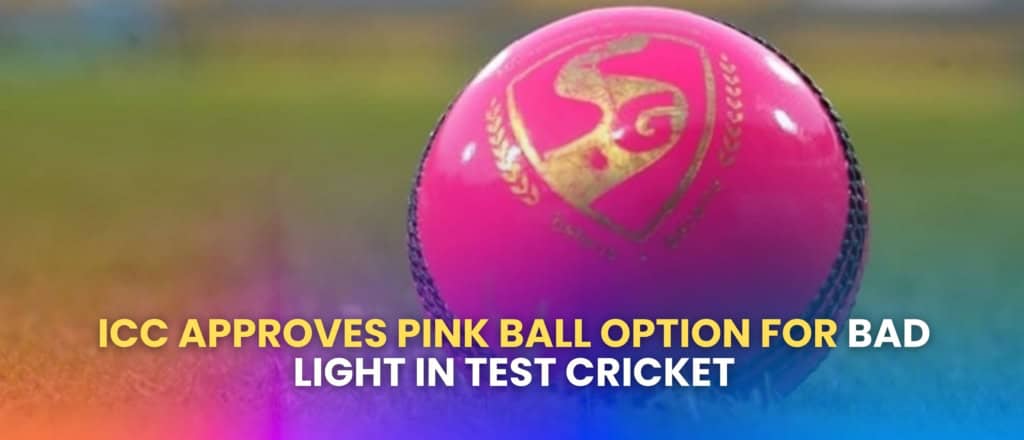
Under the new regulations, matches will begin with the traditional red ball. However, if deteriorating light conditions threaten playing time, officials may permit a switch to a Pink Ball Test format under floodlights.
The objective is simple: maximize available playing time and prevent overs from being lost unnecessarily. In many regions, fading daylight frequently causes interruptions despite the availability of modern lighting systems.
The Pink Ball Test approach seeks to address this issue by improving visibility for players, officials, and spectators while maintaining the continuity of the contest.
Why Gautam Gambhir Believes the Change Is Necessary
One of the main reasons Gautam Gambhir supports the ICC new rule is its potential impact on high-stakes matches. Modern Test Cricket schedules often feature crucial series that determine qualification for major competitions.
Gambhir pointed to scenarios where teams spend years building toward qualification objectives, only to see important matches affected by circumstances beyond their control. In such situations, lost playing time could influence tournament standings and final outcomes.
By introducing the Pink Ball Test option, cricket authorities hope to minimize the role of weather-related interruptions and ensure that performances on the field remain the deciding factor.
World Test Championship Qualification Could Be Impacted
The World Test Championship has significantly increased the importance of every Test match. Teams now compete not only for bilateral series victories but also for valuable championship points.
Gautam Gambhir highlighted how a weather-affected match near the conclusion of a World Test Championship cycle could potentially influence qualification scenarios. In such cases, every session of cricket becomes extremely valuable.
The ICC new rule provides administrators with an additional tool to preserve playing time and reduce the possibility of important matches being compromised by poor light conditions.
Challenges Players May Face During a Pink Ball Test
Although Gautam Gambhir supports the concept, he also acknowledged that players may encounter adjustment challenges. Switching from a red ball to a Pink Ball Test environment within the same match introduces new variables for batters, bowlers, and fielders.
Different balls behave differently in varying conditions. Factors such as visibility, swing movement, seam presentation, and ball durability can influence performance. Adapting quickly could become a critical skill if the ICC new rule is implemented regularly.
Nevertheless, Gambhir believes the potential benefits outweigh the challenges, particularly when significant results are at stake.
Why Test Cricket Continues to Evolve
Test Cricket has consistently evolved throughout its history. Innovations such as the Decision Review System, day-night matches, improved broadcasting technology, and revised playing conditions have all been introduced to enhance the game.
The ICC new rule represents another example of administrators attempting to balance tradition with practicality. Rather than fundamentally changing the format, the adjustment focuses on preserving play during difficult conditions.
Supporters argue that maintaining the maximum amount of on-field action ultimately benefits players, teams, and fans alike.
The Importance of Maximizing Playing Time
One of the strongest arguments in favor of the Pink Ball Test concept is the desire to maximize available cricket. Test matches are designed to provide opportunities for strategic battles across five days, but weather disruptions can sometimes reduce those opportunities significantly.
Gautam Gambhir believes every reasonable effort should be made to ensure matches are completed as fairly as possible. Extending playable conditions through the use of a pink ball could help achieve that objective.
In an era where schedules are increasingly crowded, preserving valuable playing hours has become an important consideration for administrators and teams.
Reaction Across the Cricketing World
The announcement of the ICC new rule has generated mixed reactions among players, coaches, and commentators. Some view the change as a logical solution to a long-standing issue, while others remain cautious about introducing different ball conditions within a single match.
Gautam Gambhir belongs firmly to the group supporting experimentation. He believes cricket should remain open to innovations that improve fairness and increase the likelihood of producing results.
His endorsement carries significant influence given his experience as both a former international player and current national team coach.
What This Means for the Future of Test Cricket
The success of the Pink Ball Test trial could shape future discussions about playing conditions and match management. If the ICC new rule proves effective, it may become a permanent feature of international cricket.
For now, administrators will closely monitor how teams adapt and whether the regulation successfully reduces weather-related interruptions. Feedback from players and officials will likely play a major role in determining its long-term future.
Gautam Gambhir’s support highlights the growing belief that innovation and tradition can coexist within Test Cricket. By embracing practical solutions while preserving the format’s core values, the sport continues to evolve without losing its unique identity.
As cricket enters a new era of experimentation, the ICC new rule could become one of the most significant developments in recent Test Cricket history, particularly if it helps ensure that crucial matches are decided by skill and performance rather than uncontrollable external conditions.
Written by 8JJsports.com | June 06,2026
Stay updated with 8JJ for Real-Time Sports Scores & Sports Related Updates





Responses