
How Ruben Amorim’s Manchester United Reign Went From Hope to Heartbreak

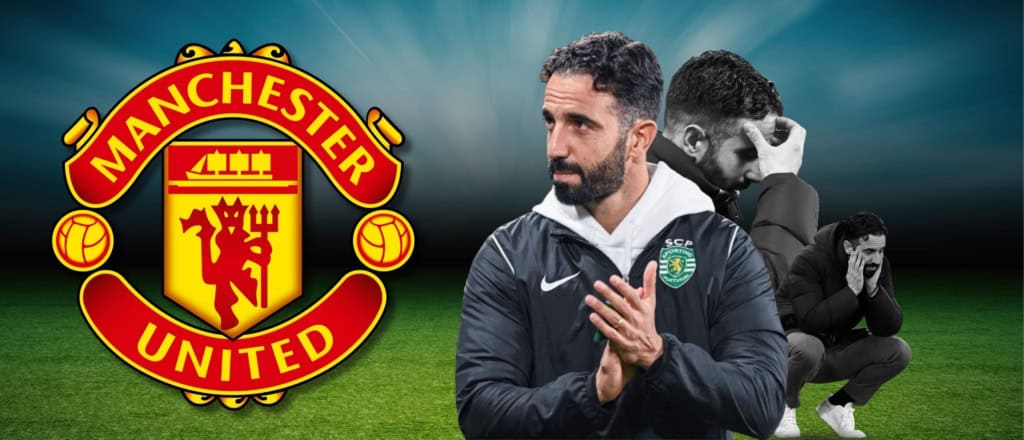
Ruben Amorim’s Manchester United Stint Ends After 14 Months
Ruben Amorim arrived at Manchester United in 2024 as one of Europe’s most promising young coaches, following a successful spell at Sporting Lisbon, where he won two Portuguese league titles. However, after just 14 months at Old Trafford, Amorim was sacked, becoming the latest in a long line of managers struggling to restore the club’s former glory. In his 63 games in charge, Amorim recorded only 25 wins, leaving United searching for their seventh permanent manager since Alex Ferguson’s retirement in 2013.
Rigid Tactical Approach
Amorim’s commitment to his preferred 3-4-3 formation, which brought him success in Portugal, proved problematic at Manchester United. Despite evidence that his squad lacked the ideal personnel for the system, he remained reluctant to adapt. Even in his final weeks, while occasionally switching to a back four due to injuries and players away at the Africa Cup of Nations, he reverted to a back three for his last two matches, both 1-1 draws against Wolves and Leeds. United ended up sixth in the Premier League, three points behind fourth-placed Liverpool.
Transfer Window Tensions
Disagreements reportedly surfaced between Amorim and club officials regarding player recruitment. In his final press conference at Elland Road, Amorim emphasized that he was appointed as the club’s “manager” rather than just a coach, hinting at clashes with director of football Jason Wilcox over transfer targets. Despite missing European football, United invested over £200 million in the summer window, adding players like Bryan Mbeumo, Matheus Cunha, and Benjamin Sesko to strengthen their attack.
Historic League Struggles
Under Amorim, United endured their lowest league finish in 50 years. When he arrived, United were just four points off a top-four spot, yet they concluded the season in 15th place, the lowest since relegation in 1974. Prioritizing a Europa League title, which could have secured Champions League qualification, Amorim fell short, losing 1-0 to Tottenham in the final. This loss meant United faced a second consecutive season without European football, a rare occurrence in the club’s history.
Cup Failures and Home Woes
Despite heavy investment in forwards, United suffered a humiliating League Cup exit to fourth-tier Grimsby early in the season. While there were victories over Chelsea and Liverpool, the team failed to win four of Amorim’s last five home games. Concerns over another failure to reach the Champions League further undermined his position.
Neglect of Academy Talent
Criticism also mounted over Amorim’s handling of academy players. United has a proud tradition of including at least one homegrown player in every matchday squad since 1937, yet stars like Kobbie Mainoo saw limited opportunities. Mainoo, after impressing for England at Euro 2024, had not started a Premier League game all season. Amorim defended his decisions, citing a “feeling of entitlement” among some youth players.
Conclusion: Lessons from Amorim’s Tenure
Ruben Amorim’s time at Manchester United serves as a cautionary tale about the challenges of implementing rigid tactical philosophies at a club with high expectations and limited patience. While he brought a successful record from Sporting Lisbon, United’s squad and environment demanded flexibility, adaptability, and stronger integration of youth talent—areas where Amorim ultimately fell short. His adherence to the 3-4-3 system, despite mismatches with player strengths, limited the team’s attacking fluidity and defensive stability.
Furthermore, his inability to fully leverage academy prospects alienated young talents who could have injected energy and innovation. His tenure underscores the delicate balance between managerial ambition and club realities, highlighting that success in one league or context does not automatically translate to another. United fans are left hoping the next manager can finally restore the club to its former glory, blending tactical intelligence, player management, and adaptability to revive both performance and morale.

Responses