

Sanjay Manjrekar Doubles Down on ODI vs Test Cricket Debate: Virat Kohli Critique Sparks Controversy

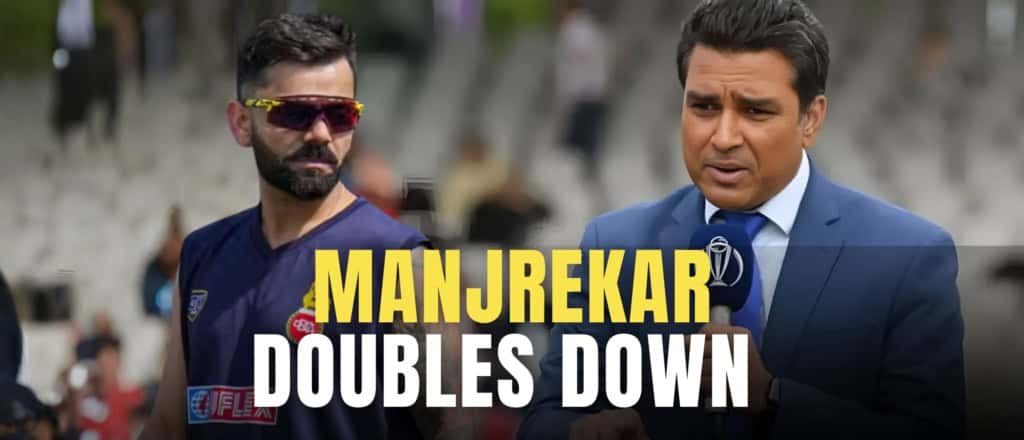
Sanjay Manjrekar Reignites Debate on ODI Cricket vs Test Cricket
Former Indian cricket star and commentator Sanjay Manjrekar has sparked fresh debate regarding Virat Kohli’s approach to international cricket. Manjrekar, who previously criticized Kohli for focusing on the “easiest format,” namely One Day Internationals (ODIs), has doubled down on his comments. According to him, Kohli’s decision to concentrate on ODIs reflects a broader trend where top-order batters find the format less challenging compared to the rigors of Test cricket.
Manjrekar’s Perspective on ODI Cricket
Manjrekar argued that ODIs offer top-order batters certain advantages that are absent in Test cricket. He noted that openers or number three batters in ODIs encounter fewer attacking field placements initially, often avoiding positions like slips and gully that are common in Test cricket. This allows players to score runs more freely during the first 10 to 15 overs of a 50-over game.
He said, “Come one-day cricket, the first advantage you get when opening or batting at number three is that there are no four slips and a gully. When the bowler runs in, he is not coming to get you out; he’s trying to make sure you don’t score 10-15 runs an over.” This, according to Manjrekar, makes ODIs less mentally and technically demanding for top-order batters than Test cricket.
The Test Cricket Challenge
Manjrekar emphasized the challenges that Test cricket poses for top-order batters. In the longer format, batters must endure sustained periods of concentration, adapt to changing pitch conditions, and face aggressive bowling strategies aimed at exploiting weaknesses. The mental and physical endurance required in Tests, coupled with constantly adjusting to the game’s evolving scenarios, makes it significantly more demanding than the one-day format.
According to Manjrekar, many talented ODI batters are often reluctant to bat in the top three during Test matches. Historically, players who excelled in 50-over cricket frequently played middle-order roles in Tests, where the ball was older, and fielding restrictions were less lenient, making scoring more difficult. Manjrekar explained that this gap between formats demonstrates why ODIs are comparatively easier for top-order batters.
Praise for Lower-Order Performers
While Manjrekar criticized the ease of top-order ODI batting, he lauded lower-order players who make a significant impact in the format. He specifically praised Indian cricket legends like MS Dhoni, Yuvraj Singh, and Suresh Raina for performing under pressure while batting in middle and lower-order positions.
“The tough place to bat in one-day cricket is where Yuvraj Singh, Suresh Raina, or MS Dhoni would bat—numbers four, five, six. Those were the challenging positions,” he said. Manjrekar acknowledged that batting lower down requires strategic shot selection, strike rotation, and finishing ability, which distinguishes elite performers from others in the ODI format.
Virat Kohli and Modern ODI Cricket
The discussion around Kohli’s preference for ODIs also touches on broader debates in Indian cricket about player workload, format specialization, and career longevity. Kohli, widely regarded as one of the greatest modern-day batters, has previously balanced commitments across formats but recently prioritized limited-overs cricket, especially ODIs, over Tests.
Manjrekar suggested that top-order batters in ODIs benefit from fielding restrictions and predictable scoring patterns, which reduce the technical and mental burden compared to Test matches. This has led to criticism from purists who view Test cricket as the ultimate measure of batting skill.
Historical Context in Indian Cricket
Indian cricket history shows a consistent trend of players adjusting between formats. Several players excelled in ODIs while facing challenges in Tests, and vice versa. Manjrekar highlighted examples of players who opted to bat lower in Tests but thrived in the middle order of ODIs. This history demonstrates how different strategies, mental resilience, and skill sets are required depending on the format. His analysis stresses that format specialization has become increasingly common in modern cricket, driven by fitness, workload, and career management considerations.
Controversy and Public Reaction
Manjrekar’s remarks have reignited debates among cricket fans and analysts. Critics argue that calling ODIs the “easiest format” undermines the skill and dedication of modern batters who consistently perform under pressure. Supporters, however, point out that Manjrekar’s comments reflect realistic challenges in balancing batting across three international formats—Tests, ODIs, and T20Is.
Key Takeaways
- Manjrekar emphasizes that top-order batters face fewer challenges in ODIs than in Test cricket.
- Lower-order batters like Dhoni, Yuvraj Singh, and Raina face more difficulty, highlighting the skill involved in middle-order roles.
- Kohli’s specialization in ODIs reflects a modern approach to workload management and format-specific skill focus.
- The debate underlines ongoing discussions in Indian cricket regarding format prioritization and the evolving role of professional cricketers.
Conclusion
Sanjay Manjrekar’s recent comments on Virat Kohli and ODI cricket have sparked significant debate among cricket analysts, fans, and players. By highlighting the relative ease of top-order batting in ODIs and praising lower-order performers, he has reignited conversations about skill, format specialization, and cricketing strategy. The discussion also underscores the changing dynamics of international cricket, where players must navigate the physical and mental demands of multiple formats while maintaining consistency and excellence. While some may dispute his characterization of ODIs as “easier,” Manjrekar’s insights provide a perspective that encourages deeper reflection on how cricketing roles and strategies differ across formats.




Responses