

Visa Denials Shake USA Cricket: Ali Khan and Pakistani-Origin Players Miss T20 World Cup


USA Cricket Faces Visa Crisis: Ali Khan and Others Denied Entry for T20 World Cup
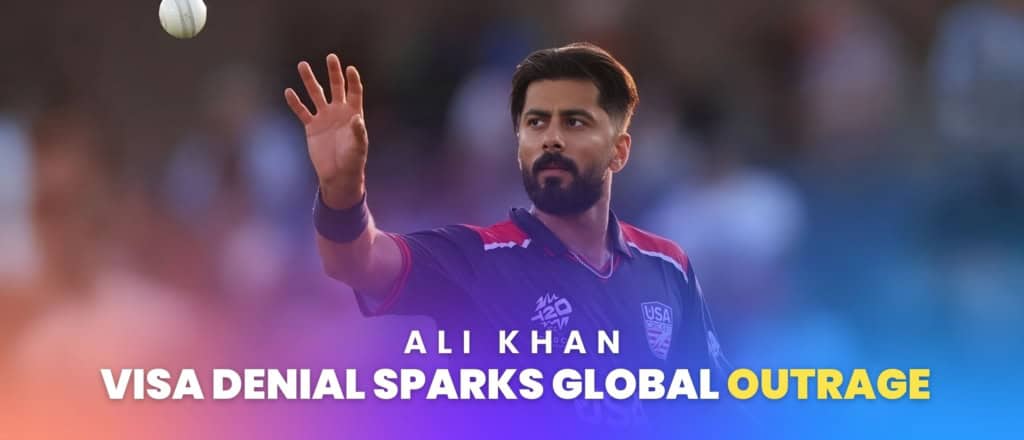
Ali Khan, the Pakistani-born fast bowler representing the United States, has confirmed that his visa to travel to India for the 2026 T20 World Cup has been denied. This denial, along with similar issues for three other Pakistani-origin US cricketers, threatens to impact the USA team’s participation in the tournament and raises broader questions about eligibility and administrative policies in international cricket.
Pakistani-Origin Players Denied Indian Visas
In total, four players of Pakistani origin were picked in the 20-man USA squad for the T20 World Cup, but all were reportedly denied visas to enter India. In addition to Ali Khan, the affected players include Shayan Jahangir, Mohammad Mohsin, and Ehsan Adil. All four athletes were born in Pakistan but have since acquired US citizenship, enabling them to play for the United States in international competitions.
Ali Khan shared the news on Instagram, posting a picture with the caption: “India visa denied but KFC for the win,” highlighting both his disappointment and his ability to maintain humor in adversity. He later confirmed the news in a video message, acknowledging the broader impact on the US team.
Visa Rules and Administrative Complications
The visa issue stems from India’s immigration regulations requiring individuals born in Pakistan to apply for travel permits using their country-of-origin passports. This rule has complicated matters for several cricketing nations where players of Pakistani origin are active, including the USA, UAE, Oman, Nepal, Canada, England, Zimbabwe, and the Netherlands.
Historically, Pakistani-origin cricketers have faced similar challenges. In 2019, the Zulfiqar brothers, Sikander and Saqib, were denied Indian visas, and in 2023, Shiraz Ahmed experienced delays ahead of the World Cup. Even international players like Australia’s Usman Khawaja (2017) and England spinners Rehan Ahmed and Shoaib Basheer (2024) faced visa complications at critical tournaments.
Player Backgrounds and Achievements
Ali Khan, born in Attock, Punjab, has been a vital asset for the USA team, showcasing speed and consistency with the ball. Similarly, Mohammad Mohsin hails from Mingora, Shayan Jahangir from Karachi, and Ehsan Adil from Sheikhupura, where he previously represented Pakistan in three Tests and six ODIs between 2013 and 2015. Adil migrated to the USA four years ago and has since been representing the Kingsmen USA franchise.
The denial of visas now prevents these players from contributing to their adopted nation’s T20 World Cup campaign, potentially impacting team performance and strategy.
Impact on Team USA’s T20 World Cup Campaign
The absence of four key players puts significant pressure on the USA squad ahead of a major ICC tournament. The team must now quickly re-strategize to accommodate replacements and adjust bowling and batting combinations. For a side still developing its international reputation, the loss of these experienced players could be a critical setback.
Analysts have noted that the situation may hinder the USA’s ability to compete effectively against established cricketing nations, as the excluded players bring a mix of domestic experience and international exposure that is difficult to replace at short notice.
Broader Implications for International Cricket
Beyond the immediate effect on USA cricket, this visa issue highlights ongoing administrative challenges in international cricket, particularly for players with dual or naturalized citizenship. Countries with growing cricket programs increasingly rely on diaspora talent to strengthen their squads, and bureaucratic hurdles like visa denials can impede the development and competitiveness of these teams.
Cricket governing bodies and tournament organizers may need to explore policy adjustments or more flexible visa arrangements to ensure that eligibility rules do not prevent players from representing their adopted nations.
Historical Context of Visa Issues – Ali Khan
This is not the first time international cricket has faced complications due to players’ country-of-origin restrictions. Players with dual nationality or those who have migrated frequently encounter hurdles in participating in major ICC tournaments. For instance, England and Australia have previously faced similar situations with spinners and batters of Pakistani origin, leading to administrative delays and uncertainty in squad selection.
These recurring issues underline the need for improved communication between cricket boards and host countries to ensure that players are not unfairly excluded from global competitions.
Players’ Perspective and Emotional Impact
For Ali Khan and his fellow teammates, being denied participation in a major world event is disappointing and emotionally taxing. These players dedicate years of training and sacrifice to reach the international stage, and administrative hurdles like visa denials can be demoralizing.
Despite these challenges, Ali Khan’s lighthearted social media post demonstrates resilience and a focus on maintaining morale. However, the broader emotional impact on team cohesion and preparation cannot be underestimated.
Steps Forward for USA Cricket
The USA cricket board now faces the urgent task of adjusting its squad and preparing replacement players for the T20 World Cup. This may involve promoting emerging talent or seeking last-minute eligibility solutions to minimize the impact of the visa denials.
In addition, the board may need to engage with the ICC and relevant authorities to advocate for clearer guidelines that prevent such situations from affecting future tournaments.
Conclusion: Visa Denials as a Wake-Up Call
The denial of visas to Ali Khan and three other Pakistani-origin US players serves as a stark reminder of the complexities faced by cricket teams with diverse rosters. While it directly impacts the USA team’s immediate prospects in the T20 World Cup, it also raises important questions about fairness, administrative coordination, and the treatment of naturalized athletes in global cricket.
As the tournament approaches, the spotlight remains on USA cricket to navigate this challenge while ensuring that players, both affected and upcoming, are supported effectively. This incident may also prompt international cricket authorities to revisit policies to safeguard the participation of all eligible players in future competitions.
Ultimately, while Ali Khan and his teammates may miss this T20 World Cup, their situation could spark necessary reforms to ensure that talent, dedication, and national representation are never hindered by bureaucratic constraints.



Responses