

Bangladesh Cricket Board Reschedules BPL 2026 Amid Player Boycott: 5 Key Updates


Bangladesh Cricket Board Reschedules BPL 2026
The Bangladesh Cricket Board (BCB) was compelled to issue a revised schedule following an emergency meeting that also resulted in the removal of senior board official M Nazmul Islam. The incident has brought attention to player rights, board accountability, and the importance of maintaining harmony in domestic cricket leagues. The Bangladesh Premier League (BPL) 2026 faced a major disruption after a player-led boycott forced the cancellation of multiple matches.
Player Boycott Sparks Crisis
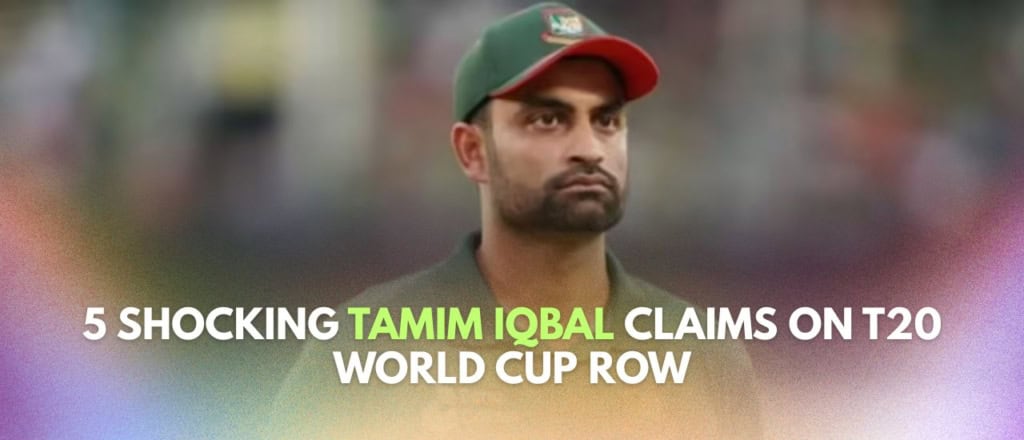
The boycott was triggered by controversial remarks from M Nazmul Islam, Finance Committee Chairman of the Bangladesh Cricket Board, who referred to former national captain Tamim Iqbal as an “Indian agent.” Senior players, including Najmul Hossain Shanto and Mehidy Hasan Miraz, under the guidance of the Cricketers Welfare Association of Bangladesh (CWAB), refused to take the field, leading to the cancellation of scheduled matches at the Sher-e-Bangla National Stadium.
Revised BPL 2026 Schedule Announced
In response to the boycott, the Bangladesh Cricket Board released a revised fixture list: matches originally scheduled for 15 January 2026 were moved to 16 January, while the games planned for 16 and 17 January were shifted to 17 and 18 January respectively. The Eliminator and Qualifier 1, initially set for 19 January, were postponed to 20 January. This adjustment ensures that the tournament can continue smoothly despite the disruption.
Removal of Senior Board Official
The crisis led to an emergency decision to relieve M Nazmul Islam of his responsibilities as Finance Committee Chairman. The Bangladesh Cricket Board stated that the move was aimed at maintaining the integrity of its operations and protecting player interests. Interim arrangements have been put in place to ensure that board functions continue without interruption.
CWAB’s Role and Player Advocacy
The Cricketers Welfare Association of Bangladesh played a crucial role in voicing player concerns. Their call for a boycott was a clear statement against unprofessional conduct within the Bangladesh Cricket Board. Players demanded a public apology from Nazmul Islam in addition to his resignation, reflecting a growing emphasis on transparency, respect, and accountability in cricket administration.
Impact on Domestic Cricket
The boycott affected not only the BPL but also other domestic competitions, including matches in the Dhaka Cricket League. Teams from Chittagong Royals and Noakhali Express failed to appear for scheduled fixtures, highlighting the significant influence that player advocacy can have on domestic cricket operations in Bangladesh.
National Response and Public Reaction
Public opinion and government representatives expressed strong support for the players’ stand. Asif Nazrul, Youth and Sports Adviser of Bangladesh, criticized the insulting remarks and called for unity in the cricketing community. The incident has sparked debates on professional conduct, board accountability, and the role of players in shaping domestic cricket policies.
Ensuring Smooth Tournament Continuity
Despite the disruption, the Bangladesh Cricket Board emphasized its commitment to completing BPL 2026 successfully. The revised schedule aims to minimize further interruptions while sending a message that player welfare remains a priority. Organizers have assured that all logistical arrangements, including venue readiness and team coordination, will be monitored closely.
Lessons for Cricket Governance
The BPL 2026 controversy underlines the importance of professional conduct, transparent communication, and player engagement in cricket administration. Analysts suggest that boards must prioritize respectful dialogue with players to prevent escalations. The Bangladesh Cricket Board’s quick action to revise the schedule and remove the official sets a precedent for handling similar crises in domestic leagues.
Looking Ahead: Player-Board Relations
Moving forward, the focus will be on rebuilding trust between the Bangladesh Cricket Board and its players. Establishing clear communication channels, ensuring accountability, and maintaining professional decorum are expected to be central to future interactions. Players’ advocacy groups like CWAB may play an increasingly influential role in shaping policy decisions, particularly in domestic T20 leagues like the BPL.
Conclusion: A Turning Point for BPL 2026
The rescheduling of BPL 2026 highlights both the power of player advocacy and the necessity for cricket boards to maintain professional standards. While the tournament is set to resume, the events of January 2026 serve as a reminder that respecting players, transparent governance, and swift decision-making are critical for the credibility and success of domestic cricket leagues. The Bangladesh Cricket Board now faces the dual challenge of completing the tournament smoothly and reinforcing trust with its players and fans.
In conclusion, the BPL 2026 crisis may ultimately strengthen the framework of domestic cricket in Bangladesh, encouraging better governance, fair treatment of players, and a renewed focus on professionalism. The revised schedule, removal of a senior official, and ongoing player advocacy collectively indicate a turning point that could shape the future of Bangladesh cricket.


Responses