

T20 World Cup 2026: Bangladesh Replaced by Scotland

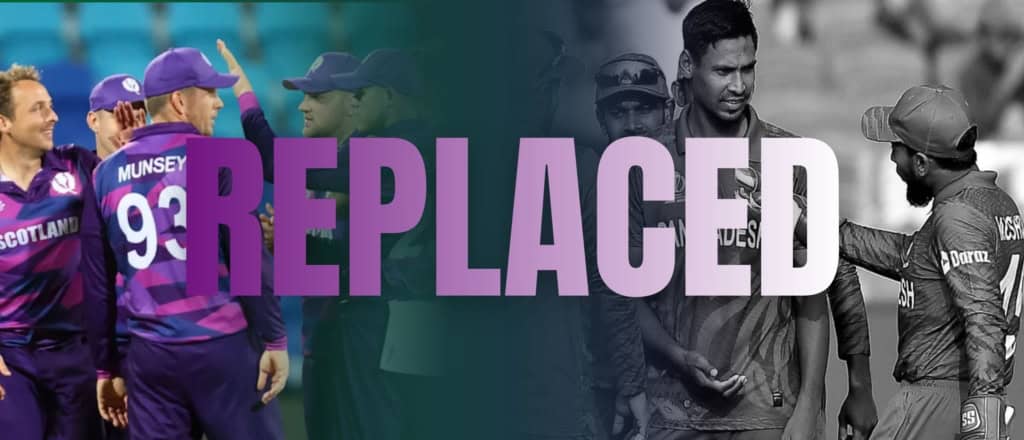
T20 World Cup 2026 saw a major late change as Bangladesh cricket team was officially replaced by Scotland in the upcoming tournament. The International Cricket Council (ICC T20 World Cup) confirmed the decision after Bangladesh refused to travel to India due to security concerns. This unprecedented move has generated wide discussion among fans, analysts, and cricket boards worldwide, highlighting the importance of player safety in international cricket events.
Bangladesh Replaced in T20 World Cup 2026
The ICC confirmed that Scotland will take Bangladesh’s place in the T20 World Cup 2026, jointly hosted by India and Sri Lanka. Bangladesh T20 World Cup officials had raised concerns about traveling to India, citing potential safety risks despite an independent security assessment clearing the country. The ICC board emphasized that their decision was final and that the tournament could not be altered for one nation.
BCB Accepts ICC Decision
Bangladesh Cricket Board (BCB) publicly accepted the ICC’s ruling. Amjad Hossain, chairman of the BCB media committee, stated, “We have tried our best. We fully respect the ICC Board, and the Board’s majority decision was that the match cannot be relocated.” He acknowledged that the BCB explored all possible avenues but understood that the ICC would not move or reschedule matches.
Government Advice Influences Bangladesh’s Stance
BCB’s stance was heavily influenced by government advisories regarding player safety. Hossain said, “The government has said that going to India to play in the World Cup would not be safe for us, for our players, journalists, or anyone accompanying the team.” This concern became a key factor in the ICC’s decision to replace Bangladesh, emphasizing the priority of player welfare in international cricket tournaments.
Failed Requests to Relocate Matches
Bangladesh had proposed alternative options to the ICC. These included shifting their matches to Sri Lanka or moving the national team from Group C to Group B. However, the ICC rejected both requests, citing tournament logistics and pre-established regulations. “Since the ICC did not respond, there is not much we can do because this is the government’s decision,” Hossain added. These negotiations highlight the challenges cricket boards face when balancing safety with competition.
ICC T20 World Cup Rules on Replacement
The ICC has clear protocols in place in case a member board cannot participate due to government restrictions or other uncontrollable circumstances. In Bangladesh’s case, the board’s inability to secure clearance led to the official replacement. Scotland, as the next eligible team, was offered the spot, ensuring the tournament schedule remained intact. Analysts have pointed out that this decision underscores the ICC’s commitment to maintaining tournament integrity while respecting safety concerns.
Reactions from Bangladesh Cricket Community
The news of Bangladesh replaced in the T20 World Cup 2026 was met with mixed reactions. Fans expressed disappointment at social media, mourning the team’s absence from such a prestigious tournament. Former players and cricket commentators highlighted the BCB’s efforts to negotiate with the ICC and the government. Hossain reiterated, “We have tried in our own way, but since the ICC will not or do not want to adjust, there is nothing more we can do.”
Security Concerns Take Center Stage
This incident has raised broader discussions about security protocols for international cricket. The Bangladesh case sets a precedent where a nation’s government advice can override standard participation in tournaments like the ICC T20 World Cup. Experts suggest that future events may include more detailed risk assessments and contingency plans to avoid last-minute replacements and disruptions.
Implications for Bangladesh Cricket
Being replaced in a global tournament is a significant setback for Bangladesh cricket. The team loses valuable exposure and ranking points, while players miss the opportunity to showcase their talent on the international stage. The board, however, has stated that it will focus on domestic preparations and future international competitions, ensuring that player development continues despite this setback.
Looking Ahead: T20 World Cup 2026
With Scotland now participating, the T20 World Cup 2026 continues as scheduled in India and Sri Lanka. Cricket analysts will closely watch how the tournament unfolds, especially in light of this unusual change. Meanwhile, Bangladesh will regroup and prepare for upcoming series, emphasizing safety and structured planning for international events.
Conclusion: Lessons for International Cricket
The replacement of Bangladesh in the T20 World Cup highlights the complex balance between safety, governance, and competition. It demonstrates that cricket boards, governments, and international bodies must collaborate closely to ensure both player welfare and tournament integrity. Fans and players alike hope that future tournaments will incorporate these lessons, preventing last-minute disruptions while maintaining the spirit of international cricket.




Responses