

Sanju Samson Under Pressure: Gavaskar Criticizes Footwork in T20 Loss


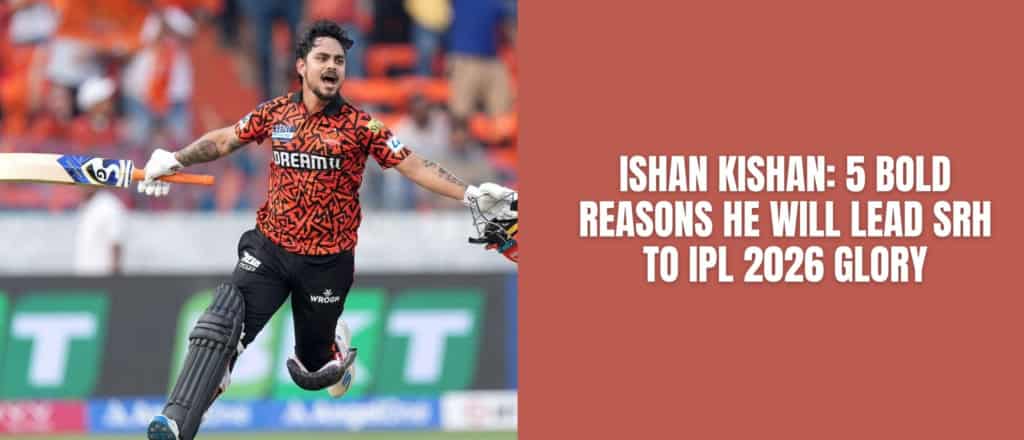
Sanju Samson, the Indian wicketkeeper-batter, once again struggled in the fourth T20I against New Zealand, raising serious concerns about his form and technique ahead of the T20 World Cup 2026. Samson managed only 24 runs off 15 deliveries before being dismissed by New Zealand’s left-arm spinner Mitchell Santner. This performance has intensified scrutiny over his position in the team, especially with Ishan Kishan performing strongly at No. 3.
Legendary India captain Sunil Gavaskar did not hold back in his analysis, pointing out Samson’s lack of proper footwork as the main reason for his dismissal. “There was hardly any movement of the feet. Going outside leg-stump, he exposed all three stumps,” Gavaskar said. His remarks highlighted a recurring issue in Samson’s batting, particularly when facing quality spin bowling, and emphasized the need for technical improvement.
New Zealand Dominates With Spin
In the fourth T20I, New Zealand set a challenging target of 215 for seven. Their opening pair, Tim Seifert and Devon Conway, put on a blistering 100-run partnership in just 8.2 overs, with Seifert scoring 62 off 36 balls and Conway contributing 44 off 23 balls. While India’s bowlers fought back with Arshdeep Singh and Kuldeep Yadav taking two wickets each, Daryl Mitchell’s late innings of 39 off 18 balls pushed New Zealand to a 50-run victory.
The match showcased the potency of New Zealand’s spin attack, with Santner’s 3/26 proving decisive. His ability to exploit the turning conditions and maintain consistent pressure exposed the weaknesses in India’s batting lineup, particularly Sanju Samson’s footwork and shot selection against spin.
Samson’s Recent Struggles
Over the last four T20Is, Samson has scored just 40 runs, highlighting a troubling pattern of inconsistency. Analysts point to his tendency to rely on wristy shots without adequate foot movement, which leaves him vulnerable on turning pitches. Gavaskar’s critique reinforced that Samson’s technical approach must evolve to handle world-class spinners effectively.
Experts also noted that Samson’s lack of preparation against quality spin has made him predictable for opposing teams. With spinners increasingly dominating T20 formats, footwork and adaptability are critical for survival and success. Failure to address these areas could jeopardize Samson’s selection for the upcoming T20 World Cup.
Technique and Mental Challenges
Gavaskar emphasized that the dismissal was preventable with proper technique. “He was just standing there, making room and playing through the off side. That’s why Santner hit the stumps,” he explained. This observation points to the fine line between talent and technical discipline at the international level.
Samson’s struggles are not purely technical; mental preparation plays a significant role. Repeated failures can affect confidence, creating a cycle where technical flaws are exacerbated by pressure. To succeed in T20 cricket, especially against high-quality spinners, Samson must focus on both mental and physical aspects of batting.
Implications For T20 World Cup 2026
With the T20 World Cup 2026 approaching, Samson’s form raises questions about India’s squad composition. Team management must decide whether to back his potential or consider alternatives like Ishan Kishan, who has shown consistency in recent matches. Analysts suggest that selecting a batter who can handle spin under pressure is critical for India’s prospects on turning tracks.
India’s reliance on spinners in T20 cricket means batters must develop precise footwork, strong hand-eye coordination, and an ability to read variations quickly. Samson’s performance against New Zealand illustrates the risks of underpreparedness, and the team will likely intensify net sessions to address these weaknesses.
Lessons For Young Indian Batters
Samson’s challenges serve as a reminder to young Indian batters about the importance of footwork and adaptability against spin. Coaches have highlighted that moving the feet forward or backward to meet the ball is essential to play confidently against turning deliveries. The New Zealand series offers practical examples of how lapses in technique can lead to quick dismissals.
- Strategic Adjustments Ahead of the Tournament
- India’s management is likely to review Samson’s training regime, focusing on:
- Footwork drills to improve movement against spin.
- Match simulations with high-quality spin bowlers in varying conditions.
- Mental conditioning to handle pressure in crucial T20 matches.
- Video analysis of dismissals to identify recurring mistakes.
These steps aim to ensure that Samson and other batters are fully prepared for the T20 World Cup 2026, where spin-heavy pitches in subcontinental venues can decide matches.
Broader Impact On India’s T20 Strategy
New Zealand’s dominance in the T20 series has wider implications for India’s strategy. The inability to tackle spin consistently could affect the team’s performance against other strong spin attacks in the upcoming World Cup. Addressing technical deficiencies early is crucial for building confidence and forming a balanced squad.
Experts suggest that India may consider flexible batting orders or including additional players who can handle spin effectively. Samson’s form will be monitored closely, as his role at No. 3 is pivotal for India’s batting structure.
Moving Forward: Sanju Samson Must Adapt
Sanju Samson’s repeated struggles highlight the urgent need for adaptation. Technical refinement, coupled with mental resilience, will be essential if he hopes to maintain his place in the squad and contribute meaningfully to India’s success in the T20 World Cup 2026.
Failure to address these issues could see him replaced, while successful adaptation could revive his career and reaffirm his value to India cricket. The series against New Zealand serves as both a warning and a learning opportunity for Samson and his teammates.
Conclusion: A Make-Or-Break Phase For Sanju Samson
Sanju Samson’s performance against New Zealand underscores the challenges of international T20 cricket and the importance of technique, footwork, and mental readiness. Gavaskar’s critique is a clear message: adapt or risk losing your spot.
As India prepares for the T20 World Cup 2026, Samson must work diligently on his footwork, shot selection, and confidence. Success in these areas will not only secure his place in the team but also strengthen India’s overall T20 strategy against spin-heavy opponents. This is a make-or-break phase for Samson, and his response will shape both his career and India’s T20 fortunes.




Responses