

Australia T20 World Cup Worries: 9 Alarming Signs After Pakistan Series

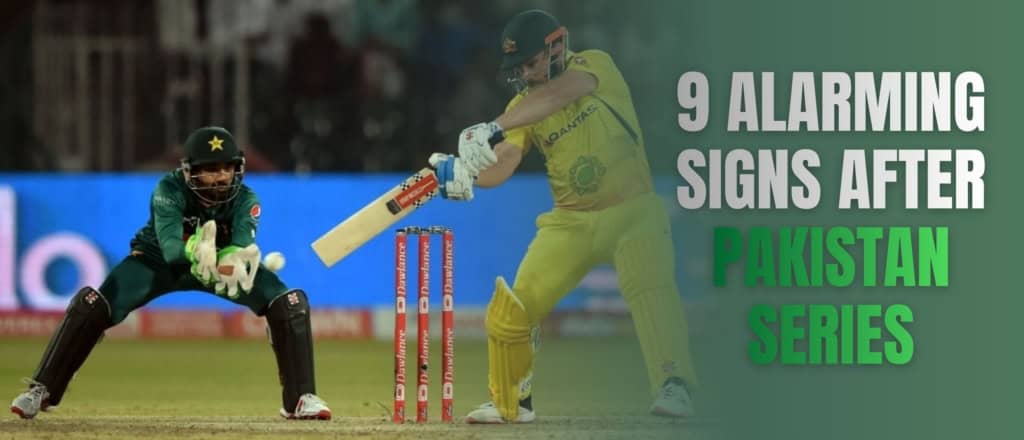
Australia T20 World Cup preparations have raised serious questions after a comprehensive 3-0 series defeat against Pakistan in Lahore. With form dips, injury concerns, and key players undercooked ahead of the ICC Men’s T20 World Cup 2026, Australia find themselves searching for answers just days before the tournament begins. Skipper Mitchell Marsh admitted his side were “outplayed,” underlining growing uncertainty around Australia’s readiness.Australia T20 World Cup Build-Up Takes a Hit
The Australia T20 World Cup campaign hit turbulence after Pakistan dominated the three-match T20I series in Lahore. While Australia fielded an under-strength side and managed workloads carefully, the margin of defeat exposed vulnerabilities in both batting and bowling.
With the T20 World Cup 2026 set to be played in India and Sri Lanka, conditions will demand adaptability against spin and disciplined execution areas where Australia looked fragile.
Mitchell Marsh Admits Australia Were Outplayed
Captain Mitchell Marsh did not sugarcoat Australia’s performance, conceding that his team was comprehensively beaten. Marsh himself endured a lean run with the bat, carrying modest returns across the Pakistan series and the latter stages of the Big Bash League.
With spin expected to play a decisive role in the Australia T20 World Cup campaign, Marsh’s struggles against quality slow bowling have emerged as a key concern. His ability to adjust will be crucial if Australia are to mount a serious title challenge.
Australia Form Concerns in the Top Order
The Australia form concerns extend beyond the captain. Travis Head, returning after a short break, showed glimpses of promise but fell twice to spin—an ominous sign ahead of subcontinental conditions.
Australia’s top order, known for power hitting, appeared vulnerable when pace and bounce were taken out of the equation. This lack of fluency has prompted questions about whether adjustments are needed before the Australia T20 World Cup opener.
Cameron Green’s Conversion Problem
Cameron Green was Australia’s most consistent batter in the Pakistan series, but once again failed to convert starts into match-defining innings. Scores in the 20s and 30s highlighted a recurring pattern across formats.
Green’s bowling also raised alarms. His economy rate soared, and his execution lacked control—concerning given Australia may rely on him as a bowling option in the T20 World Cup 2026.
Josh Inglis and Middle-Order Uncertainty
Josh Inglis, Australia’s sole specialist wicketkeeper in the squad, played limited cricket in Pakistan and struggled for runs. His form remains a talking point as Australia debate batting positions and balance.
The Australia T20 World Cup setup hinges on middle-order stability, and Inglis’ ability to rediscover his scoring rhythm could influence selection decisions early in the tournament.
All-Rounders Under the Microscope
Marcus Stoinis and Cooper Connolly are expected to be pivotal all-round options, but both left unanswered questions in Lahore. Stoinis was carefully managed and did not bowl, while Connolly’s batting against spin looked increasingly exposed.
Connolly’s recent run of low scores has heightened Australia form concerns, especially as spin-friendly conditions await in Sri Lanka and India.
Adam Zampa Injury Sparks Anxiety
One of the biggest scares for Australia was the Adam Zampa injury scare in the final T20I. The leg-spinner, Australia’s premier spin weapon, experienced groin tightness and was withdrawn as a precaution.
While Cricket Australia downplayed the issue, Zampa’s fitness is vital. Any setback to his availability would significantly weaken Australia’s T20 World Cup 2026 prospects.
Positives for Australia Amid the Gloom
Despite the series loss, there were encouraging signs. Xavier Bartlett impressed with the new ball, while Matthew Kuhnemann showcased control and adaptability, particularly in game three.
Ben Dwarshuis also made a solid case with disciplined bowling across phases, adding depth to Australia’s pace options for the Australia T20 World Cup campaign.
Australia World Cup Squad Balance Questions
The Pakistan series highlighted unresolved balance issues within the Australia World Cup squad. Decisions around the number of spinners, the role of part-time options, and batting order flexibility remain unsettled.
Australia’s coaching staff must now fine-tune combinations quickly before their tournament opener, with little room for experimentation.
Opening Match Looms Large
Australia begin their T20 World Cup 2026 campaign against Ireland in Colombo. While they will be favorites on paper, recent performances suggest complacency could be costly.
A strong start will be critical to restoring confidence and quietening doubts surrounding the Australia T20 World Cup preparations.
Conclusion: Australia T20 World Cup at a Crossroads
The Pakistan series served as a timely wake-up call for Australia. While injuries and rotation offer some context, the Australia T20 World Cup challenge now revolves around form, fitness, and adaptability.
Australia possess the experience and talent to recover, but the warning signs are unmistakable. How quickly they respond will determine whether this campaign becomes another chapter of dominance—or a missed opportunity on the world stage.


Responses