

India Match Blocked in T20 World Cup

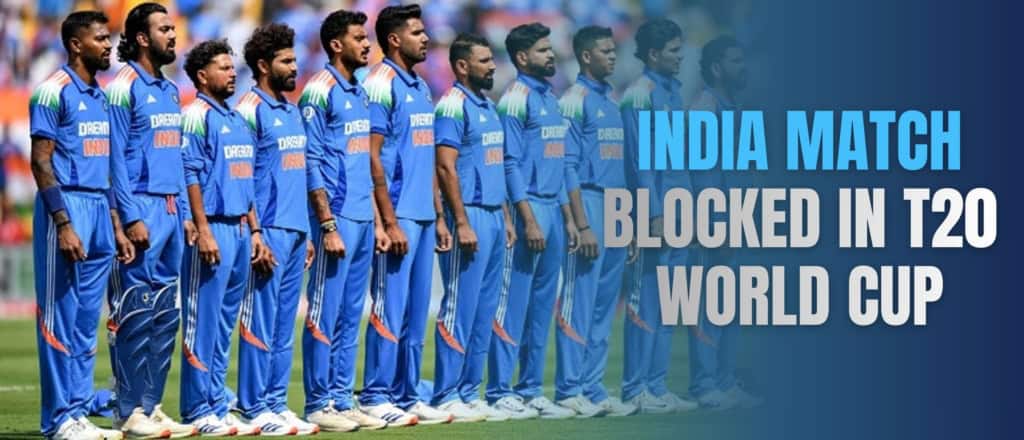
India match controversy has taken center stage ahead of the ICC T20 World Cup after the Pakistan government directed the Pakistan Cricket Board not to take the field against India. The decision has immediately altered the tournament narrative, placing political authority, cricket governance, and ICC regulations under sharp focus as the global event approaches.
India Match Ban Shapes Pakistan T20 World Cup Plans
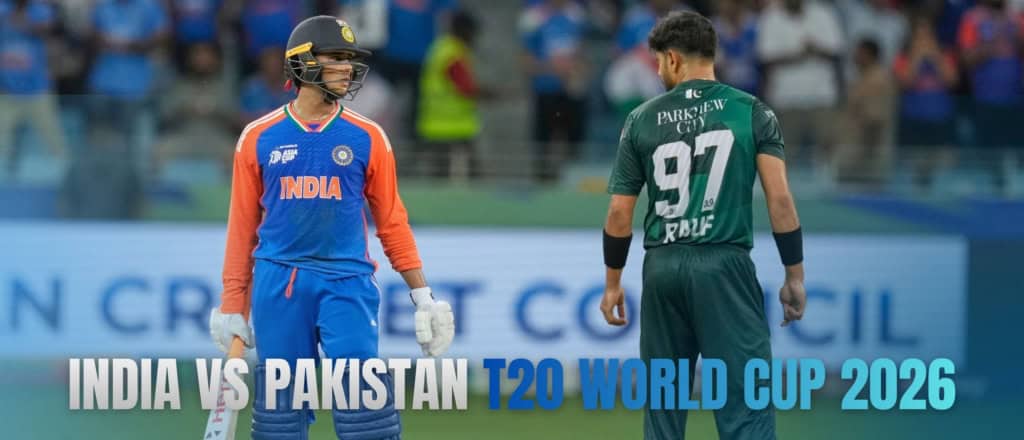
The India match decision was formally announced by the Pakistan government, confirming that while Pakistan will participate in the Pakistan T20 World Cup campaign, it will not play the scheduled February 15 fixture against India. This announcement ended days of speculation and clarified Pakistan’s stance ahead of the February 7 to March 8 tournament window. The government’s directive places the PCB in a complex position as it prepares for international commitments under ICC governance.
Pakistan government officials emphasized that the team’s participation in the Pakistan T20 World Cup remains intact, reinforcing that the boycott applies only to the India match. This selective withdrawal has raised questions about enforcement, penalties, and scheduling implications within the tournament framework.
Pakistan Government’s Official Directive Explained
The Pakistan government issued a public statement approving the team’s participation in the Pakistan T20 World Cup while explicitly restricting the India match. The wording of the directive leaves little ambiguity, making it clear that the decision was taken at the highest level of state authority. However, no official explanation was provided for the refusal to play India, leaving analysts to interpret the move within broader regional and administrative contexts.
This Pakistan government stance has placed the PCB decision under scrutiny, as the board must now communicate the directive formally to the ICC. Until that confirmation is submitted, the situation remains procedurally incomplete, though politically definitive.
PCB Decision and Leadership Consultations
The PCB decision followed a high-level meeting between PCB chairman Mohsin Naqvi and Prime Minister Shehbaz Sharif. The timing of the announcement suggests alignment between cricket administration and government policy, reinforcing the PCB’s limited autonomy in this matter. The PCB decision was expected later in the week, but the government’s announcement accelerated the process.
Despite earlier statements that the PCB decision would be finalized after internal discussions, the government intervention clarified the outcome decisively. This development highlights the continuing intersection of sports administration and national policy in Pakistan’s cricketing affairs.
ICC Response to the India Match Boycott
The ICC response has so far been measured, acknowledging the Pakistan government statement while awaiting formal communication from the PCB. The ICC emphasized its expectation that the Pakistan board will seek a mutually acceptable solution that safeguards the interests of all stakeholders, including broadcasters, sponsors, and participating teams.
This ICC response reflects the governing body’s cautious approach, balancing respect for member boards with the commercial and competitive integrity of the Pakistan T20 World Cup. The India match is widely regarded as the most commercially significant fixture of the tournament, making the situation particularly sensitive.
Context Behind the PCB Decision and Protest
The PCB decision is reportedly linked to dissatisfaction with the ICC’s refusal to relocate Bangladesh’s World Cup matches out of India. Pakistan had strongly supported Bangladesh’s request and was the sole board to vote in its favor during ICC discussions. This unresolved issue appears to have influenced Pakistan’s stance on the India match.
While the Pakistan government did not officially cite this reason, the sequence of events suggests a protest-driven approach. The PCB decision, therefore, extends beyond bilateral rivalry and reflects broader concerns about perceived inequities in tournament arrangements.
Group A Dynamics Without the India Match
The absence of the India match significantly alters Group A dynamics in the Pakistan T20 World Cup. Pakistan are grouped alongside the USA, Namibia, the Netherlands, and India. The group-stage schedule had been designed around marquee fixtures, with the India match positioned as a highlight of the league phase.
Pakistan are still scheduled to open their campaign against the Netherlands on February 7, followed by matches against the USA and Namibia. Each of these fixtures carries increased importance as points calculations and qualification scenarios may be impacted by the India match boycott.
Sri Lanka as the Neutral Host Venue
All of Pakistan’s matches in the Pakistan T20 World Cup have been allocated to Sri Lanka under pre-tournament arrangements. The India match was also scheduled to be played there, reinforcing the neutral-venue principle agreed upon earlier. Despite this, the Pakistan government maintained its directive, indicating that venue neutrality was not sufficient to change the stance.
The Sri Lanka hosting arrangement remains unchanged for Pakistan’s other group matches, ensuring logistical continuity despite the uncertainty surrounding the India match fixture.
Commercial and Competitive Impact on the T20 World Cup
The ICC response will be closely watched due to the commercial implications of the India match absence. Broadcasters and sponsors rely heavily on high-profile encounters, and any disruption could have financial consequences for the Pakistan T20 World Cup. From a competitive standpoint, tournament balance and scheduling fairness are also at stake.
The PCB decision has therefore placed the ICC in a challenging position, requiring careful navigation between regulatory enforcement and diplomatic resolution. The outcome may set precedents for handling similar situations in future global tournaments.
What Happens Next for Pakistan and the ICC
The immediate next step involves the PCB submitting formal confirmation of the Pakistan government directive to the ICC. Once received, the ICC response will likely include consultations with legal, commercial, and cricket operations teams to determine viable solutions. Options could range from rescheduling adjustments to regulatory penalties, depending on ICC statutes.
For Pakistan, focus now shifts back to on-field performance in the Pakistan T20 World Cup, starting with the Netherlands fixture. While the India match dominates headlines, the team’s progress in the tournament will still depend on consistency and results against other Group A opponents.
Broader Implications for International Cricket Governance
The India match controversy underscores ongoing challenges in international cricket governance, where political decisions can directly affect sporting outcomes. The ICC response in this case may influence how future conflicts between member boards and governments are managed, particularly in high-stakes tournaments.
As the Pakistan T20 World Cup approaches, stakeholders across the cricketing world await clarity. The resolution of this issue will not only shape the current tournament but may also redefine administrative boundaries between national governments, cricket boards, and the ICC itself.


Responses