

BPL 2026 Crisis: 7 Shocking Events That Forced a Reschedule

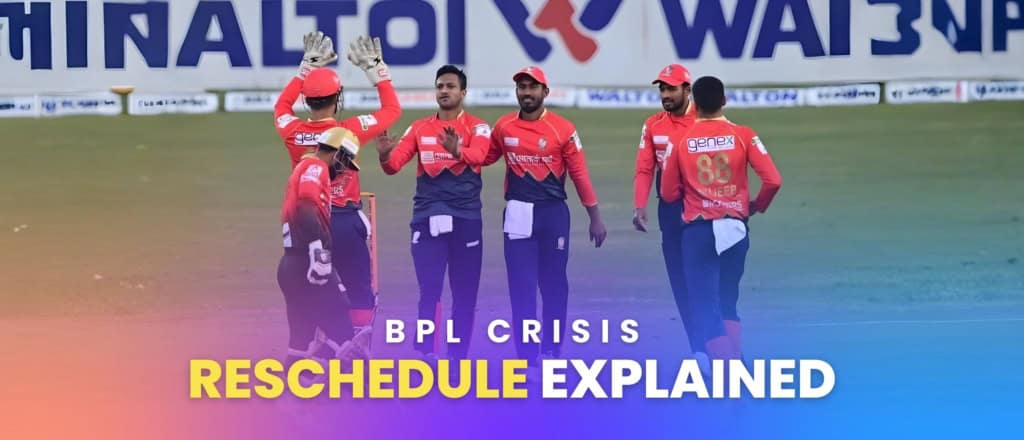
BPL 2026 Schedule Crisis Explained
BPL 2026 was thrown into turmoil after an unprecedented players-led protest forced the Bangladesh Cricket Board to reschedule matches and remove a senior official, triggering one of the biggest governance crises in Bangladesh cricket history. The sudden boycott halted play, embarrassed administrators, and exposed deep-rooted tensions between players and board officials.
Player Boycott Shakes Bangladesh Premier League
The Bangladesh Premier League crisis escalated rapidly when leading domestic and international players refused to take the field, citing disrespectful remarks made by a senior board member. The players’ strike placed BPL 2026 at risk of collapse, with matches at the Sher-e-Bangla National Stadium abandoned before the toss. The boycott was coordinated and decisive, highlighting rare unity among Bangladesh’s top cricketers.
Controversial Remarks Trigger Boardroom Turmoil
The immediate trigger for the unrest was a public statement by a senior official accusing former captain Tamim Iqbal of being an “Indian agent.” These comments outraged the cricketing fraternity and fueled anger across the Bangladesh Premier League ecosystem. As pressure mounted, BPL 2026 became the focal point of a much wider debate about respect, accountability, and governance in cricket administration.
Emergency Meeting and Official Removal
Facing the possibility of a complete shutdown of the tournament, the Bangladesh Cricket Board convened an emergency meeting. The board announced that the official at the center of the controversy had been relieved of his responsibilities. This move was presented as necessary to protect the integrity of the league, with BPL 2026 needing immediate damage control to continue without further disruption.
Revised Fixture List Released by BCB
In an official statement, the board confirmed a revised fixture list to stabilize operations. Matches originally scheduled for mid-January were shifted by a day, while key playoff games were postponed. The new timetable was designed to keep BPL 2026 on track while giving administrators time to negotiate with players and calm tensions within the Bangladesh Premier League framework.
Players Demand More Than Just Rescheduling
Despite the revised schedule, players made it clear that their demands went beyond logistics. Senior cricketers, backed by the Cricketers Welfare Association of Bangladesh, insisted on a public apology and a complete exit of the official from the board. Their stance underlined that BPL 2026 was not merely facing a scheduling issue, but a deeper trust deficit between players and administrators.
Impact on Domestic Cricket Beyond the League
The fallout extended beyond the flagship tournament, with domestic competitions also affected by the protest. Several teams skipped fixtures, sending a strong message that player welfare and dignity were non-negotiable. The events surrounding BPL 2026 demonstrated how quickly governance failures can ripple through an entire cricketing structure when communication breaks down.
National Image and Cricket Governance at Stake
Government representatives and former players weighed in, stressing the importance of unity and professionalism. Officials warned that controversies like this could harm Bangladesh’s global cricketing reputation. With international attention fixed on the situation, BPL 2026 became a test case for how effectively the board could balance authority with accountability.
Why This Crisis Matters for Future T20 Leagues
The turmoil has sparked conversations about governance reforms, player representation, and ethical conduct within sports bodies. Analysts believe the handling of BPL 2026 will influence future policies, not only in Bangladesh but across emerging T20 leagues worldwide. Strong leadership and transparent decision-making are now seen as essential for long-term stability.
What Lies Ahead for Bangladesh Premier League
As the tournament resumes under a cloud of uncertainty, all eyes remain on whether the board can rebuild trust with its players. The continuation of BPL 2026 depends on constructive dialogue and meaningful action rather than temporary fixes. The coming days will determine if this crisis becomes a turning point for positive reform or a cautionary tale of administrative failure in modern cricket.


Responses