

Harry Brook Admits 3 Costly Errors in England Loss

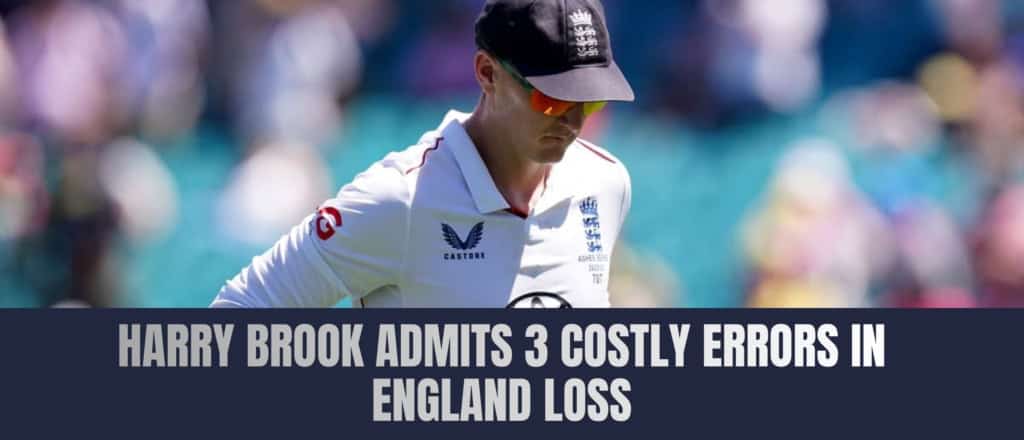
Harry Brook admitted three costly errors after England fell short against West Indies in a crucial T20 World Cup clash, conceding that his side allowed 15–20 extra runs that ultimately proved decisive. The England captain reflected honestly on the defeat, insisting there is “no issue with playing spin” despite another setback in the T20 World Cup campaign.
Harry Brook faced the media following England’s 30-run defeat at the Wankhede Stadium, where West Indies posted 196 before bowling England out for 166. The result leaves England under pressure in the T20 World Cup group stage, with qualification now dependent on strong performances in the remaining fixtures.
Harry Brook Points to Bowling Lapses
Harry acknowledged that England’s execution with the ball was below standard. According to the England captain, conceding an additional 15–20 runs made the 197-run chase significantly tougher. In a high-stakes T20 World Cup encounter, such margins often determine outcomes.
Brook explained that the team believed the target was chaseable, particularly given expectations of dew assisting batting conditions. However, the surface at the Wankhede Stadium did not behave as anticipated. Harry admitted the ball failed to slide onto the bat as predicted, complicating England’s pursuit.
T20 World Cup Pressure Mounts on England
The defeat marked a concerning moment in England’s T20 World Cup campaign. Having narrowly avoided an upset against Nepal earlier, England now find themselves in a position where victory in the remaining group games is essential. Harry emphasized that the team still believes in its batting depth despite the setback.
England showed glimpses of intent through contributions from Phil Salt, Jos Buttler, and Jacob Bethell. Yet wickets fell in clusters, halting momentum at critical junctures. Harry admitted that losing multiple wickets in short bursts disrupted England’s chase and prevented a sustained assault.
Harry Brook Rejects Spin Weakness Claims
Questions were raised about England’s ability to handle spin after West Indies’ slow bowlers dominated the middle overs. However, Harry Brook firmly dismissed suggestions that England struggle against spin in T20 World Cup conditions.
Brook referenced recent performances in subcontinental conditions, asserting that England had previously demonstrated competence against quality spin attacks. In this particular match, he credited West Indies’ bowlers for executing disciplined plans rather than blaming technical deficiencies. Harry Brook maintained that adaptability remains one of England’s strengths.
Clusters of Wickets Hurt the Chase
Harry Brook highlighted the significance of maintaining partnerships in T20 World Cup chases. While early boundaries suggested promise, England were unable to sustain rhythm. Each time momentum appeared to build, West Indies struck back through spin pressure.
The England captain conceded that his side may have been slightly cautious given the large target. Harry Brook noted that chasing nearly 200 in T20 World Cup cricket demands calculated aggression from the outset. The absence of dew meant stroke play required greater precision than anticipated.
Confidence Still Intact, Says Harry Brook
Despite the disappointment, Harry Brook insisted that confidence within the England camp remains high. He pointed to tight contests against Nepal and Sri Lanka as evidence of resilience. According to Harry Brook, the dressing room still believed they could achieve the required 50 runs in the final four overs.
Such optimism reflects England’s faith in their explosive batting lineup. Harry Brook emphasized that on another day, the same approach could yield a different result. The T20 World Cup often hinges on marginal variations in execution and timing.
Shai Hope Backs Toss Decision
Interestingly, West Indies captain Shai Hope supported Harry Brook’s decision to bowl first after winning the toss. The Wankhede Stadium is traditionally considered favorable for chasing, especially under dew-heavy conditions. However, the anticipated moisture did not materialize during this T20 World Cup fixture.
Harry Brook acknowledged that England had planned based on expected conditions. When those assumptions proved inaccurate, adapting mid-game became more challenging. The pitch offered increasing assistance to spinners, shifting the balance toward West Indies.
England’s Path Forward in T20 World Cup
With qualification now uncertain, Harry Brook faces a crucial leadership test. England must secure wins in their remaining T20 World Cup matches to keep knockout hopes alive. The captain’s calm demeanor suggests belief rather than panic.
Harry Brook underlined the importance of learning from mistakes rather than dwelling on them. Bowling accuracy, fielding sharpness, and improved middle-overs batting will be focal points in training sessions ahead of the next clash.
Leadership Under Scrutiny
As England captain, Harry Brook shoulders responsibility not only for tactical calls but also for maintaining morale. The T20 World Cup spotlight intensifies scrutiny on leadership decisions, including bowling changes and batting order strategies.
Brook’s willingness to admit errors reflects accountability. In global tournaments, transparent assessment can strengthen team unity. Harry Brook’s approach indicates that England intend to regroup collectively rather than assign blame individually.
Final Word from Harry Brook
Harry Brook concluded that while the defeat stings, England possess the talent to recover quickly. The T20 World Cup remains open, and a strong finish in the group stage could quickly transform their narrative.
The England captain reiterated that there is “no issue with playing spin,” reaffirming confidence in the squad’s technical abilities. For Harry Brook and England, the focus now shifts to execution and composure in the matches that will define their T20 World Cup journey.




Responses