

India Pakistan Handshake Row: Blunt PCB Chief Statement Shocks Cricket World


India Pakistan Handshake Controversy Grips International Cricket
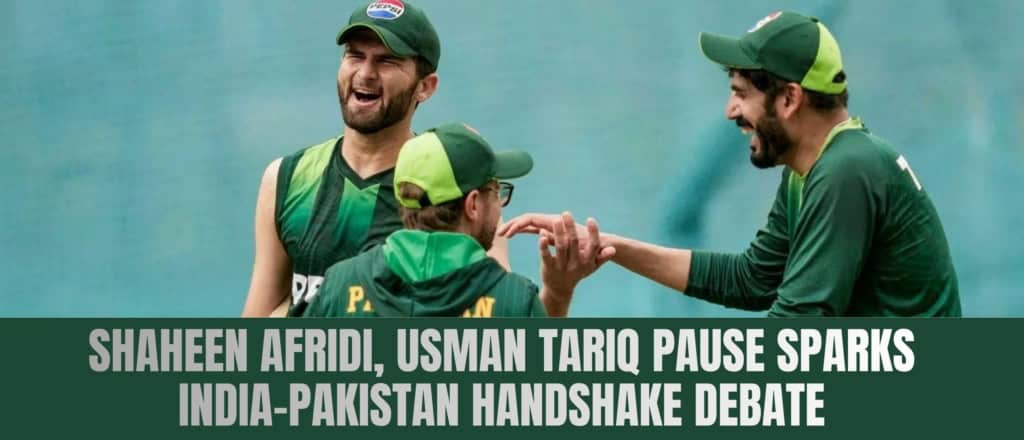
India Pakistan handshake tensions have once again taken center stage in international cricket after Pakistan Cricket Board chief Mohsin Naqvi delivered a blunt response to India’s continued refusal to engage in post-match handshakes. The issue, which has lingered since the Asia Cup earlier this year, reflects the deep political strain between the two neighboring nations and its growing impact on cricketing relations.
The matter resurfaced following India’s recent stance during youth and senior-level tournaments, where Indian teams opted out of customary gestures against Pakistan. While the decision has sparked debate among fans and former players, the PCB chief made it clear that Pakistan will not push for symbolic actions if India chooses to avoid them.
PCB Chief Statement Clarifies Pakistan’s Position
Addressing the India Pakistan handshake issue, PCB chairman Mohsin Naqvi emphasized that Pakistan respects whichever path India decides to take. Speaking to reporters in Lahore, Naqvi explained that the board has no intention of forcing handshakes or ceremonial exchanges, particularly when emotions and sensitivities remain high.
The PCB chief statement highlighted that Pakistan’s approach is based on mutual respect and equality. Naqvi stressed that cricket should ideally remain separate from political developments, but acknowledged that current realities make certain gestures difficult. His remarks underlined Pakistan’s resolve not to appear submissive or apologetic over matters beyond the cricket field.
Mohsin Naqvi Comments on Politics and Cricket
Mohsin Naqvi’s comments on the India Pakistan handshake debate also touched on the broader relationship between politics and sport. According to Naqvi, Pakistan’s leadership has consistently advised against mixing political disputes with cricketing engagements. However, he noted that symbolic acts like handshakes inevitably attract political interpretation during times of heightened tension.
Naqvi recalled previous interactions where similar attitudes were displayed, suggesting that the current situation is part of a recurring pattern rather than an isolated incident. His remarks reflected frustration but also a clear intent to maintain dignity and balance in Pakistan’s cricketing approach toward India.
Asia Cup Controversy and Its Lasting Impact
The roots of the India Pakistan handshake issue trace back to the Asia Cup, where India first adopted the no-handshake stance. Since then, the policy has reportedly been followed across formats and age-group tournaments, including recent under-19 competitions. The decision has drawn mixed reactions, with some supporting it as a gesture of solidarity and others viewing it as an erosion of sporting traditions.
This Asia Cup controversy has had a lasting impact on how bilateral interactions are perceived. Each on-field meeting between India and Pakistan now carries added scrutiny, not just for cricketing excellence but for off-field symbolism and diplomatic undertones.
India vs Pakistan Cricket Rivalry Under Strain
The historic India vs Pakistan cricket rivalry has always extended beyond runs and wickets, and the India Pakistan handshake debate further illustrates this reality. Matches between the two sides are among the most watched sporting events globally, yet they are increasingly shaped by off-field narratives.
Despite the tension, Naqvi reiterated that Pakistan will continue to compete with India on equal footing whenever they meet. He made it clear that respect must be mutual, and Pakistan will not accept a situation where one side dictates the tone of engagement unilaterally.
Equal Footing Message from PCB Leadership
A key takeaway from the India Pakistan handshake discussion is Pakistan’s insistence on equality. Naqvi stated that if India chooses not to engage in handshakes, Pakistan has no particular desire to pursue them either. This stance, he said, would remain consistent going forward.
The PCB chief statement reinforced that Pakistan will not alter its position under pressure. Instead, the board aims to maintain a balanced approach that prioritizes competitive integrity while acknowledging the broader context surrounding Indo-Pak relations.
Cricketing Spirit Versus Political Reality
The India Pakistan handshake issue raises important questions about the future of sporting gestures in politically sensitive rivalries. Traditionally, handshakes have symbolized respect and sportsmanship, even between fierce competitors. However, evolving geopolitical realities are challenging these conventions.
For players, the focus remains on performance and professionalism. Administrators, meanwhile, are tasked with navigating a complex landscape where every action is closely interpreted. Naqvi’s remarks suggest that Pakistan is prepared to adapt without escalating tensions further.
What Lies Ahead for India Pakistan Encounters
Looking ahead, the India Pakistan handshake debate is unlikely to disappear anytime soon. As long as political tensions persist, cricket encounters between the two nations will continue to be accompanied by symbolic scrutiny. How boards manage these moments could shape perceptions of sportsmanship in future tournaments.
For now, Mohsin Naqvi’s blunt yet measured stance sends a clear message: Pakistan will respect India’s choices but expects the same level of respect in return. As cricket fans await the next high-profile clash, the focus remains on whether the game can rise above politics, even when gestures remain divided.

Responses