

India vs New Zealand 2nd ODI: Daryl Mitchell, Young Power NZ Record Chase; Ten Doeschate Critiques India’s Spinners


The chase of 285 was orchestrated by Daryl Mitchell’s unbeaten 131 and supported by a solid 87 from Will Young, marking New Zealand’s highest-ever successful ODI chase on Indian soil.In a thrilling clash at the Niranjan Shah Stadium, Rajkot, New Zealand leveled the three-match ODI series 1-1 with a historic seven-wicket win over India.
However, India’s loss exposed glaring flaws, particularly in the spin department. With Virat Kohli and Rohit Sharma failing to deliver their usual firepower, the Indian bowling unit, led by spinners Kuldeep Yadav and Ravindra Jadeja, struggled to contain the visitors. Assistant coach Ryan Ten Doeschate did not shield the team in the post-match press conference, highlighting the need for better execution and sharper bowling strategies.
New Zealand’s Record Chase
Chasing 285 on a tricky wicket, New Zealand initially lost two early wickets for 43 runs, placing pressure on the middle order. Mitchell and Young batted with patience and composure, gradually taking the game away from India. Their match-winning partnership of 162 runs stabilized the innings, with Mitchell’s 131* from 117 balls and Young’s 87* from 98 balls demonstrating tactical maturity and shot selection.
Mitchell played with incredible versatility, using sweeps, drives, and well-timed straight hits to keep the scoreboard ticking. Young complemented him with steady rotation of strike, ensuring that the required run rate remained manageable. The duo’s efforts brought New Zealand home in 47.3 overs, losing only three wickets.
India’s Batting Highlights
India batted first and posted a competitive total of 284/7. Openers Shubman Gill and Rohit Sharma gave a promising start, putting on a 70-run opening stand. Gill scored 56 off 53 balls, hitting nine fours and a six, while Rohit contributed 24 runs.
Despite losing wickets at regular intervals, KL Rahul anchored the innings with an unbeaten 112 off 92 balls, including 11 fours and two sixes. Rahul built crucial partnerships with Ravindra Jadeja (27) and Nitish Kumar Reddy (20), allowing India to post a challenging total for the Kiwis.
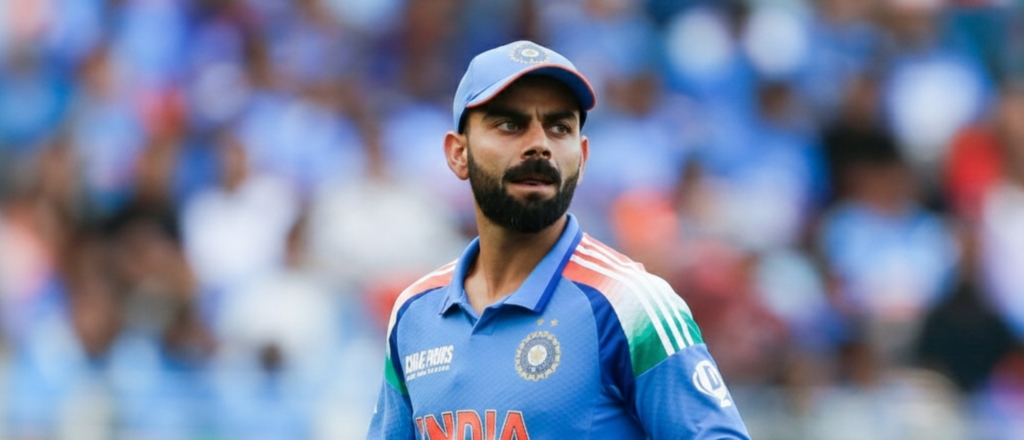
However, regular dismissals of Virat Kohli (23) and Shreyas Iyer (8) prevented India from accelerating in the latter half of the innings. Kohli’s inside-edge dismissal and Iyer’s early wicket reflected the Indian middle-order vulnerability against disciplined bowling.
New Zealand Bowling Performance
Kristian Clarke emerged as the pick of the bowlers for New Zealand, claiming 3/56 and striking at crucial moments to dismantle India’s top order. Debutant Jayden Lennox bowled tightly to concede just 42 runs in 10 overs, while Michael Bracewell finished with 1/34. Glenn Phillips bowled economically in his three overs for only 13 runs.
India’s spinners, particularly Kuldeep Yadav and Ravindra Jadeja, struggled to assert dominance. Kuldeep took the wicket of Will Young but went for 82 runs in 10 overs, failing to capitalize on key moments. Jadeja’s 8-over spell cost 44 runs without success. India’s inability to make breakthroughs in the middle overs allowed New Zealand to build a substantial partnership, highlighting a critical weakness in the bowling attack.
Tactical Insights – Mitchell and Young’s Masterclass
After an early wobble, Mitchell and Young’s partnership displayed remarkable composure under pressure. Mitchell’s versatility with sweep shots, straight drives, and clever footwork enabled him to manipulate the field and maintain a steady strike rate. Young’s patient innings allowed rotation of strike and minimized dot balls, relieving pressure during key moments.
A turning point came when Prasidh Krishna dropped Mitchell on 80, giving the Kiwi batsman a crucial reprieve. Mitchell capitalized on the lifeline and converted it into a match-winning century. Their strategic awareness and ability to handle high-pressure situations highlighted the importance of experience and planning in ODIs.
India’s Fielding Lapses
India’s fielding was a critical factor in the defeat. Dropped catches and missed run-out chances allowed New Zealand’s batsmen to build partnerships with minimal risk. Captain Shubman Gill acknowledged post-match that missed opportunities often cost the team in limited-overs cricket, while Ten Doeschate emphasized the need for collective improvement in execution and accountability.
Coach’s Critique and Strategic Reflection
India’s assistant coach Ryan Ten Doeschate openly criticized the spin attack after the match. Speaking at the post-match press conference, he stated:
“We probably want to bowl a little bit better than we did tonight,” reflecting on the team’s inability to capitalize on early breakthroughs.
He added:
“Particularly spinners, about lengths. But we’ll go back and look at those lengths in more detail. But it’s never just one reason for losing a game. There’s a lot of different things going into that loss tonight.”
Ten Doeschate’s comments underline that India’s defeat was a collective failure rather than the fault of one player, with spinners being the most exposed department.
Daryl Mitchell’s Insight
From New Zealand’s perspective, Mitchell revealed meticulous planning against India’s spinners:
“Kuldeep is one of the best bowlers in the world, he can turn it both ways. It was about adapting to different situations and finding different options against him.”
This statement reflects New Zealand’s tactical discipline and ability to analyze opposition weaknesses—a key reason for their success in Rajkot.
Series Context and Implications
With the series now level at 1-1, all focus shifts to the decider in Indore. India must address the following issues to regain control:
- Middle-Over Bowling Strategy: Spinners need sharper execution and variation to prevent partnerships from flourishing.
- Fielding Consistency: Dropped catches and missed chances were costly and must be minimized.
- Middle-Order Stability: Apart from KL Rahul, contributions from Kohli, Iyer, and Jadeja are crucial to building defendable totals.
For New Zealand, confidence is high. Mitchell and Young’s composure, combined with disciplined bowling plans, provide a blueprint for success in the series decider.
Conclusion
Daryl Mitchell’s unbeaten 131 and Will Young’s steady 87 powered New Zealand to a record 285-run chase, leveling the ODI series 1-1 in Rajkot. India’s batting heroics from KL Rahul and Shubman Gill were overshadowed by poor spin execution, fielding lapses, and missed opportunities in the middle overs.
Assistant coach Ryan Ten Doeschate candidly pointed to the spinners and overall collective responsibility, signaling a strategic reassessment ahead of the series-deciding third ODI in Indore. New Zealand’s win underscores the importance of tactical planning, adaptability, and seizing scoring opportunities, setting the stage for a thrilling conclusion to the series



Responses