

Major Concerns as Bruno Fernandes Injury Hits Manchester United

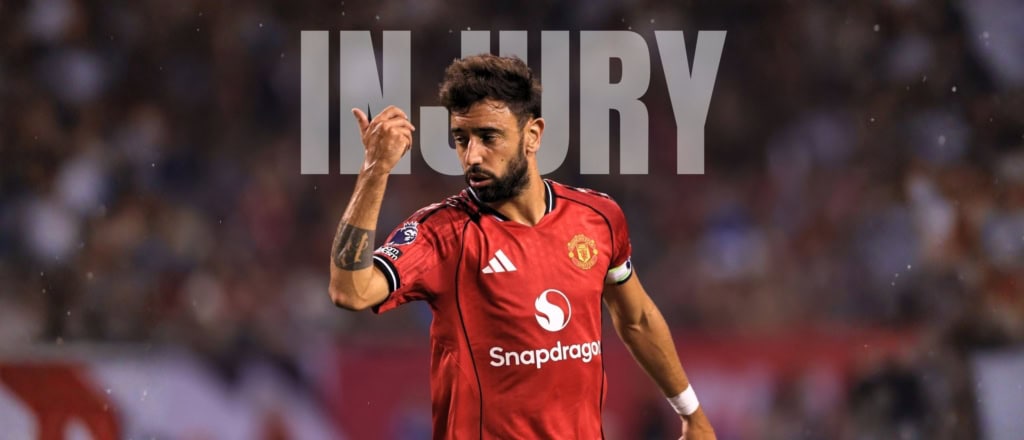
Bruno Fernandes’ injury has emerged as a major concern for Manchester United, with the club facing renewed uncertainty after their captain suffered a setback during the defeat to Aston Villa. What initially appeared to be a manageable issue quickly developed into a more serious problem, forcing Fernandes to withdraw at halftime after briefly attempting to continue. The timing of the injury, combined with United’s already fragile squad situation, has amplified concerns both on and off the pitch.
Bruno Fernandes Injury Details Emerge
Early assessments suggest the Bruno Fernandes injury is soft tissue–related, an area that typically requires caution rather than urgency. Fernandes initially tried to play through the discomfort, a reflection of both his durability and his importance to the team. However, it became clear that continuing posed unnecessary risk, leading to his substitution at the interval.
Soft tissue injuries are particularly problematic during congested fixture schedules, as insufficient recovery time can lead to recurrence or more serious complications. While the club has not released a definitive timeline, internal assessments indicate Fernandes will miss several upcoming fixtures, with medical staff prioritizing full rehabilitation over short-term availability.
For a player who has been consistently relied upon since his arrival, the setback represents a rare interruption. Fernandes has often been United’s constant presence amid rotation, injuries, and tactical shifts, making his absence all the more disruptive.
Why the Bruno Fernandes Injury Hurts Manchester United
The impact of the Bruno Fernandes injury extends far beyond the loss of a single player. Fernandes is not only United’s captain but also their primary creative engine. His ability to dictate tempo, progress the ball, and deliver decisive passes has been central to United’s attacking structure.
Without Fernandes, United lose a player who contributes across multiple phases of play. He links midfield and attack, presses aggressively out of possession, and often serves as the emotional reference point for the team. Few players in the squad offer the same combination of leadership, work rate, and technical quality.
Statistically, Fernandes is involved in a significant percentage of United’s chances created, set-piece deliveries, and attacking sequences. His absence forces the team to redistribute creative responsibility, often among players who either lack experience or are better suited to more specialized roles.
Captaincy and Creativity Loss
From a leadership perspective, the Bruno Fernandes injury removes a vocal presence during matches. Fernandes is known for organizing teammates, demanding higher standards, and responding quickly when the team loses structure. In high-pressure moments, particularly away from home, this influence is difficult to replace.
Creatively, United face an even greater challenge. Fernandes operates between lines, finds pockets of space, and takes risks that others may hesitate to attempt. Without him, United’s attacking play risks becoming slower and more predictable, especially against well-organized defenses.
The captaincy itself becomes a question during his absence. While United have other senior players, Fernandes’ role as both tactical leader and emotional driver is unique, leaving a noticeable void in matches where control and composure are required.
Midfield Depth Tested
The Bruno Fernandes injury also exposes United’s lack of midfield depth. With multiple absences already limiting options, the coaching staff faces difficult decisions regarding balance and system. Replacing Fernandes like-for-like is virtually impossible, meaning tactical compromises are inevitable.
Options may include shifting another midfielder into a more advanced role, adjusting formation, or relying on younger players to step into demanding positions. Each choice carries risk. Asking defensive-minded players to provide creativity can weaken structural stability, while trusting inexperienced options during crucial fixtures may lead to inconsistency.
As a result, United may need to adopt a more conservative approach in certain matches, prioritizing compactness over creativity. While this may limit damage, it also reduces attacking ambition, potentially impacting results during a vital stretch of the season.
Ruben Amorim Responds to Bruno Fernandes Injury
Following the match, manager Ruben Amorim addressed the situation, confirming that Fernandes will miss upcoming fixtures. Amorim emphasized the importance of protecting the player’s long-term health, making it clear that there would be no attempt to rush the captain back into action.
Amorim acknowledged Fernandes’ desire to play and his importance to the team but stressed that soft tissue injuries require patience. The manager’s comments suggested a cautious approach, aiming to avoid aggravation that could extend Fernandes’ absence even further.
The response reflects a broader shift toward player welfare and squad sustainability, particularly in a season where fixture congestion has increased physical demands across competitions.
Fixture Congestion Adds Pressure
The Bruno Fernandes injury arrives during one of the most demanding periods of the calendar. With league matches coming in quick succession and little recovery time between games, United are forced to navigate high-intensity fixtures without their most influential midfielder.
Fixture congestion magnifies the impact of every injury, reducing opportunities for rotation and increasing fatigue among available players. For United, already searching for consistency and momentum, the loss of Fernandes during this period could have lasting consequences on league position and overall performance.
Matches decided by fine margins often hinge on moments of creativity or leadership—areas where Fernandes excels. His absence therefore increases the likelihood of dropped points, particularly against organized opponents capable of exploiting small weaknesses.
January Window Implications
The selection strain caused by the Bruno Fernandes injury may also influence thinking around the January transfer window. While the injury highlights gaps in depth, the club is expected to remain cautious rather than reactive.
Short-term signings made purely in response to injuries often carry long-term consequences, particularly in terms of squad balance and financial planning. Instead, United may opt to rely on internal solutions, viewing Fernandes’ injury as a temporary setback rather than a trigger for immediate spending.
However, the situation does reinforce the importance of strategic recruitment. Fernandes’ absence underlines how heavily United depend on a small group of key players and how vulnerable the team becomes when even one is unavailable.
Long-Term Outlook
Ultimately, the Bruno Fernandes injury represents a critical test for Manchester United’s adaptability. How the team responds—both tactically and mentally—will shape their short-term results and potentially influence broader decisions about squad construction.
For Fernandes, the priority will be a complete recovery, ensuring he returns at full capacity rather than risking further setbacks. For United, the challenge lies in maintaining competitiveness, redistributing responsibility, and navigating a demanding schedule without their captain.
While injuries are an unavoidable part of football, the absence of a player as central as Bruno Fernandes serves as a reminder of his value—and of the fine margins that define success during the most demanding stretches of the season



Responses