

Navneet Kaur Inspired by 2026 Cricket World Cup Win as India Hockey Eyes Global Glory

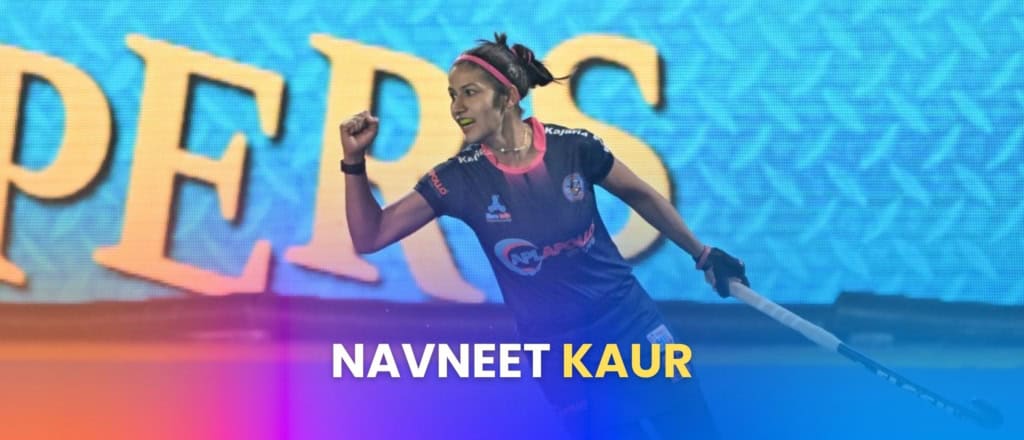
How Navneet Kaur Found Belief in Cricket’s World Cup Triumph
The moment Harmanpreet Kaur lifted the Women’s Cricket World Cup trophy, something fundamental shifted across the entire landscape of Indian women’s sport. The significance of that victory extended far beyond the boundaries of cricket, traveling swiftly into dressing rooms, training facilities and athletic programmes across the country. For Navneet Kaur, the dynamic Indian women’s hockey forward at the forefront of the national team’s attacking unit, the sight of an Indian women’s team conquering the world was a full recalibration of what she and her teammates are permitted to expect of themselves on the global stage.
Indian women’s sport has undergone a profound transformation over the past decade and a half, with athletes achieving performances at international level that previous generations might have considered entirely beyond reach. The cricket World Cup triumph under Harmanpreet Kaur, however, occupies a singular position within that progression. It demonstrated conclusively, on the largest stage in women’s cricket, that an Indian team could not only compete with the best in the world but defeat them decisively when the moment demanded the very best.
The Moment That Changed Everything for Indian Women’s Hockey
That proof of concept has reverberated through every corner of Indian women’s athletics, and nowhere has it landed with greater urgency than within the Indian women’s hockey setup. Players who have dedicated their lives to representing their country now have living, incontrovertible evidence that the summit is reachable and the trophy can be lifted. The cricket World Cup did not merely produce a champion. It produced a permission structure for Indian women’s sport that had never previously existed in such clear and undeniable form.
Navneet Kaur has articulated the psychological impact of that triumph with a clarity that reflects both her intelligence as an athlete and the depth of conviction she carries into her own competitive endeavours. In her most recent interview, Navneet Kaur stated: “Seeing Harmanpreet Kaur and the Indian women’s cricket team lift the World Cup tells us what is possible. It gives us the belief that we can achieve the same in hockey. Our goal is clear: to stand on the podium at the World Cup and then bring home a medal from the LA 2028 Olympics.” The precision of that statement is worth examining carefully.
Navneet Kaur does not speak of participation, of hoping to be competitive, or of aiming for a respectable performance against stronger opposition. She speaks of the podium, she speaks of medals, and she does so with the language of a genuine contender who has internalised the possibility of victory as the baseline expectation.
Navneet Kaur on Replacing Hope With Belief
The psychology of belief in elite sport is a subject that has attracted considerable academic and practical attention over many decades, and for very good reason. At the highest levels of international competition, the margins between success and failure are frequently so narrow that technical ability and physical conditioning alone cannot fully account for outcomes. What separates athletes and teams who achieve the ultimate prize from those who fall agonisingly short is often rooted in their capacity to genuinely believe that victory is not merely possible but entirely achievable.
For years, the Indian women’s hockey team possessed the talent and work ethic to compete meaningfully on the world stage. The missing ingredient, in the assessment of many observers and participants alike, had too often been the unqualified expectation of winning rather than merely competing creditably. It is precisely that ingredient which Navneet Kaur identifies as having been decisively supplied by the cricket World Cup triumph, and her conviction on the subject carries the weight of someone who has felt that shift personally and profoundly.
Watching peers and compatriots stand on top of the world, holding a trophy before a global audience, sends a message to the subconscious of every watching athlete that transcends what any structured programme can deliver. It is living proof that the destination being pursued is not a fantasy but a genuinely attainable reality for Indian sportswomen who commit fully to the journey. Navneet Kaur captured this dynamic with characteristic economy: “When you see an Indian team win at that level, it changes your mindset. You stop hoping and start believing. That is what we want as a team: to go all the way.”
Why India Women’s Hockey Is Built to Win at FIH World Cup 2026
The distinction between hoping and believing is not a semantic one, and it would be a mistake to treat it as such. Hope is inherently conditional and uncertain, a desire for a positive outcome that acknowledges the real possibility of a different result. Belief, in the sporting context, is the internalised conviction that the desired outcome is not merely possible but probable, provided the necessary preparation and execution are maintained at the required standard.
The shift from a hoping team to a believing team is one of the most consequential transitions a sporting programme can undergo, and Navneet Kaur is describing exactly that transition within the Indian women’s hockey squad. The cricket World Cup did not give the hockey team their ability or their dedication, both of which were already present in considerable measure. It gave them the final critical piece of the psychological architecture they needed to fully inhabit their own potential and compete without the internal hesitancy that has occasionally undermined Indian teams at decisive moments in major tournaments.
The Indian women’s hockey team enters the FIH World Cup 2026 carrying that belief into every preparation session and competitive fixture, and the qualification campaign has already provided compelling evidence that the team’s ambitions are firmly grounded in reality. Navneet Kaur has been absolutely central to that evidence, delivering performances of the highest individual quality at precisely the moments they were most urgently needed. For those who have followed Indian women’s hockey closely, the current trajectory of the team feels genuinely different from previous cycles of promise followed by underperformance.
India Hockey’s Growing Identity as a Global Contender
There is a discernible sense of purpose, alignment and collective conviction running through the squad that the qualification campaign has made palpably tangible. Navneet Kaur, as both a match-winning performer and an increasingly authoritative voice within the squad, is positioned at the very heart of that shift. Her contribution to the programme’s current trajectory extends well beyond what any statistical record of goals and assists can adequately capture.
Indian women’s sport is experiencing a period of unprecedented visibility, investment and ambition on multiple fronts simultaneously. Athletes across disciplines are competing at levels that demand not just participation but genuine podium performance, and the expectations placed upon national teams by a growing and knowledgeable fanbase reflect that elevated standard. For Navneet Kaur and the hockey team, the challenge now is to be the next chapter in that story and add their name permanently to the roll call of Indian women’s teams that have conquered the world.
Navneet Kaur’s Commanding FIH World Cup Qualifier Campaign
Words of inspiration acquire their true significance only when they are grounded in competitive performance that demonstrates their authenticity beyond reasonable doubt. In the case of Navneet Kaur, the evidence base for her ambitious declarations about the FIH World Cup 2026 and the LA 2028 Olympics is not built on rhetoric alone. It is constructed from a recent run of personal and collective form that has emphatically announced India women’s hockey team’s genuine readiness for the global stage.
At the FIH World Cup 2026 Qualifiers, Navneet Kaur delivered one of the most commanding individual performances seen in the women’s hockey qualifying environment in recent years. She established herself before a watching international audience as a player of exceptional technical quality and devastating competitive instinct. Her contribution across the campaign was not confined to isolated moments of individual brilliance but reflected a player fully integrated into India’s attacking system while simultaneously possessing the quality to unlock opposition defences through her own direct initiative.
Her goals played a decisive role in propelling India to a runners-up finish in the FIH World Cup 2026 Qualifiers, a result that secured the national team’s place in the FIH World Cup 2026 tournament itself. That qualification, earned through competitive performance over a demanding tournament rather than through seeding or administrative allocation, carries particular significance and credibility. India did not simply qualify. They qualified emphatically, finishing second and demonstrating that the team’s collective quality is capable of sustaining high performance across multiple matches against varied and determined opposition.
The runners-up finish was a statement of collective strength and tactical organisation under sustained competitive pressure. Finishing second while producing the competition’s sole hat-trick scorer, and having that scorer recognised as the tournament’s outstanding individual performer, speaks to a blend of collective organisation and individual brilliance that characterises genuinely dangerous international teams. The coaching staff will have derived enormous confidence from the campaign, and Navneet Kaur’s central role in the team’s success only deepens the expectation that she will be a defining figure at the FIH World Cup 2026.
What Navneet Kaur’s Hat-Trick Reveals About India’s World Cup Threat
The individual achievement that drew the most widespread attention from the global hockey community was Navneet Kaur’s hat-trick, a feat that made her the only player in the entire FIH World Cup 2026 Qualifiers to score three goals in a single match. The significance of that achievement extends well beyond the statistical record it produced. Scoring a hat-trick in international qualifying competition requires a precise convergence of technical execution, physical sharpness, mental composure under pressure and the tactical intelligence to occupy the right positions at the right moments repeatedly across a full international fixture.
Navneet Kaur demonstrated all of those qualities simultaneously, announcing to every team that will contest the FIH World Cup 2026 that India’s attacking threat is a proven and demonstrated competitive reality. Opposition teams will need to construct their defensive and tactical preparations with her specific threat very firmly in mind. The hat-trick was not a moment of fortune. It was a declaration of intent from one of the most complete attacking forwards in the international women’s game today.
Navneet Kaur Named Player of the Tournament at FIH World Cup Qualifiers
The recognition that followed was entirely commensurate with the quality of her performances across the qualifying campaign. Navneet Kaur was named Player of the Tournament at the FIH World Cup 2026 Qualifiers, reflecting her status as the single most impactful individual performer across the entire competition. For a player who began her journey on the hockey pitches of Shahabad Markanda in Haryana, earning this distinction on the international stage represents the validation of years of personal sacrifice and a clear indicator of how significantly Indian women’s hockey’s standards have risen.
The Player of the Tournament award serves as a formal notice of intent to the international game. Navneet Kaur is not an emerging talent to be monitored cautiously from a distance but an established international performer of the highest quality. Every opposing team at the FIH World Cup 2026 will need to account for her presence from the first whistle of the tournament.
India Hockey’s World Cup Ambitions Are Grounded in Proven Quality
The trajectory India women’s hockey is currently riding points unmistakably toward a team capable of competing with the very best nations in the world when the FIH World Cup 2026 commences. The foundations are firmly in place, the technical quality has been demonstrated under tournament pressure, and the individual match-winning ability is present and proven. The qualifying campaign did not merely secure India’s passage to the World Cup. It served notice that India has arrived at a moment where the conversation about their realistic ceiling needs to be conducted at a significantly higher level than in any previous World Cup cycle.
Navneet Kaur’s combination of match-winning quality, competitive consistency and vocal belief in the team’s collective potential makes her the defining figure around whom India’s World Cup challenge will be constructed. Her performances at the qualifiers were not a peak to be reached again but a foundation to be built upon across the full demands of a World Cup tournament. India women’s hockey goes into the FIH World Cup 2026 not as hopeful participants but as a team with the proven tools and the unshakeable conviction to go all the way.
Navneet Kaur’s Journey from Shahabad Markanda to the World Stage
Behind every athletic achievement of genuine significance lies a personal story of perseverance, sacrifice and unwavering commitment, and in the case of Navneet Kaur that story is both deeply instructive and genuinely compelling. Born and raised in Shahabad Markanda in Haryana, a region whose contribution to Indian hockey over multiple generations has achieved the status of genuine sporting legend, Navneet Kaur grew up immersed in a culture that took the game seriously as a vehicle for individual achievement and collective community pride. The town and its surrounding district have produced a remarkable concentration of national-level hockey players across the decades, providing both an environment of genuine sporting aspiration and a community infrastructure capable of nurturing raw talent toward international excellence.
Yet Navneet Kaur’s path to hockey was not the automatic progression that Shahabad Markanda’s storied reputation might suggest to outside observers. Her father, motivated by the towering cultural status of cricket in Indian society, had initially hoped that his daughter would pursue cricket rather than field hockey. Navneet Kaur, however, was operating on a different frequency entirely from her earliest years, drawn irresistibly to the hockey field in a manner that no parental suggestion could redirect.
How Navneet Kaur’s Early Passion for Hockey Shaped Her Career
“My father wanted me to play cricket, but I was drawn to hockey,” she recalled. “Even as a child, I was very clear. I would train for hours and never wanted to miss practice. I just loved being on the field.” That childhood clarity of purpose, the complete absence of ambiguity about where she belonged and what she was working toward, is a characteristic shared by a significant proportion of the athletes who ultimately reach and sustain themselves at the very highest levels of their chosen sport.
The path from Shahabad Markanda’s hockey pitches to a sustained and impactful presence in the Indian national team demands considerably more than natural talent and childhood enthusiasm. The journey requires years of systematic technical development, progressive physical conditioning, emotional resilience sufficient to withstand the inevitable setbacks of an elite athletic career, and a genuine willingness to endure the significant personal costs that high-performance sport consistently demands. Navneet Kaur navigated each of those demands with the tenacity and clarity of purpose that has come to define her character both as an international athlete and as a person.
Navneet Kaur on the Sacrifices Behind International Hockey Success
Her rise through the ranks of Indian women’s hockey was built on sustained and cumulative effort rather than sudden emergence, and that foundation has given her international career a structural solidity that setbacks are unable to undermine. Extended periods of separation from family represent one of the most emotionally demanding aspects of international athletic life, particularly for athletes from close-knit communities where family relationships are central to daily existence and personal identity. The relentless physical toll of sustaining international conditioning standards across long competitive seasons places extraordinary demands on the human body that require total professional commitment to manage effectively.
“There were difficult days,” Navneet Kaur admitted with characteristic honesty. “Being away from family, pushing yourself every day: it is not easy. But I never thought of giving up. Hockey gave me happiness, and that kept me going.” The simplicity and completeness of that statement is profoundly instructive, revealing an athlete whose deepest investment has always been in the sport itself rather than in the external rewards it might deliver.
Athletes whose intrinsic motivation is rooted in genuine love of their sport are substantially more resilient through prolonged difficulty than those driven primarily by external reward, and Navneet Kaur’s career trajectory reflects exactly that competitive durability. Her consistency at international level, maintained across the full demands of a high-performance programme, speaks to a professional foundation that is extraordinarily difficult to build and even more difficult to sustain. It is that foundation that now positions her as not only a match-winner for India at the FIH World Cup 2026 but as a central figure in the programme’s long-term ambitions at the LA 2028 Olympics.
Navneet Kaur and the Tokyo 2020 Pain That Drives India Hockey Forward
The emotional architecture of high-performance sport is constructed as much on painful near-misses as it is on triumphant victories, and for Navneet Kaur and the Indian women’s hockey team, no experience has left a more lasting imprint than the Tokyo 2020 Olympics. India’s campaign at those Games generated genuine excitement and a palpable sense that an Olympic podium finish was within the team’s competitive grasp, only for a fourth-place finish to leave the squad one agonising position outside the medal standings. That result continues to shape the motivations of Navneet Kaur and her teammates in ways that no coaching intervention can replicate.
Rather than allowing the Tokyo experience to generate despondency, the Indian squad has collectively channelled the pain of fourth place into a driving competitive force that informs every training session, every tactical preparation meeting and every competitive appearance. “We were so close, and that feeling stays with you,” Navneet Kaur reflected. “It pushes you during training, during matches, during the toughest moments. We do not want to miss out again.” The economy of those words belies their emotional weight and competitive significance for every member of the Indian squad.
Why LA 2028 Represents Navneet Kaur’s Defining Olympic Opportunity
The road to redemption leads through the FIH World Cup 2026 and ultimately to the LA 2028 Olympics, and Navneet Kaur has made her intentions regarding both competitions emphatically clear. The World Cup this year represents the immediate objective, an opportunity to demonstrate that India women’s hockey has evolved into a genuine title contender rather than a team content to compete respectably. The LA 2028 Olympics then stands as the stage on which the story of the post-Tokyo Indian women’s hockey team will find its most consequential and defining chapter.
Navneet Kaur’s vision for LA 2028 is precise and unambiguous, focused on delivering the Olympic medal that Tokyo so painfully withheld from the squad. Given the form she displayed at the FIH World Cup 2026 Qualifiers and the collective improvement visible across the Indian squad, that ambition no longer belongs in the realm of wishful thinking. India women’s hockey goes into this cycle with a player of Navneet Kaur’s quality leading the line and a squad united by the shared memory of Tokyo’s heartbreak and the shared inspiration of cricket’s World Cup triumph.
Navneet Kaur’s Leadership Role in Building India’s Next Generation
Leadership in team sport takes many forms, and Navneet Kaur is demonstrating a growing capacity to fulfil multiple leadership roles simultaneously within the Indian women’s hockey programme. Her individual performances establish her credentials as one of the most potent attacking threats in the Asian game. Her personal history of perseverance and sacrifice provides a model of professional conduct that younger players within the squad can observe, absorb and build their own careers upon.
“As a senior, I feel responsible for the younger players,” Navneet Kaur said. “I try to share my experiences and help them settle in. When everyone grows together, the team becomes stronger.” That philosophy reflects a genuine understanding of what high-performing team cultures require to sustain themselves across multiple competitive cycles. Individual excellence, however brilliant and consistent, reaches its maximum value only when it is deployed in service of collective growth and shared ambition.
The story of Navneet Kaur is, in many respects, the story of Indian women’s sport in this era. It is a story of athletes from regions where the pathway to elite competition was never straightforward, finding their way to the national stage through extraordinary personal determination and an unbreakable love for their sport. Shahabad Markanda’s contribution to Indian hockey is legendary, and in Navneet Kaur that tradition finds one of its most compelling and consequential contemporary expressions.
As India women’s hockey prepares for the FIH World Cup 2026 and looks beyond it to the LA 2028 Olympics, the alignment of external inspiration drawn from cricket’s World Cup triumph with the internal excellence, drive and leadership of Navneet Kaur creates conditions that Indian hockey’s most optimistic observers have rarely witnessed before. The goals Navneet Kaur has set for herself and her team are not fantasies. They are the logical and entirely justified extension of a journey that has already covered remarkable ground and shows absolutely no sign of slowing.



Responses