

Pakistan’s Dominant Performance Shines in U19 Asia Cup Final Against India

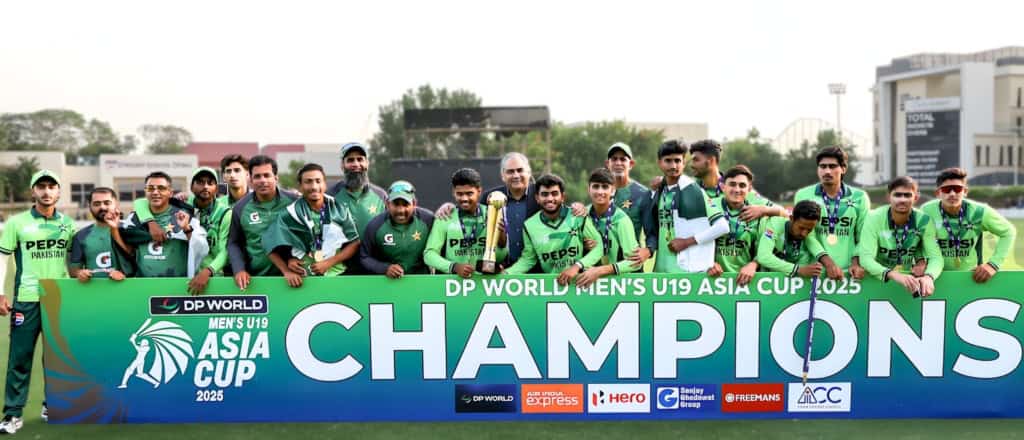
Pakistan delivered a resounding statement in the 2025 U19 Asia Cup final, dismantling India in emphatic fashion to clinch the title. From an imposing batting display to a clinical bowling performance, Pakistan left no doubt about their superiority in the tournament’s climax. The final showcased the strength of Pakistan’s youth system and highlighted areas India will need to address before upcoming ICC events.
Pakistan’s Batting Sets U19 Asia Cup Final Tone
The U19 Asia Cup final swung decisively in Pakistan’s favor after they posted a mammoth 347/8. Anchored by a historic innings from Sameer Minhas, who registered the highest individual score in Youth ODI history for Pakistan, the team set a target that would prove too daunting for India.
Minhas’ innings was a blend of technical skill, aggressive intent, and remarkable stamina, reflecting the modern demands of limited-overs cricket at the youth level. His partnerships with the middle order ensured Pakistan maintained momentum, accelerating in the final overs to post a total that left India under immense pressure even before facing the first ball.
Bowlers Decide U19 Asia Cup Final Outcome
Pace Trio Overpowers India
While Pakistan’s batting laid the foundation, their fast bowlers sealed the match. Exploiting bounce, seam movement, and disciplined lengths, the pace trio dismantled India’s top and middle order, restricting them to just 156. The combination of raw speed, accurate yorkers, and clever variations made it impossible for the Indian batsmen to settle.
The trio’s early strikes removed key wickets, disrupting India’s chase from the outset. As partnerships failed to develop, India struggled to rotate strike or build momentum, and Pakistan’s bowlers maintained pressure consistently throughout the innings.
Sustained Pressure and Discipline
Beyond outright pace, Pakistan’s success came from discipline and relentless execution. Bowlers maintained a hard length and exploited conditions intelligently, allowing minimal scoring opportunities and forcing errors from India’s batters. The sustained pressure ensured India never recovered momentum, highlighting the importance of tactical awareness and execution at the youth level.
Mohsin Naqvi’s Reaction Reflects One-Sided Final
The atmosphere during the U19 Asia Cup final captured the delight of Pakistan officials and the team management, reflecting the sense of control Pakistan asserted over the contest. Mohsin Naqvi, a key figure in the Pakistan setup, expressed visible satisfaction at how his team executed the game plan from start to finish. The reaction underscored the collective effort of both the batting and bowling units in a dominant performance that left little room for opposition resurgence.
India’s Collapse Under Scrutiny
India’s defeat was defined by their inability to counter Pakistan’s pace attack and recover from early wickets. The top order faltered against disciplined lines and lengths, and the middle order could not accelerate effectively under mounting pressure.
Critics highlighted that India’s collapse stemmed not just from individual errors but also from inadequate preparation against quality fast bowling. The inability to build partnerships or stabilize the innings after losing early wickets became the defining feature of India’s U19 Asia Cup final defeat. Mental resilience, shot selection, and adaptability under pressure emerged as areas requiring significant improvement for future competitions.
What the U19 Asia Cup Final Means Going Forward
Pakistan’s win reinforces the strength of their youth cricket pipeline. With a balanced combination of aggressive batting, disciplined bowling, and tactical awareness, Pakistan demonstrated that their developmental programs are producing players capable of dominating at international youth levels. The final serves as an example of how well-prepared youth sides can execute plans cohesively in high-stakes matches.
For India, the loss raises developmental questions. While talent remains evident, the final highlighted areas needing attention, including pace counter-strategies, mental toughness in pressure situations, and the ability to rotate strike against aggressive bowling attacks. Addressing these gaps will be crucial for India to compete effectively in future ICC youth events and maintain a consistent pipeline of high-quality talent.
Implications for Future ICC Events
The outcome of the final also offers lessons for global tournaments. Teams with strong domestic and youth structures, like Pakistan, are better positioned to translate potential into performance under pressure. India’s performance, in contrast, emphasizes the need to integrate skill development with psychological preparedness, ensuring young players can adapt to high-pressure scenarios on the international stage.



Responses