

Steep Bounce in Cuttack Pitch

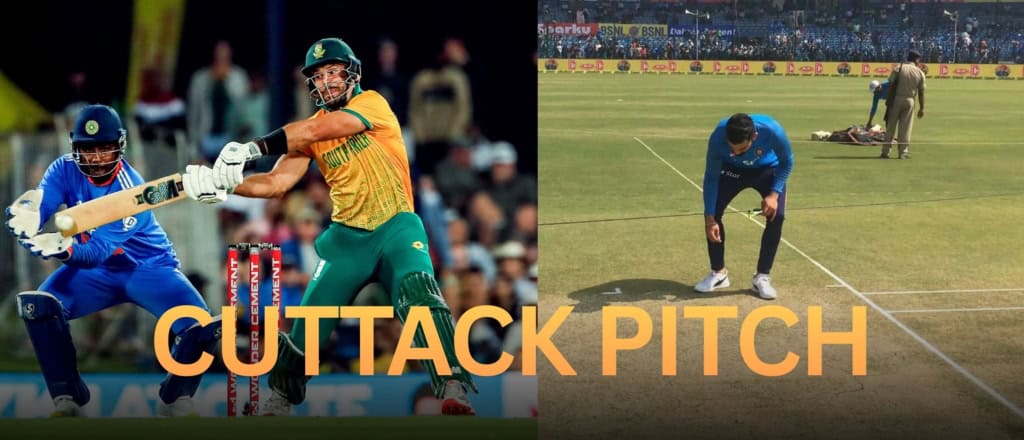
Steep bounce on the Cuttack pitch became the defining factor in India’s dominant win over South Africa in the first T20I, and South African skipper Aiden Markram admitted this challenge right after the match. In a one-sided contest that saw India take a 1–0 lead in the five-match series, the steep bounce shaped batting struggles, bowling breakthroughs, and critical match dynamics. This analysis breaks down everything Markram highlighted and how the pitch influenced the outcome.
Steep Bounce Sets the Tone in India vs South Africa T20I
The steep bounce on the Cuttack surface surprised South Africa early on. Markram explained that the tennis-ball effect made stroke-making difficult. India, however, adapted quickly, setting up a competitive total of 175/6. In T20I cricket, conditions often dictate the pace of the innings, and Cuttack’s pitch played a decisive role throughout the match.
India’s tactical approach—using slower balls, cutters, and hard-length deliveries—maximized the advantage the pitch offered. For the Proteas, that same steep bounce caused hesitation in footwork and timing, leading to early wickets.
Aiden Markram’s Assessment of Cuttack’s Steep Bounce
Markram described the pitch as “sticky” with “steep tennis-ball bounce,” noting that it wasn’t just an initial-overs phenomenon—it remained consistent throughout India’s innings. The South African captain emphasized that such bounce disrupts rhythm and makes it harder for batters to commit fully to strokes, especially cross-batted shots.
Why the Steep Bounce Hurt South Africa
The steep bounce posed three major challenges:
- Inconsistent elevation caused mistimed shots
- Difficulty in driving the ball off the surface
- Increased vulnerability to back-of-length deliveries
Each of these worked in India’s favor, particularly when their spinners and pacers attacked good areas repeatedly.
Batting Collapse Triggered by Bounce and Early Pressure
The steep bounce was only one piece of the puzzle—India’s disciplined attack amplified its impact. South Africa collapsed to 74 all out, their inability to build partnerships becoming the biggest setback.
Markram Reflects on Partnership Failures
The skipper admitted that losing wickets in clusters left the team with no chance to settle. In his view, T20I cricket doesn’t allow teams the luxury of time to “look around and absorb,” especially when conditions are tricky. Markram insisted that quick recovery and calmness are essential when bounce becomes unpredictable.
Key Moments That Broke South Africa’s Chase
- Early wickets created panic
- Back-of-length deliveries became unplayable
- No batter except Dewald Brevis crossed 25
- Indian bowlers used the steep bounce perfectly to their advantage
India’s Clinical Bowling Performance on a Helpful Surface
The same steep bounce that troubled South Africa became a weapon for India. A mix of pace and spin ensured constant pressure.
Pacers Adapted Brilliantly
Bumrah, Arshdeep Singh, and Hardik Pandya extracted sharp bounce, creating awkward angles. Their lengths forced South Africa into defensive misjudgments.
Spinners Thrive with Extra Bounce
Axar Patel and Varun Chakravarthy exploited the pitch’s grip and bounce, generating top edges and soft dismissals. Their combined control dried up scoring opportunities.
Key Bowling Figures
- Bumrah – 2 wickets
- Arshdeep Singh – 2 wickets
- Varun Chakravarthy – 2 wickets
- Axar Patel – 2 wickets
- Hardik Pandya & Shivam Dube – 1 each
Hardik Pandya Leads India with Bat and Ball
Before exploiting the steep bounce with the ball, Hardik delivered a captain’s knock—an unbeaten 59 off 28 balls with powerful sixes and smart strike rotation.
Hardik’s Dominant Impact
His innings ensured India posted a strong total on a challenging surface. Later, his disciplined bowling added further pressure on South Africa’s collapsing order.
Player of the Match Performance
Hardik’s all-round brilliance earned him the Player of the Match award and set the tone for India’s series start.
Other Notable Performances in India’s Innings
While Hardik led with the bat, Tilak Varma and Axar Patel provided stability through crucial partnerships.
Tilak Varma’s Steady Contribution
His 26 off 32 balls came during a phase where South Africa controlled the new ball well. Tilak ensured India didn’t lose momentum.
Axar Patel’s Late-innings Support
A vital 23 off 21 pushed India toward a total that would later prove far more imposing due to the steep bounce challenging batters.
South Africa’s Lone Resistance from Dewald Brevis
Brevis showed intent with 22 off 14 balls, but the conditions and lack of partnerships overshadowed his efforts.
Why Brevis Looked Comfortable Temporarily
His natural attacking style allowed him to counter the bounce for a brief period. However, without support at the other end, his innings remained a footnote in an otherwise difficult chase.
Markram’s Message: Don’t Overthink, Move Forward
Markram emphasized the importance of drawing a line through the loss. With a long series ahead, the Proteas intend to focus on positives—particularly their good start with the ball.
Proteas’ Plan for the Next T20I
- Review lightly, avoid panic
- Adjust shot selection for steep bounce
- Build early partnerships
- Maintain fielding standards that impressed in this match
Conclusion – Steep Bounce Defines the First T20I
The Cuttack pitch’s steep bounce was the biggest factor in the match and shaped every major turning point. India adapted quicker, executed plans better, and showcased depth in both batting and bowling. South Africa, meanwhile, will look to reset quickly as the series moves forward.
Overall, the clash demonstrated how conditions can dictate outcomes in T20I cricket and why adaptability remains one of the sport’s most decisive qualities.




Responses