

T20 World Cup 2026: 3 Harsh Truths For Abhishek Sharma


T20 World Cup 2026 continued to test India’s batting depth as Sunil Gavaskar delivered a blunt assessment of Abhishek Sharma’s struggles following the Super 8 defeat to South Africa. The T20 World Cup 2026 campaign has been particularly difficult for the young opener, whose extended lean patch has become a growing concern for Team India at a crucial stage of the tournament.
In the high-stakes T20 WC 2026 clash in Ahmedabad, Abhishek Sharma showed brief signs of promise but failed to convert his start into a meaningful contribution. His dismissal once again highlighted the challenges India’s top order has faced in adapting to pressure situations and disciplined bowling attacks.
Abhishek Sharma’s form under spotlight in T20 World Cup 2026
The T20 World Cup 2026 began on a worrying note for Abhishek Sharma, who registered three consecutive ducks during the group stage. Although he managed to score 15 off 12 balls against South Africa, the innings ended prematurely when a well-disguised knuckleball from Marco Jansen induced a mistimed top edge.
Sunil Gavaskar, analyzing the dismissal, pointed out that the fluency normally associated with Abhishek Sharma was missing in the T20 World Cup 2026 fixture. He explained that net sessions cannot replicate the mental pressure of a World Cup game, where every ball carries enormous weight. According to Gavaskar, that pressure appeared to restrict the natural movement of Abhishek’s arms, preventing him from playing his trademark attacking strokes.
T20 World Cup 2026 pressure impacting shot selection
Gavaskar’s primary criticism centered on shot selection during the T20 World Cup 2026 encounter. He observed that South Africa’s bowlers executed a clear strategy to deny Abhishek Sharma the room he prefers on the off side. By consistently targeting his pads and cramping his movement, they neutralized his scoring areas.
The T20 World Cup 2026 clash exposed how well-prepared bowling units can limit aggressive openers by forcing them into uncomfortable positions. Even after conceding a boundary, South Africa’s pacers persisted with disciplined lines, eventually forcing errors. Gavaskar emphasized that when batters feel rushed or stuck, they often attempt high-risk strokes, which can prove costly in ICC tournaments.
India’s top-order struggles in T20 World Cup 2026
The T20 World Cup 2026 Super 8 stage has highlighted broader concerns about India’s opening combination. The ultra-aggressive approach that worked in bilateral series has not consistently translated into success under tournament pressure. With Abhishek Sharma and his fellow opener failing to provide strong starts, the middle order has frequently been exposed early.
In the 76-run defeat, India lost multiple wickets during the powerplay, making the chase of 188 an uphill battle from the outset. The T20 WC 2026 setting demands a balance between intent and patience, and India’s inability to stabilize the first six overs proved decisive against South Africa’s disciplined bowling unit.
Learning from South Africa’s adaptability in T20 World Cup 2026
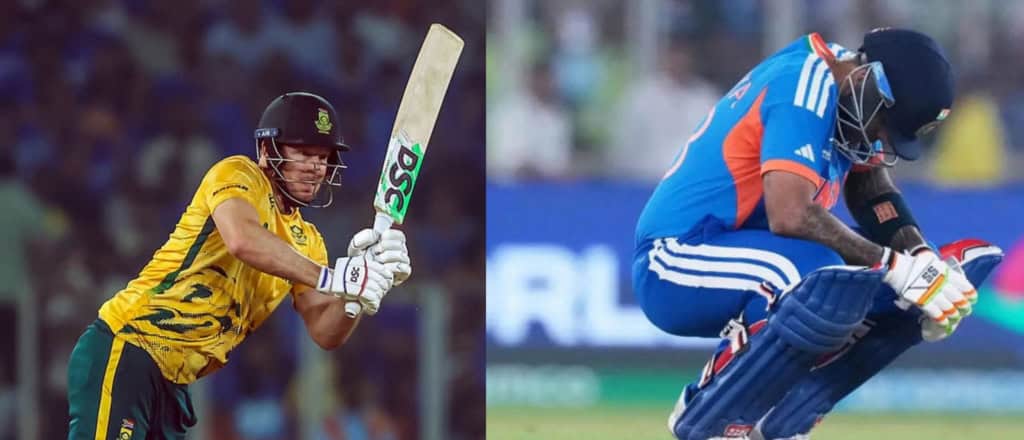
Gavaskar also contrasted India’s approach with that of South Africa in the T20 WC 2026 match. He praised David Miller and Dewald Brevis for adjusting to a pitch where the ball did not come onto the bat easily. Instead of forcing strokes, they built partnerships, rotated strike, and selected scoring options carefully.
This adaptability, Gavaskar suggested, was missing from India’s batting display. The T20 WC 2026 surface required measured aggression rather than reckless shot-making. South Africa’s ability to read conditions and apply themselves patiently ultimately separated the two sides.
T20 World Cup 2026 setback deepens India’s concerns
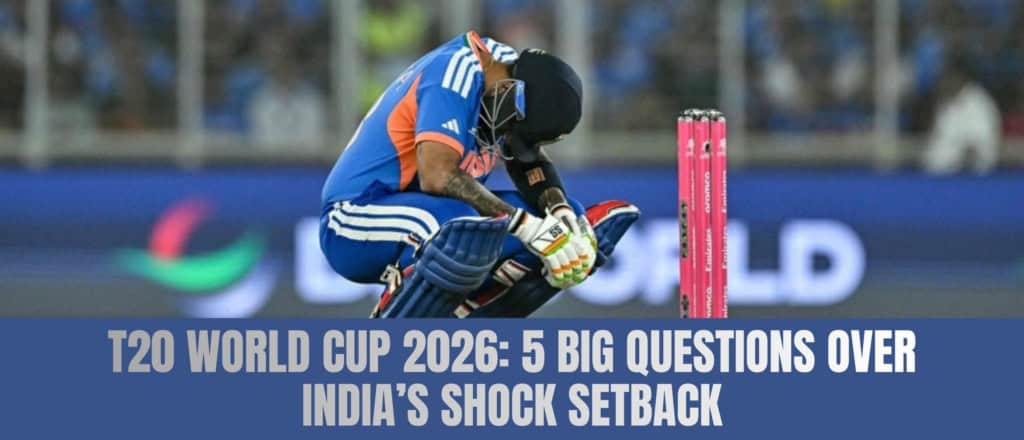
The heavy defeat marked India’s biggest loss in T20 World Cup history and intensified scrutiny on the batting lineup. In the context of the T20 WC 2026 standings, the result significantly affected net run rate and added pressure ahead of the remaining Super 8 fixtures.
Abhishek Sharma’s struggles have now become symbolic of the larger challenge facing Team India — converting potential into performance on the global stage. Gavaskar’s comments reflect a call for greater composure, improved game awareness, and smarter decision-making under pressure.
What next for Abhishek Sharma in T20 World Cup 2026
The T20 World Cup 2026 still offers opportunities for redemption, but adjustments are essential. For Abhishek Sharma, regaining fluency and confidence will be crucial if he is to play a defining role in India’s campaign. The young opener possesses immense talent, yet ICC tournaments demand consistency and adaptability.
As India prepare for their remaining matches, the focus will be on recalibrating strategies and reinforcing mental resilience. The T20 World Cup 2026 has already delivered harsh lessons, and Gavaskar’s candid assessment underscores the urgency of learning from them. Whether India can turn the page will depend on sharper execution and a more disciplined batting approach in the matches ahead.


Responses