

WPL 2026: India’s Women’s Cricket Gears Up for Global Dominance

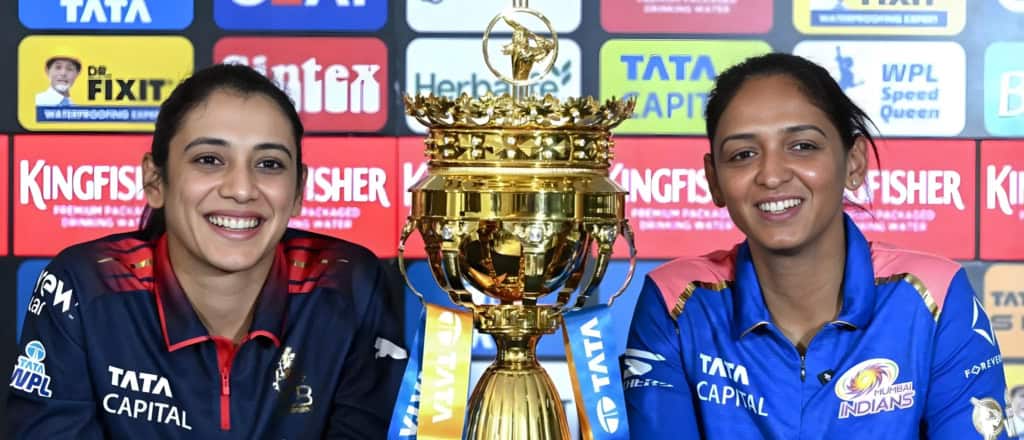
The 2026 edition of the Women’s Premier League (WPL) is set to showcase the next era of Indian women’s cricket, with star players like Smriti Mandhana and Harmanpreet Kaur leading the charge. Returning to the DY Patil Stadium—the site of the 2025 Women’s World Cup final—the fourth WPL season promises a platform for talent development, strategic preparation, and global exposure for India’s players.
Leadership and Legacy- WPL 2026:
Mandhana and Harmanpreet, captains of the two most popular WPL franchises, continue to serve as the faces of Indian women’s cricket. Beyond their on-field performance, they represent a vision for India to become a dominant force in women’s cricket worldwide. Their leadership is vital not only for team strategy but also for inspiring the next generation of players who aspire to play at international levels.
Pathway for Young Talent – WPL 2026: :
WPL serves as a critical stepping stone for emerging players. For instance, 22-year-old Anushka Sharma from Gwalior has been rigorously training, facing hundreds of deliveries daily to refine her range hitting and batting technique. Players like her view WPL as an accelerated path to national selection, providing exposure to high-pressure scenarios against top-tier competition. The league bridges the gap between domestic cricket and international competition, allowing young talent to demonstrate readiness for higher levels of the game.
Kashvee Gautam and Kiran Navgire have also adapted their preparation routines, focusing on diet, fitness, and batting mechanics to compete effectively in WPL. Their dedication underscores the increasing professionalization of Indian women’s cricket, with the league offering structured opportunities for improvement and consistent match practice.
Impact of WPL on Indian Cricket:
Since its inception, WPL has significantly influenced player development and performance standards. The tournament has provided a platform for domestic and international players to engage in competitive cricket, allowing India to build a strong bench of talent. Young seamers like Renuka Singh, Meghana Singh, Arundhati Reddy, and Shikha Pandey gained international exposure through WPL, while newcomers such as Kranti Goud, Saima Thakor, and Titas Sadhu made their debut for India after showcasing skills in the league.
The trend is not limited to seamers. Batting and spin departments have also benefited, with players like Minnu Mani, Saika Ishaque, Shreyanka Patil, and Kashvee Gautam breaking into national setups, illustrating WPL’s pivotal role in shaping India’s women’s cricket landscape.
Strategic Vision for WPL 2026:
The league’s organizers aim not just for entertainment but also for performance excellence. The goal is to create conditions where players consistently face competitive cricket, simulate international pressures, and elevate skills to world-class standards. The 2026 edition will test Indian players against strong international franchises, enhancing their adaptability, decision-making, and mental toughness—key components for global dominance.
Mandhana emphasized the long-term vision, stating that WPL bridges the gap between domestic cricket and international competition, ensuring India’s teams are prepared to face top global opponents in every format. Harmanpreet added that exposure to high-level competition helps players adjust to pressure situations, contributing to sustained success beyond single tournaments.
Integration of Overseas Talent:
WPL 2026 also incorporates overseas players, adding a critical dimension to skill development and competitiveness. Competing alongside and against accomplished international cricketers provides Indian players opportunities to learn, adapt, and benchmark their performance. This interaction raises standards across all facets of the game—from batting and bowling to fielding and game strategy.
Preparation and Fitness:
The WPL 2026 edition emphasizes fitness and conditioning, with players like Navgire, Anushka Sharma, and Kashvee Gautam undertaking rigorous programs to enhance strength, agility, and endurance. The preparation aligns with the demands of T20 cricket, where explosive performance, quick recovery, and tactical execution are essential. WPL acts as a real-world laboratory where players can test strategies, refine techniques, and improve mental resilience.
Tournament Schedule:
The league will take place across two primary venues. DY Patil Stadium in Navi Mumbai will host matches from January 9-17, including 11 league matches. BCA Stadium in Kotambi will stage the remaining 9 league matches and one playoff match from January 19 to February 5. The schedule features double-header matches, providing fans and players with high-intensity cricket action.
Opportunities for Young Players:
WPL 2026 encourages the development of emerging talent by exposing them to high-stakes situations early in their careers. The league creates a competitive ecosystem where players from smaller domestic circuits can challenge themselves against seasoned internationals, enhancing their learning curve. This exposure is crucial for India to maintain its status as a global powerhouse in women’s cricket.
Future Aspirations:
With the WPL platform, Indian women’s cricket is aiming for sustained excellence and global recognition. Players are motivated not only to win individual games but also to uphold a legacy of performance and professionalism. Mandhana and Harmanpreet’s statements highlight the shared ambition among players: to dominate consistently in all formats, leveraging WPL experience to achieve world-class outcomes.
Conclusion:
WPL 2026 represents more than a domestic tournament; it is a strategic instrument for India to consolidate its strength in women’s cricket. With Mandhana, Harmanpreet, and a cohort of emerging stars taking center stage, the league will enhance skills, foster international competitiveness, and prepare India for future T20 World Cups and global competitions. As players, franchises, and organizers align their efforts, WPL continues to shape the trajectory of Indian women’s cricket toward long-term success and global dominance.



Responses