

5 Key Updates: Shubman Gill Injury Clouds Crucial 5th T20I Selection


Shubman Gill injury has emerged as a significant concern for Team India ahead of the fifth and final T20I against South Africa in Ahmedabad. The Indian vice-captain travelled with the squad despite sustaining a toe injury during training, creating uncertainty around his availability for the series decider. With India holding a 2–1 lead, the Shubman Gill injury introduces an added layer of strategic complexity to the final match of the calendar year.
Shubman Gill Injury Status Ahead of Ahmedabad Clash
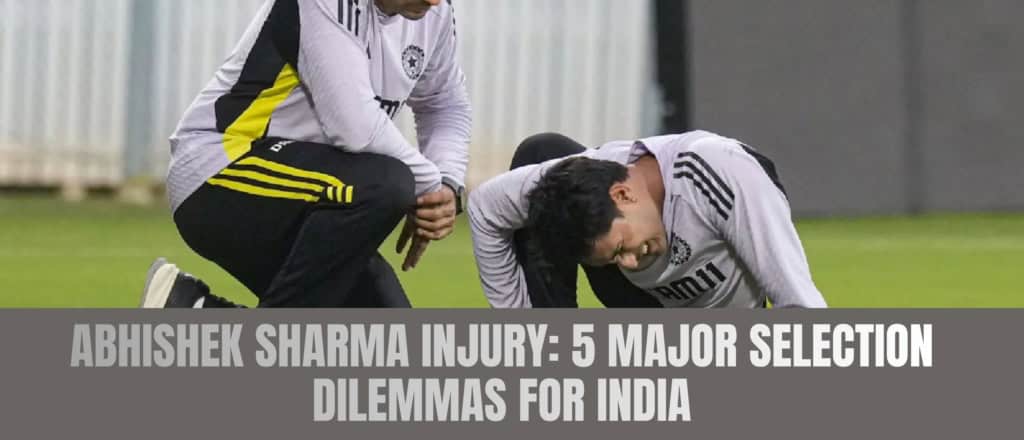
Shubman Gill injury concerns surfaced after the batter was struck on the toe during a net session ahead of the fourth T20I. The impact caused visible discomfort, forcing him to leave practice early. Although Gill accompanied the team to Ahmedabad, management remains cautious about fielding him prematurely. The decision to keep him with the squad suggests the Shubman Gill injury is not severe, but fitness clearance remains pending until closer to match day.
Fourth T20I Washout Alters Recovery Window
Gill was widely expected to miss the fourth T20I in Lucknow due to the Shubman Gill injury. However, persistent fog and unfavorable weather led to the match being abandoned without play. This unexpected pause allowed Gill additional recovery time, marginally improving his prospects for the fifth T20I. Despite the rest period, the Shubman Gill injury continues to be monitored closely, as toe injuries can significantly affect balance and running between the wickets.
Selection Dilemma Triggered by Shubman Gill Injury
The Shubman Gill injury has opened the door to a potential change in India’s playing XI. If Gill is ruled out, Sanju Samson is the leading candidate to step in. Samson offers middle-order flexibility and wicketkeeping depth, providing tactical balance. Gill’s recent white-ball form has also drawn attention, adding further weight to selection deliberations. In this context, the Shubman Gill injury may ultimately influence both fitness-based and performance-based decisions.
Injury History Adds Context to Current Concern
The current Shubman Gill injury follows a season disrupted by fitness setbacks. Earlier in the year, Gill missed most of the Test series against South Africa due to a neck injury sustained in Kolkata, which also ruled him out of the ODI series that followed. While none of these injuries were long-term threats, their recurrence has limited continuity. The latest Shubman Gill injury reinforces the importance of careful workload and recovery management.
BCCI Source Explains How Injury Occurred
A BCCI source provided insight into the incident behind the Shubman Gill injury, revealing it occurred late during an extended batting session. The blow resulted in immediate pain and restricted movement, prompting caution. The source confirmed Gill did not travel to the ground for the fourth T20I due to the low likelihood of selection. A final call on his availability in Ahmedabad remains dependent on medical assessment.
India’s Series Position Allows Conservative Call
India’s 2–1 series lead offers breathing room as selectors assess the Shubman Gill injury. With the series not yet decided but advantage in hand, management can prioritize long-term fitness over short-term risk. Protecting a core batter aligns with India’s broader player-management strategy, particularly with multiple international assignments scheduled ahead.
Fifth T20I Importance Beyond Result
Despite the series lead, the fifth T20I carries importance as India’s final international match of the year. It provides an opportunity to refine combinations and assess bench strength. The Shubman Gill injury complicates preparation, especially at the top of the order. Ahmedabad’s batting-friendly conditions could suit Gill if fit, but compromised mobility would negate that advantage.
Batting Structure Impacted by Gill’s Fitness
Gill’s role as a top-order anchor is central to India’s T20 blueprint. His ability to stabilize innings while maintaining tempo allows aggressive batters to play freely around him. The Shubman Gill injury disrupts this balance, potentially forcing a reshuffle and redistributing responsibility across the lineup. While alternatives exist, the preferred structure relies on Gill’s presence and fitness.
New Zealand Tour Raises Stakes
India’s upcoming tour of New Zealand, featuring ODIs and T20Is starting January 11, adds urgency to careful decision-making. The Shubman Gill injury must be viewed within this congested schedule. Rushing him back for a single match risks compromising availability across an entire series, reinforcing the logic of a cautious approach.
Medical Team Focuses on Controlled Recovery
Team sources indicate that conservative recovery protocols are being followed. Ice therapy, reduced training intensity, and load management form part of the plan. While the Shubman Gill injury is not considered serious, toe injuries demand careful handling due to their impact on batting mechanics. Medical clearance will hinge on Gill’s ability to move freely without discomfort.
Leadership Considerations Add Another Layer
As India’s T20I vice-captain, Gill’s presence extends beyond batting. The Shubman Gill injury therefore affects leadership dynamics on the field. His absence would increase responsibility on senior players, a factor selectors will consider. However, leadership value is unlikely to outweigh fitness concerns if risk remains.
Conclusion: Shubman Gill Injury Calls for Prudence
The Shubman Gill injury has created genuine uncertainty ahead of the Ahmedabad T20I, placing selectors in a delicate but familiar position. With a series lead and demanding fixtures ahead, caution appears the rational choice. Whether Gill features or not, long-term fitness remains the priority. The final decision will reflect India’s evolving emphasis on sustainability over short-term gains.


Responses