

5 Real Reasons Why Gill Dropped Shocked India’s T20 World Cup Squad

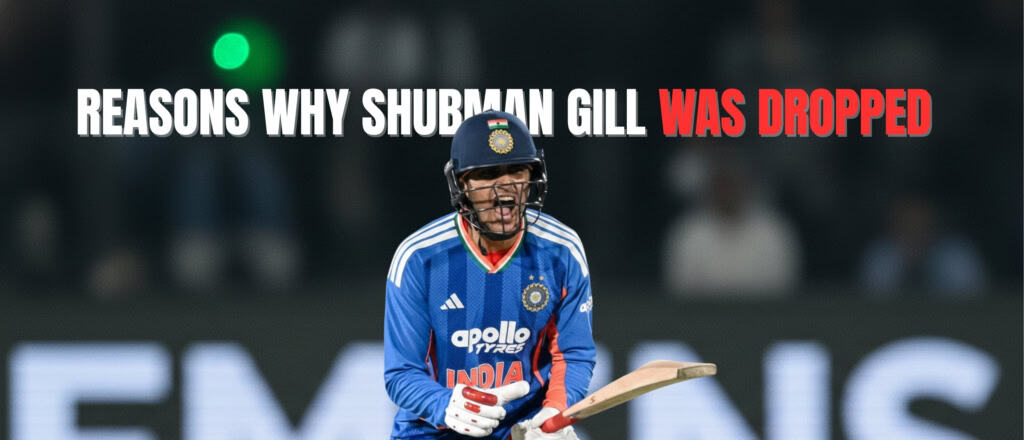
Gill dropped from India’s T20 World Cup 2026 squad has become one of the most debated selection calls in recent memory. Despite vice-captaincy status and technical excellence, the decision reflects a deeper strategic recalibration rather than a reactionary move. India’s selectors have signaled that adaptability, not hierarchy, now governs T20 selections as the global tournament approaches.
Powerplay Demands Explain Why Gill Dropped
The primary cricketing reason Gill dropped relates to India’s renewed emphasis on powerplay acceleration. On slower World Cup surfaces, early momentum is critical, and selectors were unconvinced that Gill’s batting style consistently delivers maximum output in the first six overs. His strength lies in timing and placement, attributes better suited to longer formats.
In modern T20 planning, cautious starts can place middle orders under undue pressure. India’s management appears unwilling to compromise early scoring rates, even if it means sidelining technically elite players.
Top-Order Competition Intensifies After Gill Dropped
Competition at the top has intensified sharply, contributing directly to why Gill dropped from the squad. Sanju Samson, Abhishek Sharma, and Ishan Kishan each offer explosive intent from ball one, aligning more closely with India’s tactical goals. These options reduce reliance on anchoring roles, especially in high-scoring matchups.
Selectors weighed ceiling impact over stability, concluding that alternatives provide greater matchup flexibility. In a format decided by marginal gains, this competitive depth narrowed Gill’s pathway.
Tactical Shift Overrides Reputation in Gill Dropped Call
The Gill dropped decision reflects a broader tactical shift away from reputation-based selection. India’s T20 blueprint now favors hitters who can alter games rapidly, even at the risk of volatility. Technical correctness alone no longer guarantees selection if it does not translate into scoreboard pressure.
This evolution mirrors trends across elite T20 sides, where intent and adaptability outweigh classical batting structure. Gill’s omission underscores this philosophical transition.
Rinku Singh Balance Adds Context to Gill Dropped Decision
Another layer behind Gill dropped involves squad balance, particularly Rinku Singh’s recall as a designated finisher. Including Rinku required reshaping the batting core to maintain role clarity. With limited squad slots, selectors prioritized players who fit clearly defined phases of the innings.
This balance-driven approach often results in difficult exclusions. Gill’s profile overlapped with roles already covered, making his omission a structural rather than individual judgment.
Pitch Conditions Central to Gill Dropped Assessment
Expected pitch conditions played a significant role in why Gill dropped from consideration. Slower, gripping surfaces reduce the value of timing-based strokeplay and increase the premium on power hitting and improvisation. India’s selection reflects anticipation of these conditions rather than retrospective analysis.
Teams preparing effectively for World Cups select for environments, not averages. Gill’s strengths, while undeniable, were deemed less aligned with projected conditions.
Vice-Captaincy Could Not Prevent Gill Dropped Outcome
Perhaps the most striking aspect of Gill dropped is that leadership status offered no protection. Vice-captaincy traditionally provides continuity during form fluctuations, but this selection cycle prioritized output over titles. India’s management has made it clear that leadership roles must coexist with tactical suitability.
This approach reinforces accountability across the squad. Leadership is now viewed as functional rather than symbolic within the T20 framework.
Selection Philosophy Behind Gill Dropped Moment
This reflects a transparent selection philosophy centered on clarity and specialization. Each batter is expected to deliver specific value within defined phases. Those who do not fit cleanly into these roles face increased scrutiny, regardless of pedigree.
Such decisions aim to reduce ambiguity during high-pressure matches. India’s selectors appear focused on minimizing overlap and maximizing intent-driven roles.
What Gill Dropped Signals for India’s T20 Future
At a broader level, this signals India’s commitment to evolving with the format rather than defending tradition. The message to the wider talent pool is clear: domestic and international performance must align with tactical vision, not just technique or past success.
This shift may feel ruthless, but it reflects a high-performance environment preparing for global competition margins.
Final View on Why Gill Dropped Matters
Ultimately, Gill dropped is less about exclusion and more about direction. India have chosen a path that prioritizes aggression, flexibility, and pitch-specific planning ahead of hierarchy. While Gill remains a central figure in India’s long-term plans, this omission reinforces that T20 World Cup selection is governed by immediate relevance, not long-term promise.



Responses