

Bangladesh Cricket Faces Uncertainty as BCB and India T20 World Cup Standoff Continues


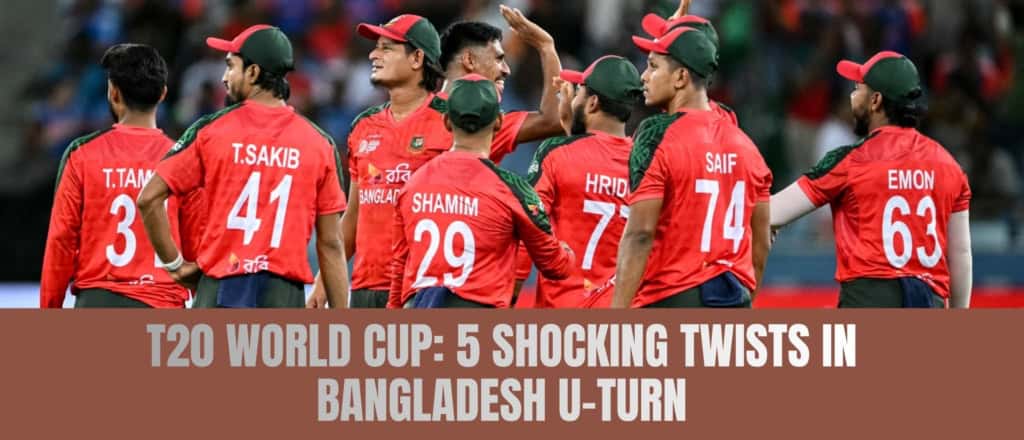
A cloud of uncertainty hangs over Bangladesh cricket as the Bangladesh Cricket Board (BCB) maintains its stance on not traveling to India for the upcoming ICC T20 World Cup 2026 due to security concerns. The decision has left players, coaching staff, and fans anxious, with stakeholders unsure about the team’s participation and the location of matches.
The controversy began after pacer Mustafizur Rahman was removed from the Kolkata Knight Riders squad for the IPL 2026, prompting the BCB to raise concerns about player safety in India. The board has received support from Bangladesh sports adviser Asif Nazrul, who emphasized that the safety of players, spectators, and journalists should take precedence over any participation in the tournament.
Player Concerns:
National cricketers have expressed unease as the situation remains unresolved. While some issues, like sponsorship complications with Indian equipment maker Sanspareils Greenlands (SG), have emerged, players like Litton Das and others are reportedly affected by the strained Indo-Bangla ties. A BCB official explained that players are anxious about what lies ahead, with questions revolving around whether Bangladesh will participate and where matches might be held.
Former Bangladesh captain Tamim Iqbal voiced his perspective publicly, urging careful deliberation by the BCB. He stressed that decisions should prioritize the future of Bangladesh cricket and the welfare of players over external pressures. “Today’s decisions will have an impact ten years down the line, so decisions should be taken by considering what is best for Bangladesh cricket,” Tamim said.
He further highlighted the importance of the BCB operating independently, stating that while government consultation is necessary, the board must have the authority to make its own decisions. Tamim also recommended internal discussions before public announcements to avoid unnecessary confusion, stressing that abrupt statements could heighten anxiety among players and stakeholders.
Coaching Staff Perspective:
The situation has also affected the foreign coaching staff. One coach expressed hope for a swift resolution, emphasizing the importance of the World Cup as a pinnacle event for all cricket professionals. “We are here for cricket, and what is bigger than a World Cup? I hope the matter gets resolved soon,” he said.
The uncertainty has placed additional pressure on coaches who must plan training schedules, strategies, and player readiness without knowing the final location or confirmation of participation. This creates challenges in team preparation and mental conditioning, potentially affecting performance if the situation persists.
Administrative Measures:
The BCB has reportedly sent a second official letter to the International Cricket Council (ICC) seeking clarity and a positive response regarding the matter. While the board is awaiting feedback, the prolonged wait is testing the patience of all involved, including cricketers, journalists, and fans.
Analysts argue that the BCB’s cautious approach is a balancing act between national safety concerns and the obligations of international cricket. The board must navigate political sensitivities, contractual obligations, and the expectations of fans while safeguarding its players.
Implications for Bangladesh Cricket:
The standoff has significant ramifications for the national team. Non-participation in India could affect Bangladesh’s international ranking, exposure, and players’ experience against top-tier opposition. Conversely, agreeing to travel under unsafe conditions could endanger player welfare and damage the credibility of the board among stakeholders.
Moreover, uncertainty surrounding the T20 World Cup could impact player morale, sponsorships, and public support. Cricket is a major sport in Bangladesh, and the fans’ emotional investment in the team adds additional pressure on the board to reach a responsible and transparent decision.
Public and Media Reactions:
The ongoing tension has attracted significant media coverage in Bangladesh and internationally. Sports journalists continue to monitor developments at the Sher-e-Bangla National Cricket Stadium in Mirpur, hoping for breaking news. Public opinion is divided, with some supporting the BCB’s cautious approach, while others advocate for participation to maintain Bangladesh’s cricketing reputation on the global stage.
Possible Outcomes:
Cricket experts suggest several potential resolutions. One scenario involves relocating Bangladesh’s matches to neutral venues outside India, ensuring player safety while allowing tournament participation. Another involves diplomatic negotiations between cricket boards to guarantee adequate security measures, enabling travel to India. The ICC may also step in to mediate and provide guidance on ensuring fair play and safety compliance.
Looking Ahead:
The resolution of this issue will shape the trajectory of Bangladesh cricket. Timely decision-making is critical to allow the team to prepare effectively for the T20 World Cup. Players need clarity to maintain focus on training, strategizing, and peak performance levels. Additionally, clear communication with fans and stakeholders will help maintain confidence in the BCB’s management and leadership.
Conclusion:
The current impasse between the BCB and India regarding the T20 World Cup 2026 highlights the complex interplay of safety, politics, and professional cricket. With players, coaches, and fans anxiously awaiting a final decision, the BCB faces the delicate task of balancing national interests, international obligations, and the future of Bangladesh cricket. How the board navigates this challenge will have lasting implications for the team’s global standing, the confidence of stakeholders, and the development of cricket in Bangladesh.



Responses