

India A’s Stunning Catch Controversy vs Pakistan A


Catch controversy erupted during the Asia Cup Rising Stars 2025 clash between India A and Pakistan A, setting the tone for one of the most debated moments of the tournament. The dramatic relay catch involving Nehal Wadhera and Naman Dhir left players, commentators, and fans stunned as India A confronted umpires over a crucial third-umpire decision.
Catch Controversy Dominates India A vs Pakistan A Clash
The catch controversy unfolded in the 10th over when Maaz Sadaqat lofted a delivery down the ground. Wadhera caught the ball cleanly but lost balance near the boundary. In a split-second effort to remain legal, he relayed the ball to Naman Dhir, who completed what appeared to be a legitimate catch. Yet, the third umpire shocked India A by ruling the batter “not out,” triggering instant confusion across the field.
India A Furious After Third-Umpire’s ‘Not Out’ Verdict
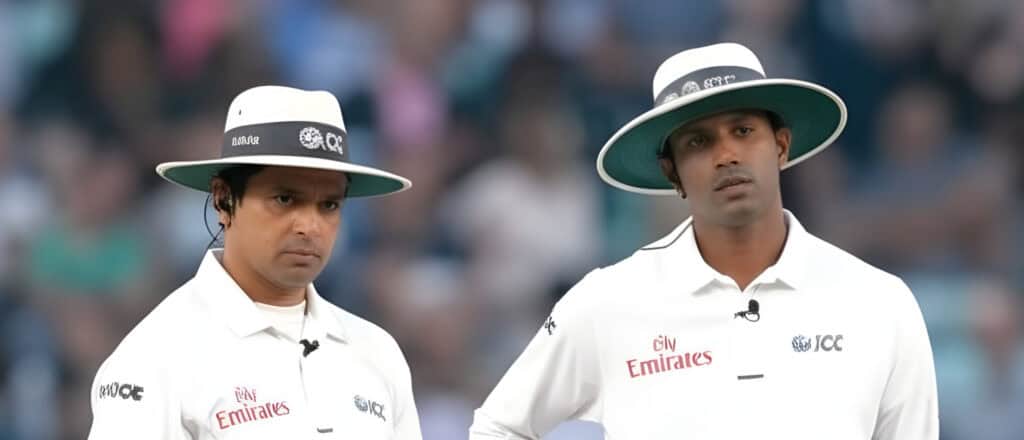
The India A players immediately surrounded the on-field umpires, questioning the ruling. Skipper Suyash Sharma appeared especially animated as he engaged in a heated exchange seeking clarification. The umpires, however, did not signal a six, nor did they support India A’s appeal, leading to a rare situation where neither side fully understood the final call.
Why India A Felt the Catch Should Stand
India A argued:
- Wadhera released the ball before landing beyond the boundary
- Dhir completed the catch with full control
No clear breach of traditional relay-catch rules was visible
This clash showcased how small technicalities can dramatically influence high-stakes matches.
MCC Rule Change at Center of Catch Controversy
The pivotal catch controversy stemmed from the Marylebone Cricket Club’s updated laws regarding catches near the boundary. The MCC recently clarified conditions for fielder movements outside the boundary line when completing relay catches, altering interpretations that players were previously accustomed to.
MCC Rules Explained in the Context of the Controversy
According to the revised law:
- A fielder may touch the ball airborne beyond the boundary only once
- After this contact, the fielder must land fully inside the field of play for the remainder of the play
- In relay situations, the first fielder must re-enter the field before the second contact or completion of the catch
These rules were designed to simplify boundary-line decisions but have instead led to growing confusion during tight match situations.
Why Wadhera’s Relay Was Ruled Invalid
In this catch controversy, replay angles showed Wadhera making contact with the ball outside the boundary area before tossing it to Dhir. Crucially, he did not return inside the field before the catch was completed by Dhir. This detail aligned with the MCC’s updated interpretation, making the third-umpire’s ‘not out’ ruling consistent with the revised law.
A Technical Breakdown of the Decision
Key points affecting the verdict:
- Wadhera’s foot placement occurred beyond the boundary
- His airborne second contact was deemed illegal under new regulations
- Dhir’s completion of the catch could not override the initial breach
This clarified why the third umpire did not award a six but still invalidated the catch.
Growing Confusion Over MCC’s Relay Catch Interpretation
The incident reinforced widespread uncertainty over the newly phrased MCC rule. Even with slow-motion technology, fielders and captains struggled to interpret decisions correctly in real time. This catch controversy may lead to further clarifications before major tournaments.
Why Players Demand Clearer Communication
Players have urged:
- Better communication from umpires during reviews
- Real-time explanations for unusual decisions
- Clearer visual demonstrations of updated rules
These improvements could prevent future heated exchanges like the one seen in this match.
What the Controversy Means for Future India A Matches
As the Rising Stars tournament continues, India A will be more cautious around boundary-line catches. The catch controversy revealed how technicalities and law changes can shift momentum in tightly contested games, especially between arch-rivals.
Key Takeaways from the High-Voltage Moment
- Players must adapt quickly to MCC’s revised rules
- Relay catches now require precise footwork and timing
- Umpiring communication needs to improve in pressure situations
This moment will likely influence coaching emphasis and tactical approaches for both India A and Pakistan A in upcoming fixtures.




Responses