

Ravichandran Ashwin on Player Freedom: “Will Abhishek Sharma Be Accepted?”


Ravichandran Ashwin has sparked a discussion on player expression in Indian cricket, highlighting how domestic players often cannot express themselves as freely as their overseas counterparts. Speaking on his Hindi YouTube channel ‘Ash ki Baat,’ Ashwin referenced Australia spinner Nathan Lyon, who publicly expressed disappointment at being left out of the Ashes XI, and contrasted it with the cultural limitations faced by Indian players.
Ravichandran Ashwin Reflects on Nathan Lyon’s Freedom
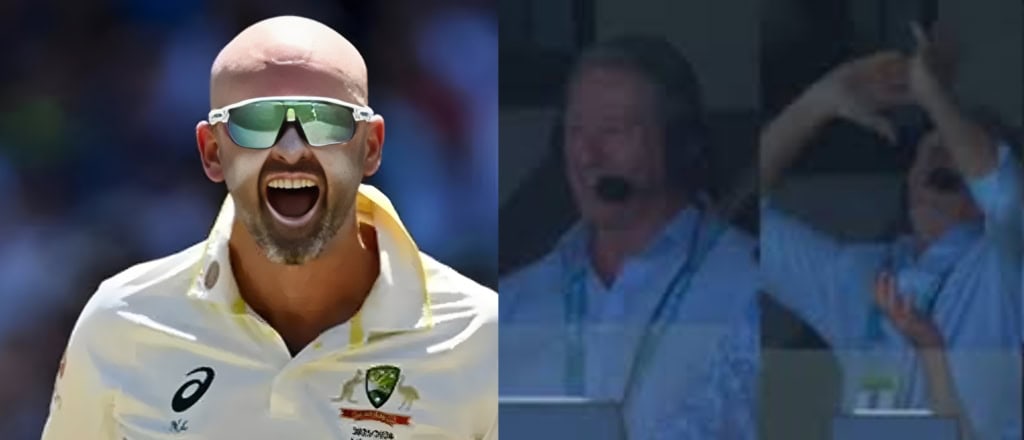
Ravichandran Ashwin praised Nathan Lyon for openly expressing his feelings after being dropped for the second Ashes Test against England. “Nathan Lyon is lucky that he is from a team who won’t change their emotions. He got a medium to express, and he did. But he won’t be considered wrong and he’ll still be considered for the next Test match,” Ashwin said. The Indian spinner acknowledged Lyon’s courage while emphasizing that Indian cricketers often face consequences for displaying similar emotions.
Cultural Barriers in Indian Cricket
Ashwin explained that Indian cricketers are often constrained by deep-rooted cultural norms that discourage open emotional expression. He pointed out that everyone experiences emotions, especially in high-pressure situations like international cricket, but in the context of Indian cricket, showing those emotions can be seen as a vulnerability. “People have emotions, and they will do just that,” Ashwin said. “However, I cannot express my emotions, because if I do, I will lose out, and only my harm will be caused.” This self-censorship is a survival tactic within a highly competitive environment where showing vulnerability can sometimes be misinterpreted as weakness or a lack of professionalism.
He referred to this societal attitude as “collateral damage,” where players’ natural emotional expressions are not only unappreciated but often condemned. According to Ashwin, this lack of acceptance for emotional expression creates an unfair judgment system where players are expected to maintain a stoic, composed exterior at all times. The constant suppression of genuine feelings leads to a scenario where players are judged for being human—faced with the burden of portraying an image of perfection, even when they might be struggling emotionally. This, Ashwin believes, stifles their authenticity and can have detrimental effects on their mental health and overall well-being.
Example of Abhishek Sharma
To illustrate his point, Ashwin cited star batter Abhishek Sharma. “Let’s take Chris Gayle as an example. He announced himself as the ‘Universe Boss’. We all accepted it, didn’t we?” Ashwin asked. He then posed a hypothetical: if Abhishek Sharma wore a chain and declared, ‘Universe Boss is here, man,’ would the public accept him? “No, because there is a conditioning in our brains that we don’t like to credit someone else. I hope that changes,” Ashwin added, stressing the need for cultural evolution in Indian cricket.
The Collateral Damage Concept
Ashwin elaborated on the consequences of this cultural bias. Players expressing emotions in India are often stamped with a certain character, leading to “collateral damage.” He expressed hope that over time, Indian cricket will evolve to respect players’ personal expression as much as international teams do, promoting freedom and authenticity on and off the field.
Australia’s Ashes Success Despite Changes
Ashwin also referenced Australia’s recent performance in the second Ashes Test, where they comfortably won despite leaving out Nathan Lyon and missing pacers Pat Cummins and Josh Hazlewood. His point highlighted how teams abroad allow players to voice frustrations without it affecting selection. Michael Neser, Lyon’s replacement, even secured a five-wicket haul in the second innings, demonstrating the team’s depth and culture of acceptance.
Conclusion
Ravichandran Ashwin’s comments shed light on the unique cultural challenges faced by Indian cricketers regarding self-expression. By comparing the acceptance of overseas players like Chris Gayle and Nathan Lyon with domestic stars, Ashwin has opened a debate on freedom, respect, and evolving cultural norms in Indian cricket. His remarks underscore the importance of embracing individuality while maintaining professionalism in the sport.




Responses